
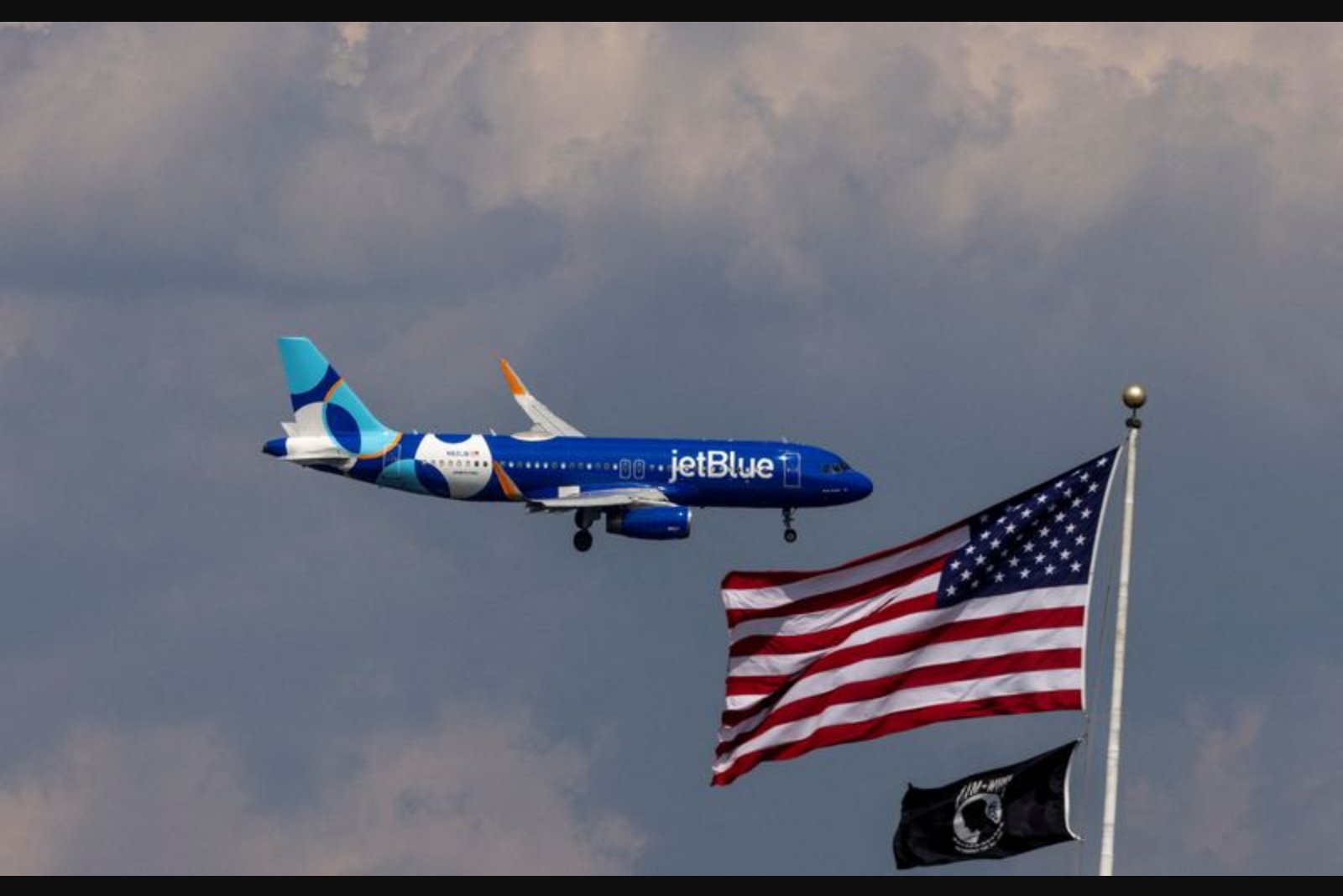
JetBlue Airways recorded a larger net loss in the first quarter, with management attributing the deterioration in part to a spike in jet fuel costs after recent military action in the Middle East raised oil and gas market volatility.
The company said that the U.S.-Israeli attack on Iran has led to the closure of the Strait of Hormuz, a key chokepoint for global energy shipments, disrupting roughly one-fifth of worldwide oil and gas supplies. JetBlue and other carriers have felt immediate pressure from sharply higher jet fuel prices, which the airline said have nearly doubled since the conflict began at the end of February.
"While the macro environment, particularly fuel, has become more volatile, we are taking decisive actions to manage what is within our control, including adjusting capacity, optimizing revenue, and maintaining disciplined cost control," CEO Joanna Geraghty said on Tuesday.
In response to the higher fuel bill, JetBlue plans to recoup 30% to 40% of the increased fuel costs in the second quarter, and expects to recover the full amount by early 2027. The company noted the squeeze created by rapidly rising fuel costs while many tickets were already sold at prices that cannot be retroactively adjusted.
Fuel represents the second-largest expense for airlines after labor, typically making up between 20% and 25% of operating costs. Industry conditions have become more challenging because several U.S. carriers have scaled back or abandoned fuel-cost hedging strategies, leaving them more exposed to volatile fuel prices.
Smaller carriers such as JetBlue are particularly sensitive to these developments because they typically have less financial flexibility and a greater exposure to sudden cost swings. Executives across the industry have warned that the conflict in the Middle East could alter competitive dynamics in aviation, creating new uncertainty for carriers trying to stabilize operations.
JetBlue entered 2026 focused on regaining stability and beginning to reap the benefits of a turnaround initiative launched in 2024. That effort centered on strict cost controls, route optimization and deferral of aircraft deliveries. Management now says those recovery plans face headwinds from elevated fuel prices.
In internal communications last week, the chief executive told employees the airline was not considering bankruptcy and emphasized that the carrier had ample liquidity and access to additional capital. JetBlue recently secured a $500 million debt financing commitment backed by up to 22 aircraft, with an option to raise a further $250 million using additional planes as collateral.
For the quarter, JetBlue reported a net loss of $319 million, or $0.86 per share, compared with a loss of $208 million, or $0.59 per share, in the prior year period.
Key points
- JetBlue's first-quarter net loss widened to $319 million, or $0.86 per share, from $208 million, or $0.59 per share, a year earlier.
- Jet fuel prices have nearly doubled since the end of February amid a Middle East conflict that disrupted about 20% of global oil and gas supplies via closure of the Strait of Hormuz.
- The airline plans to recover 30% to 40% of the higher fuel costs in Q2 and expects full recovery by early 2027; it has arranged committed financing and says liquidity is ample.
Risks and uncertainties
- Continued volatility in jet fuel prices could further pressure margins across the airline sector, with outsized effects on smaller carriers - impacting airline operations and energy-sensitive market sectors.
- Uncertainty about how long higher fuel costs will persist creates risk for revenue management, since many tickets are already sold and cannot be repriced - affecting carriers' yield management and retail travel demand exposure.
- Reduced industry hedging of fuel expenses leaves carriers more exposed to rapid price swings, heightening financial volatility for airlines and related credit markets.