
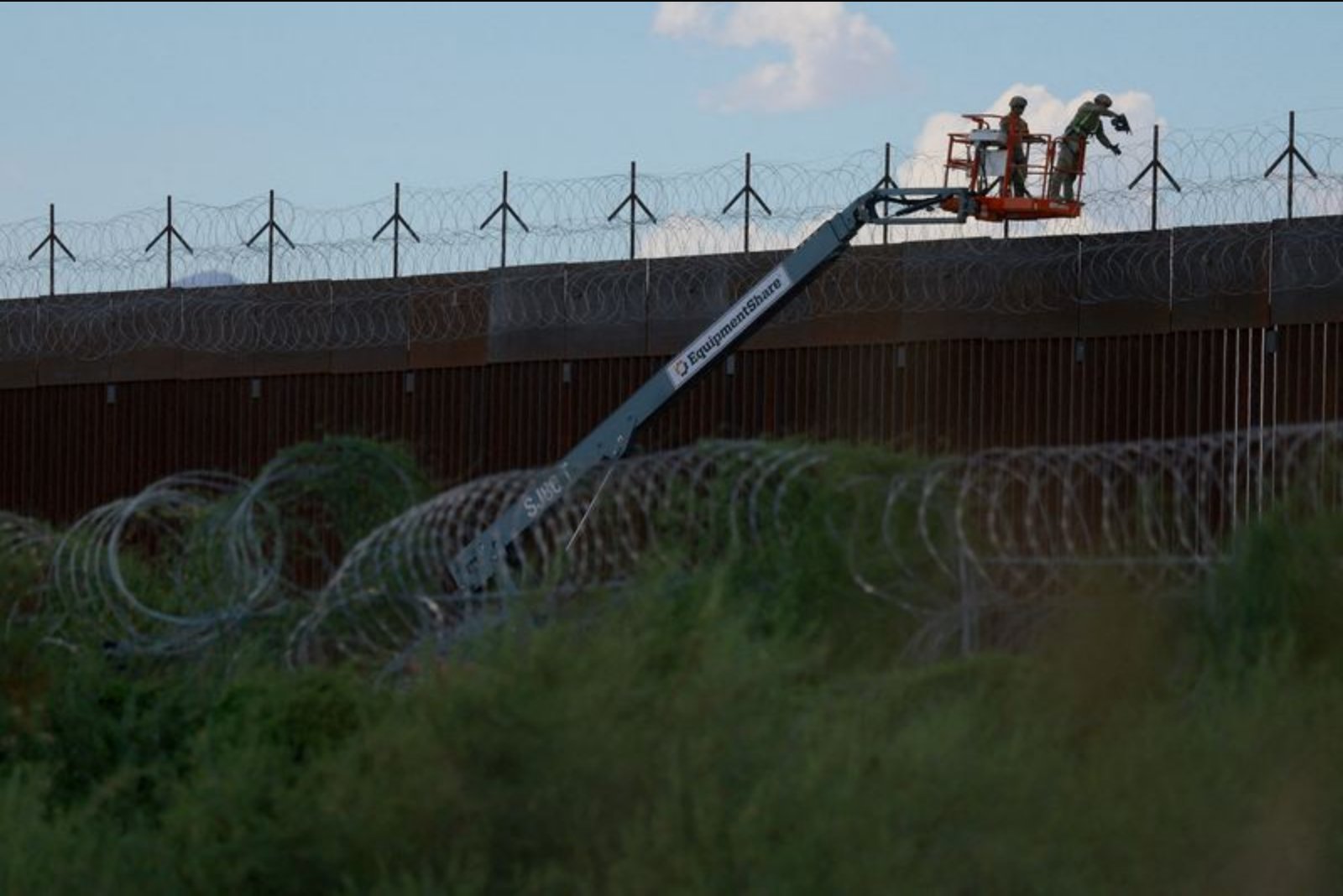
April 24 - A federal appeals court on Friday authorized Texas officials to begin enforcing a Republican-backed state law that criminalizes illegal entry or reentry into Texas and provides for state prosecution of individuals suspected of crossing the U.S.-Mexico border without authorization. The full bench of the New Orleans-based 5th U.S. Circuit Court of Appeals voted 10-7 to set aside a 2024 injunction that had barred enforcement of the statute known as SB4.
The decision overturns that earlier block, a measure that the Biden administration had challenged in court before the federal government withdrew its lawsuit after a change in administrations. Despite the federal case being dropped by the Republican federal administration, SB4 remained the subject of litigation brought by immigrant-rights organizations Las Americas Immigrant Advocacy Center and American Gateways, together with the city of El Paso.
Signed by Texas Governor Greg Abbott in December 2023, SB4 would establish a state crime for entering or re-entering Texas from another country without authorization. The law also authorizes state judges to order that those convicted depart the United States, and it includes penalties of up to 20 years in prison for individuals who refuse to leave when ordered.
The legal path for SB4 has been complex and marked by repeated injunctions and appeals. In February 2024, a federal judge issued a preliminary injunction that temporarily blocked the law. The case then progressed to the U.S. Supreme Court, which briefly allowed the law to take effect before the 5th Circuit moved within hours to halt enforcement pending further deliberation. A three-judge panel of the 5th Circuit in July 2025 maintained the injunction, concluding that the state measure would intrude on the federal government's authority to enforce immigration laws.
At the urging of Texas Attorney General Ken Paxton, the appeals court agreed to rehear the matter en banc. In the ruling issued Friday, U.S. Circuit Judge Jerry Smith wrote that the fact the advocacy groups had voluntarily expanded representation for immigrants harmed by the law did not automatically confer standing to challenge it. "When enterprising plaintiffs repackage a generalized grievance as an 'injury,' courts should rightly exercise caution," Smith wrote in an opinion joined by all but two of the court's Republican-appointed judges.
Paxton praised the outcome in a public statement, saying: "Texas's right to arrest illegals, protect our citizens, and enforce immigration law is fundamental." The plaintiffs' legal teams did not immediately provide comment in response to the decision.
Seven judges issued a dissent from the majority decision. Among them was U.S. Circuit Judge Priscilla Richman, an appointee of Republican President George W. Bush, who referenced a controlling 2012 precedent of the U.S. Supreme Court in arguing that federal law would supersede state action in this domain. "Texas cannot enact its own immigration regime," she wrote.
Procedural and legal uncertainties remain. The ruling reverses an injunction but does not conclude the broader legal fight over whether a state may criminalize and prosecute unauthorized entry in light of federal immigration statutes and longstanding constitutional principles governing federal primacy in immigration enforcement. The split within the court underscores that further appeals or continued litigation could follow.
This decision restores to Texas the authority to implement SB4 for the time being, including arrest and prosecution under the statute's terms. It also cements a sharply divided federal appellate posture on where immigration enforcement authority resides when state measures assert powers that overlap with federal law.