
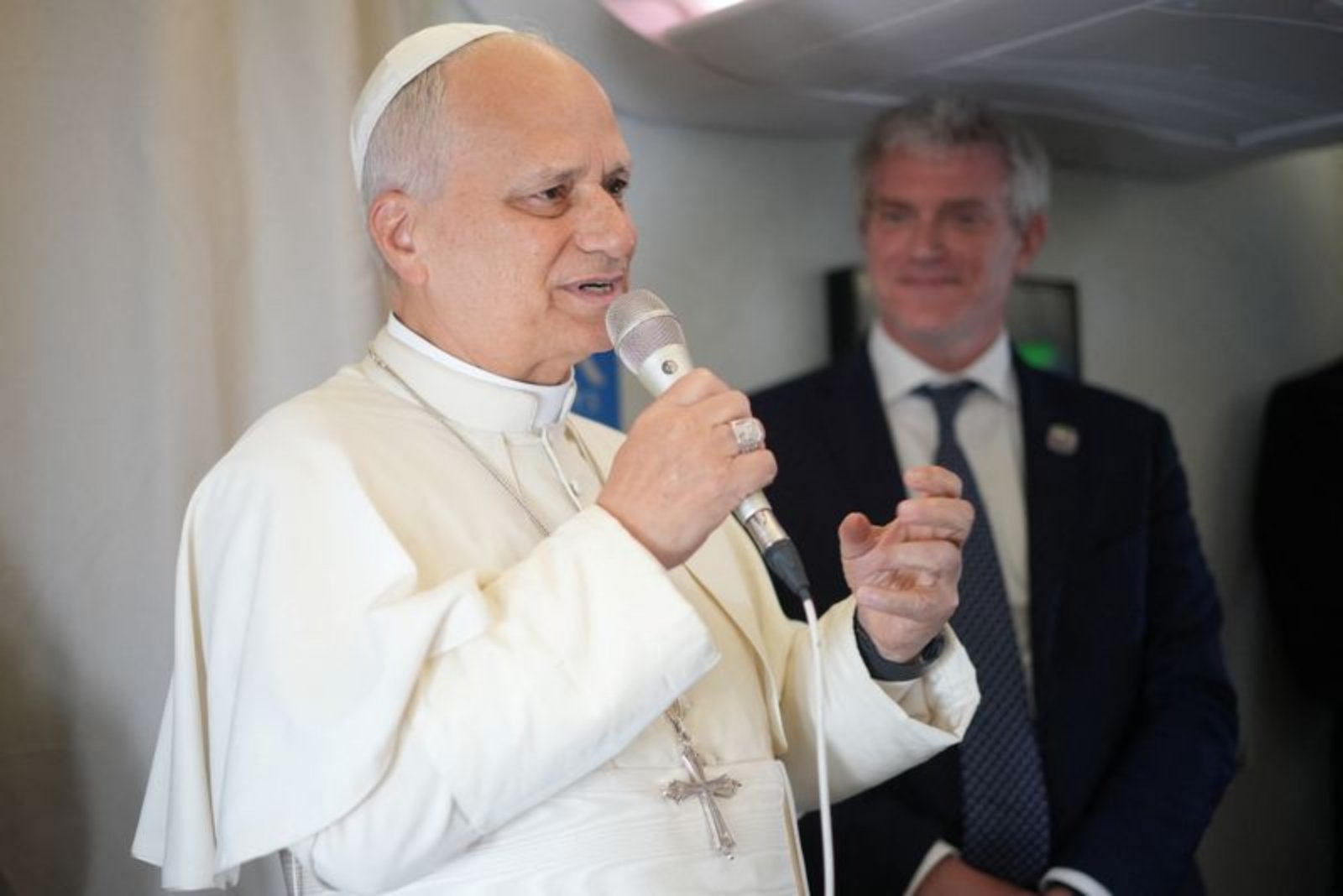
VATICAN CITY, April 24 - Pope Leo on Friday renewed his condemnation of the death penalty, calling for its abolition in the United States as the U.S. government moves to expand the methods available for federal executions.
In a message sent to DePaul University in Chicago to commemorate the 15th anniversary of Illinois abolishing the death penalty, the pope underscored the Catholic Church's teaching that every human life is sacred from the moment of conception. "The right to life is the very foundation of every other human right," he said. "For this reason, only when a society safeguards the sanctity of human life will it flourish and prosper."
Pope Leo said that effective prison systems can protect the public while also preserving opportunities for individuals convicted of serious crimes to seek redemption. Those comments followed a question from a reporter a day earlier about reports of waves of executions in Iran. He had replied plainly: "I condemn all actions that are unjust. I condemn the taking of people’s lives. I condemn capital punishment," he had said.
The pope's appeal comes as the U.S. Justice Department recommended broadening the means by which the federal government could carry out executions, pointing to difficulties in obtaining the drugs typically used for lethal injection. In a report, the department argued that execution protocols should be revised to include methods such as firing squads, electrocution and gas asphyxiation alongside lethal injection.
The Justice Department's proposal follows President Donald Trump's pledge to resume capital punishment at the federal level. Under the previous administration, President Joe Biden commuted the sentences of 37 federal death row inmates, leaving three individuals still facing execution.
Pope Leo, noted as the first pontiff from the United States, has in the past year publicly criticized elements of the Trump administration, including its immigration measures and what the pope characterized as the U.S.-Israeli war on Iran. The pope's statements have drawn rebukes from the president, who has described him as "terrible."
Context and implications in brief:
- The pope's message to DePaul University reaffirmed the church's long-standing position on the sanctity of life and condemned capital punishment in unequivocal terms.
- The U.S. Justice Department's report cites practical obstacles in securing lethal injection drugs and proposes expanding execution methods to include historical alternatives.
- The developments occur against a backdrop of contrasting executive positions - a presidential pledge to resume federal executions versus prior commutations that reduced the federal death row population.