
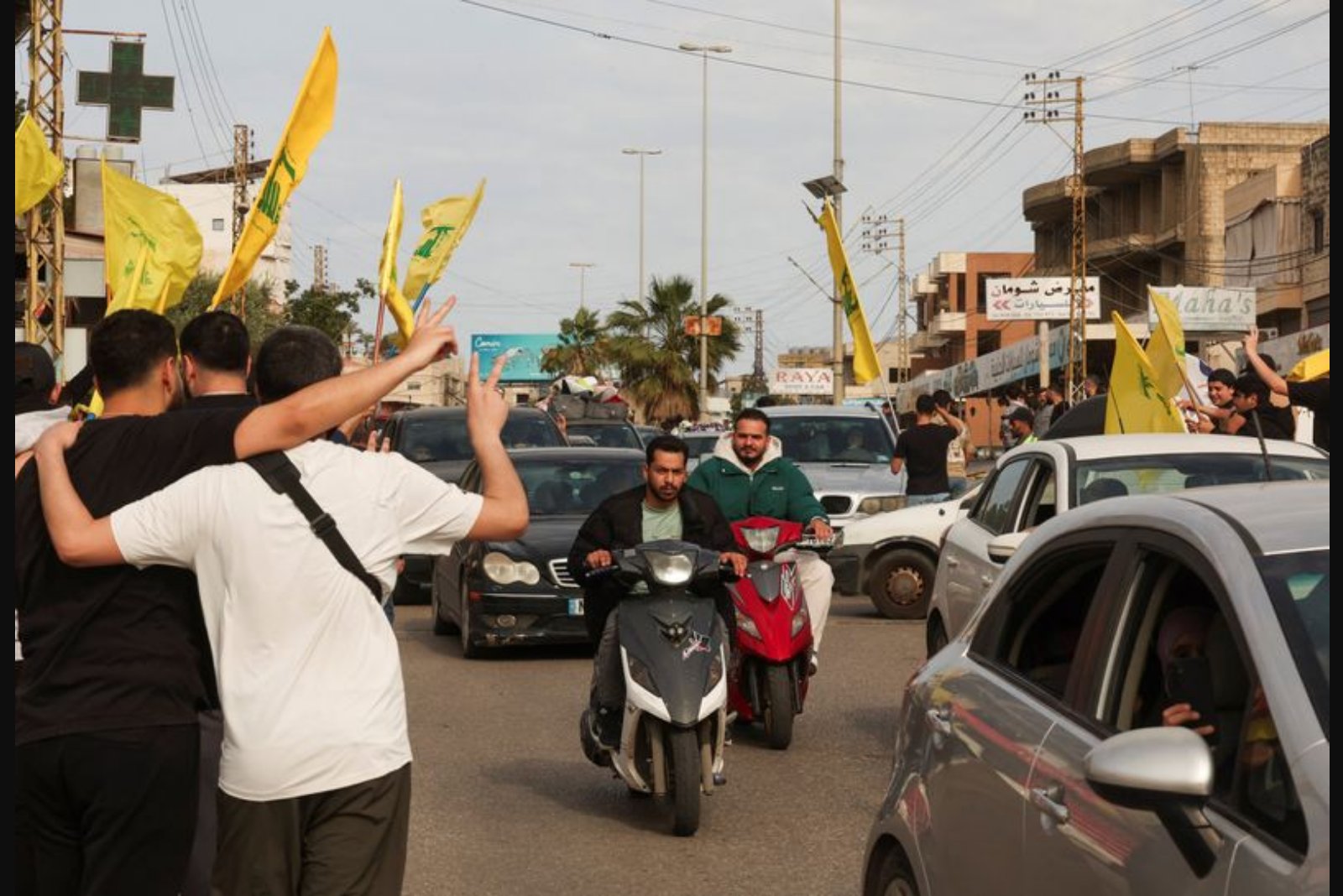
People who fled their homes during the recent fighting in Lebanon have started to go back, cautiously checking whether their residences survived weeks of bombardment. Many of those who visited their neighborhoods said they would not settle permanently yet, citing concerns that the 10-day ceasefire between Hezbollah and Israel might not endure.
In the Hezbollah-controlled southern suburbs of Beirut - an area widely known as Dahiyeh - hills of rubble mark where residential blocks once stood after more than six weeks of strikes. The area was heavily pummelled by Israeli attacks during a conflict that spiralled out of the war between the United States and Iran.
At Qasmiyeh in south Lebanon, drivers were using a makeshift crossing over the Litani River after the ceasefire took effect at midnight local time (2100 GMT). Israeli forces destroyed all bridges over the Litani during the fighting, including the bridge at Qasmiyeh, which was blown up on Thursday.
"I inspected my home and praise God the building is still standing," said Ali Hamza, who had visited his house in the southern suburbs. But he added that many remain fearful. "People are scared to come and live, and it is impossible to live in these circumstances, and with these smells. A full return is difficult now, despite the hardship of displacement."
The ceasefire was announced on Thursday by U.S. President Donald Trump, who said Lebanon and Israel would work toward a longer-term agreement and that Lebanon had agreed to "take care of Hezbollah." The Lebanese government, which has for some time been sharply at odds with Hezbollah over the group's decision to enter the fighting, has sought its peaceful disarmament.
The Lebanese army reported violations of the ceasefire by Israel, citing intermittent shelling of several southern Lebanese villages, and urged citizens to hold off on returning to southern towns and villages. There was no immediate comment from the Israeli military on the army's report.
In Nabatieh, a southern city left largely destroyed by the campaign, some people returning said they intended to stay despite the damage. Others found there was nothing they could return to.
"There’s destruction and it’s unliveable. Unliveable. We’re taking our things and leaving again," said Fadel Badreddine, who had come with his young son and wife. "May God grant us relief and end this whole thing permanently - not temporarily - so we can return to our homes and lands."
Hezbollah, a Shi'ite Muslim group founded by Iran’s Revolutionary Guards in 1982, opened fire in support of Tehran on March 2. Lebanese authorities say the fighting killed more than 2,100 people in Lebanon and forced some 1.2 million from their homes, with the bulk of those displaced coming from the Shi'ite community, which suffered heavily during the 2024 phase of the conflict. Hezbollah attacks killed two Israeli civilians, while Israel reports 13 of its soldiers were killed in Lebanon since March 2. During the hostilities Hezbollah also fired hundreds of rockets and drones at Israel.
Israeli forces carried out operations across southern Lebanon and said they sought to create a "buffer zone" to protect northern Israeli towns from Hezbollah attacks. At points, Israeli forces invaded areas of southern Lebanon and had vowed to maintain control over territory extending to the Litani River, which meets the Mediterranean some 30 km (20 miles) north of Israel’s border. During the conflict Israel ordered residents out of the area south of the Litani.
Israeli Prime Minister Benjamin Netanyahu said he had not agreed to Hezbollah’s demand to withdraw forces that invaded southern Lebanon and that Israel would maintain an extensive "security zone" up to the border with Syria. He insisted that Israel's main demand remained that Hezbollah be dismantled.
Hezbollah responded that any ceasefire must not allow Israel freedom of movement within Lebanon. In a statement the group said the presence of Israeli troops on Lebanese territory granted Lebanon and its people the "right to resist." The group has argued that Israeli activity inside Lebanon could justify continued resistance by Lebanese forces aligned with Hezbollah.
The campaign in Lebanon emerged as a significant impediment to reaching a broader peace agreement that U.S. officials sought as a way to end fighting connected to the wider confrontation with Iran.
On the ground, the human consequences are visible: entire neighborhoods reduced to rubble, destroyed bridges over waterways such as the Litani, and a population that remains largely displaced or unsure whether to return. While some residents are attempting to salvage possessions and assess damage, authorities and military officials warn that instability and localized violence could continue even as the formal truce is in place.
Contextual details and immediate developments
The ceasefire came into force at midnight local time (2100 GMT) and was presented by U.S. officials as the start of a 10-day halt in active hostilities between Lebanon and Israel. Although the truce is in effect, the Lebanese army's report of intermittent shelling illustrates continuing threats to security in parts of the south.
Political disagreement also remains pronounced: the Lebanese government and Hezbollah have sharply different stances on the latter's participation in the fighting, and major political figures in both Israel and Lebanon continue to set preconditions for their acceptance of any long-term arrangements.
Reporting from the field shows a region beginning the slow process of return and assessment, while the permanence of the pause in hostilities remains uncertain.