
Hook & thesis
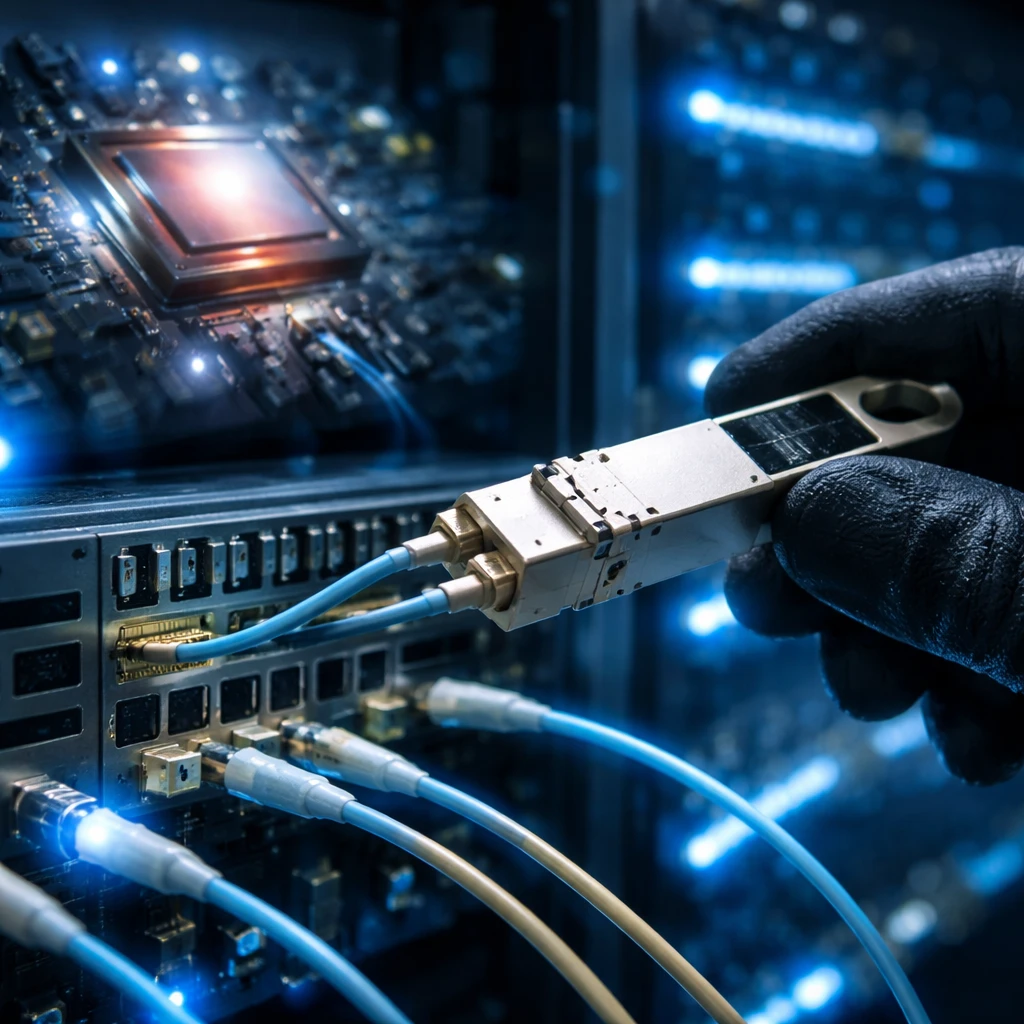
Marvell is no longer a niche storage or communications silicon vendor - it has become one of the practical enablers of AI scale. The most painful constraint in today's AI datacenters is not raw GPU compute but the ability to move huge models and training data between racks and across facilities. Marvell's work on coherent DSPs, DCI optical modules and high-speed Ethernet/PCIe interconnects addresses that bottleneck directly.
Valuation appears rich on headline multiples, but the market is beginning to price in durable, high-margin optical and networking products sold into hyperscalers and cloud builders. Combine that with improving free cash flow, modest leverage and visible strategic investments from major ecosystem players, and you get a credible case for a tactical long position ahead of multi-quarter AI infrastructure deployments.
What the company does and why it matters
Marvell designs and sells integrated circuits across a broad set of data-center and communications use cases: DPU-style data processing units, coherent DSPs for long-haul optics, DCI optical modules, Ethernet controllers and high-performance switches. Those products are no longer incremental — they are components that determine how effectively AI clusters can be scaled and linked.
The market should care because bandwidth and low-latency interconnects are gatekeepers for the next wave of model scaling. GPUs and accelerators generate compute; Marvell's optical and networking silicon moves and protects that compute. As hyperscalers expand multi-rack and multi-site training and move to NVLink Fusion-style fabrics, demand for coherent optics and high-throughput switching can accelerate quickly, and Marvell has product lines in each of those buckets.
Key data points that back the thesis
- Market cap: $122.19 billion, signalling large-cap investor attention and scale economics.
- Recent EPS: $3.05 and a trailing P/E of 45.5 - the market is pricing growth and margin expansion into the stock.
- Free cash flow: $1.396 billion - the company is generating cash that can fund R&D, tuck-in acquisitions or support strategic partnerships.
- Return on equity: 18.66% and return on assets: 11.98% - solid profitability for a semiconductor-equipment supplier.
- Balance sheet: debt-to-equity 0.31 and current ratio ~2.01 - modest leverage and liquidity to invest through cycles.
- Technical momentum: 9-day EMA $127.64 vs price $147.41 and MACD in bullish momentum; short interest days-to-cover running modestly low recently - a sign of limited near-term short pressure.
Valuation framing
On headline measures Marvell is expensive versus historical semiconductor averages: price-to-sales ~14.9 and EV/EBITDA ~47.1. That premium reflects the market assigning a high multiple to specialized, high-margin AI infra revenue rather than commodity networking silicon. If Marvell converts a meaningful share of hyperscaler DCI and switch ports to its coherent optics and NVLink Fusion-compatible solutions, those multiples could be justified by sustained revenue growth plus margin expansion.
Put another way: the company trades like a high-growth infrastructure name today. The justification must come from multi-quarter topline expansion, rising free cash flow conversion and continued wins with hyperscalers. We view the current price as a near-term reflection of those expectations rather than proof they have been realized, which argues for disciplined entry and a measurable stop.
Catalysts to watch (2-5)
- Hyperscaler design wins and ramp: any multi-quarter disclosure of larger footprints for Marvell optics or switch silicon at Amazon, Google or Microsoft would materially de-risk the multiple.
- Nvidia strategic tie-ups or investments: the market has already reacted positively to reports of Nvidia investment and NVLink Fusion synergies (coverage in mid-April 2026). Further validation from Nvidia or public technical demonstrations would be a re-rating trigger.
- Quarterly revenue and gross margin beats tied to optics and DCI sales: these would convert future expectations into realized performance and support higher multiples.
- Product milestones on coherent DSP and pluggable optics that increase port density and lower TCO for datacenter operators - adoption of next-gen modules is a multiyear tailwind.
Trade plan
I am recommending a directional long with tight risk control and a multi-quarter horizon. This is not a sprint; it is a position that expects AI-related infrastructure purchases to roll out over months.
| Parameter | Value |
|---|---|
| Ticker | MRVL |
| Trade direction | Long |
| Entry price | $147.41 |
| Stop loss | $130.00 |
| Primary target | $190.00 |
| Time horizon | Long term (180 trading days) - allow multiple product ramps and quarterly results to flow through. |
Rationale: entry at $147.41 captures current momentum while recognizing the stock has had a strong recent run; stop at $130.00 limits downside to roughly 12% from entry and respects the company's near-term support zone around recent moving averages. The $190 target is an approximation of the re-rating required if optics and high-bandwidth networking revenue materially accelerate and free cash flow expands - about 29% upside from entry.
Risks and counterarguments
Any trade has obvious risks - here are the principal ones and a counterargument to the bullish case.
- Valuation is stretched. P/E ~45.5 and EV/EBITDA ~47 imply the market expects substantial growth and margin improvement. If revenue ramps stall or margins compress due to competition, the stock can correct sharply.
- Execution risk on optics and custom silicon. Coherent optics and large-port switch projects are complex and multi-stage. Delays, yield issues or higher-than-expected capex for customers could push out revenue recognition.
- Customer concentration and procurement cycles. Hyperscalers buy in lumpy waves and can exert pricing pressure. A pullback in hyperscaler capex or a shift to in-house optics at scale would reduce Marvell's addressable opportunity.
- Competition and technological substitution. Peers and system integrators (including potential in-house chips from cloud providers or custom ASICs) can erode content-per-system or push Marvell into aggressive pricing.
- Macro or sentiment shock. Semiconductor names are sensitive to macro risk and index flows; a broad tech drawdown can remove the near-term narrative premium even if fundamentals remain intact.
Counterargument: One could reasonably argue that the stock already prices in the best-case AI infrastructure scenario and that any disappointment will spark a re-rating. In this view the premium multiples are vulnerable and the prudent move is to wait for concrete quarter-on-quarter revenue evidence of optics and switch ramps before taking a material stake.
What would change my mind
I would materially reduce or exit the position if any of the following happened:
- Quarterly reports show negative or flat year-over-year revenue in the optics/networking end markets or gross margin contraction tied to increased competition or pricing.
- Hyperscaler disclosures or industry reporting indicated a preference for in-house optical solutions at scale that would displace Marvell products.
- Balance sheet stress or a sustained free cash flow decline that forces the company to cut R&D or delay product launches.
Conclusion
Marvell sits at a high-conviction point in the AI supply chain: data movement and interconnects. The company has healthy returns, is generating free cash flow and carries moderate leverage - a profile that supports continued investment into optics and networking silicon. Near-term multiples are premium, so the recommended trade includes a disciplined stop to limit downside while allowing time for multi-quarter product ramps and hyperscaler adoption to validate the valuation.
For investors who want a play on AI infrastructure beyond pure GPU exposure, MRVL offers a differentiated route. The trade laid out here - entry $147.41, stop $130.00, target $190.00 over 180 trading days - balances upside from a re-rating and product execution with explicit risk controls should expectations prove too optimistic.