
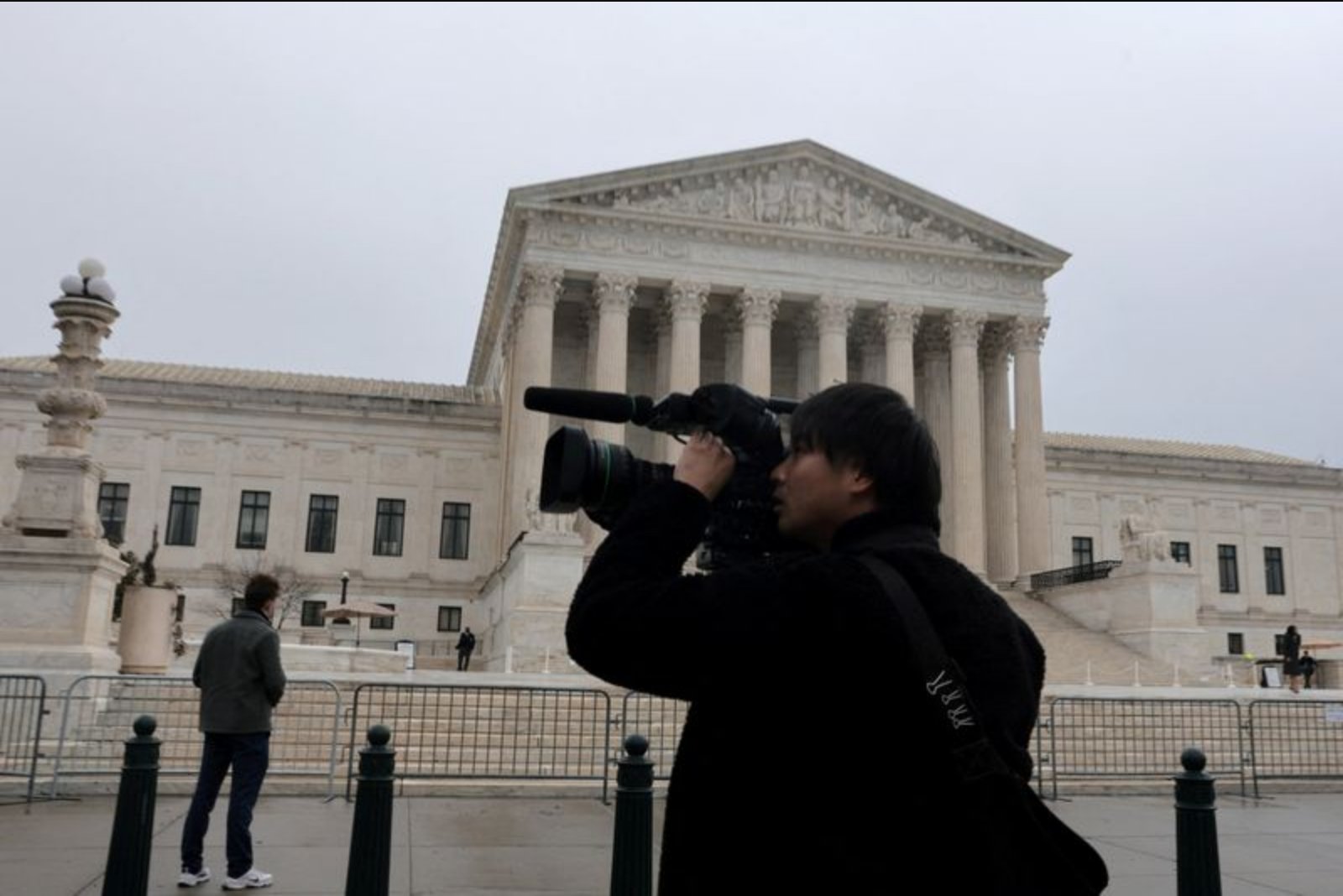
The U.S. Supreme Court has agreed to decide a legal question with significant implications for securities enforcement: whether the Securities and Exchange Commission must show that investors incurred financial losses before seeking disgorgement of profits earned through illegal conduct.
At issue in the case is the appeal filed by a defendant, Ongkaruck Sripetch, who was ordered by a lower court to return more than $3 million plus interest based on alleged proceeds from financial fraud. The justices will hear arguments in his challenge to a lower-court ruling that upheld the SEC’s use of disgorgement to strip those proceeds.
The broader existence of disgorgement authority is not contested. Courts have long recognized the remedy and it is embodied in federal law. The narrow question before the Supreme Court is procedural: must the SEC establish that its enforcement action caused pecuniary harm to victims - for example, that stock prices fell or investors experienced quantifiable losses - before a court may order the surrender of illegal profits?
In filings supporting the SEC’s position, Justice Department attorneys argued that the agency is not required to prove pecuniary loss to pursue repayment in court. They framed disgorgement as a tool to divest wrongdoers of gains obtained through misconduct rather than a mechanism to compensate victims for losses. In their words, "Disgorgement is a remedy designed to strip ill-gotten profits from wrongdoers, not to compensate victims for their losses."
The facts underlying the appeal mirror a common enforcement scenario. The SEC in 2020 sought disgorgement for proceeds it alleges Sripetch obtained through fraudulent conduct, specifically a pump-and-dump strategy that inflated penny stock prices so shares could be sold at a profit. Sripetch admitted to violating securities laws and later received a 21-month prison sentence in a related criminal matter. He maintains that the SEC did not prove his conduct caused stock prices to fall or otherwise produced measurable financial harm to investors, and he has asked the Supreme Court to revisit the disgorgement order.
Lower courts have been split on the precise showing required for disgorgement. A federal judge in California endorsed the SEC’s broader understanding of its disgorgement authority in this case, and that decision was affirmed by the 9th U.S. Circuit Court of Appeals. However, federal appellate courts are divided on whether a showing of pecuniary harm to victims is an element of the remedy, prompting both the Trump administration and Sripetch to press the Supreme Court to resolve the circuit split.
The contested remedy has been a significant enforcement tool for the SEC. The agency reported obtaining roughly $1.4 billion through disgorgement in fiscal 2025, a figure the SEC said excludes certain repayments secured by other federal agencies as well as an $8 billion payment made in January 2025 related to long-running litigation over a Ponzi scheme. By comparison, in the prior fiscal year under the previous administration the SEC secured $6.1 billion in disgorgement, accounting for almost three-quarters of its total monetary penalties.
Beyond disgorgement, the SEC retains other enforcement options, including fines and sanctions, which it can pursue independent of the disgorgement question now before the court. The Supreme Court’s forthcoming decision will address a narrow legal standard but one with potential consequences for how frequently and on what terms courts return profits claimed by the SEC.
Contextual note: The dispute focuses strictly on the procedural requirement for seeking disgorgement and does not challenge the existence of the SEC’s authority to pursue the remedy.