
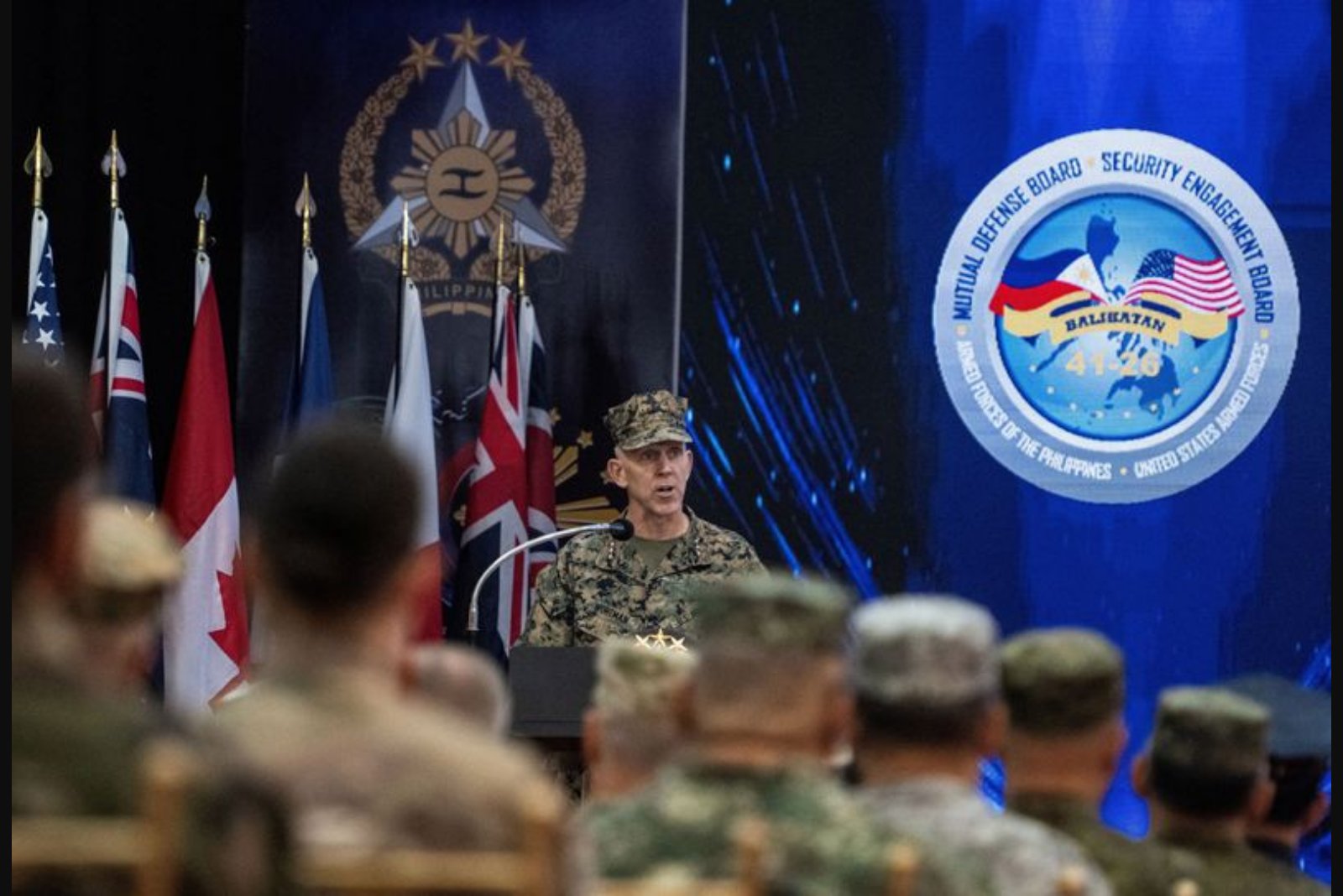
Philippine and U.S. forces have commenced the annual Balikatan exercises, a series of drills intended to evaluate combined readiness across multiple domains under what the Philippine armed forces described as "real-world conditions." The exercises, scheduled from April 20 to May 8, will include multinational forces and a range of live-fire and precision-strike activities.
Organizers characterize this year's Balikatan as the largest yet by number of participating countries. Australia returns as a participant, while Canada, France, New Zealand and Japan are taking part as active participants for the first time, reflecting Manila's expanding security partnerships.
Operational components for the exercise include precision strike and interdiction operations focused on coastal Philippine waters, integrated air and missile defence drills, multinational maritime operations, and counter-landing live-fire exercises. Philippine armed forces chief Romeo Brawner, speaking at the launch, said the drills were intended to reaffirm the alliance's strength and the partnership's role in regional security.
"We train across the breadth of our archipelago...testing our readiness in real-world conditions across all domains," Brawner said.
More than 17,000 troops are participating in Balikatan, including about 10,000 from defence treaty ally the United States, even as the U.S. remains heavily engaged in the Middle East. The exercises will also showcase newly acquired Philippine systems, notably the BrahMos missiles, alongside allied capabilities such as Japan's Type 88 anti-ship missile, which is slated to be used in a live-fire sinking drill.
Counter-landing live-fire drills will be conducted in Zambales province on waters of the South China Sea, at a location roughly 230 km (143 miles) from the disputed Scarborough Shoal, which the article describes as a strategic atoll controlled by China. For the first time in the exercise series, Philippine and U.S. forces will hold maritime strike drills on Itbayat, the northernmost island of the Philippines located about 155 km from Taiwan.
The positioning of drills near Itbayat underscores the island's strategic location amid ongoing tensions over Taiwan. The article notes that Taiwan's government rejects China's sovereignty claims and maintains that only its people can decide the island's future.
China has repeatedly criticised the Philippines for conducting defence exercises with foreign allies on the grounds that they risk raising regional tensions. The Chinese embassy in Manila did not immediately respond to a request for comment on the exercises.
Francisco Lorenzo, the Philippine exercise director, stressed that Balikatan had "no target nation" in mind.
Exercise scope and timeline:
- Dates: April 20 to May 8.
- Participants: More than 17,000 personnel; about 10,000 from the United States. Australia participating again; Canada, France, New Zealand and Japan as active participants for the first time.
- Key activities: Maritime strike drills, integrated air and missile defence, multinational maritime operations, counter-landing live-fire drills, and live-fire sinking drill utilizing allied and Philippine systems.