
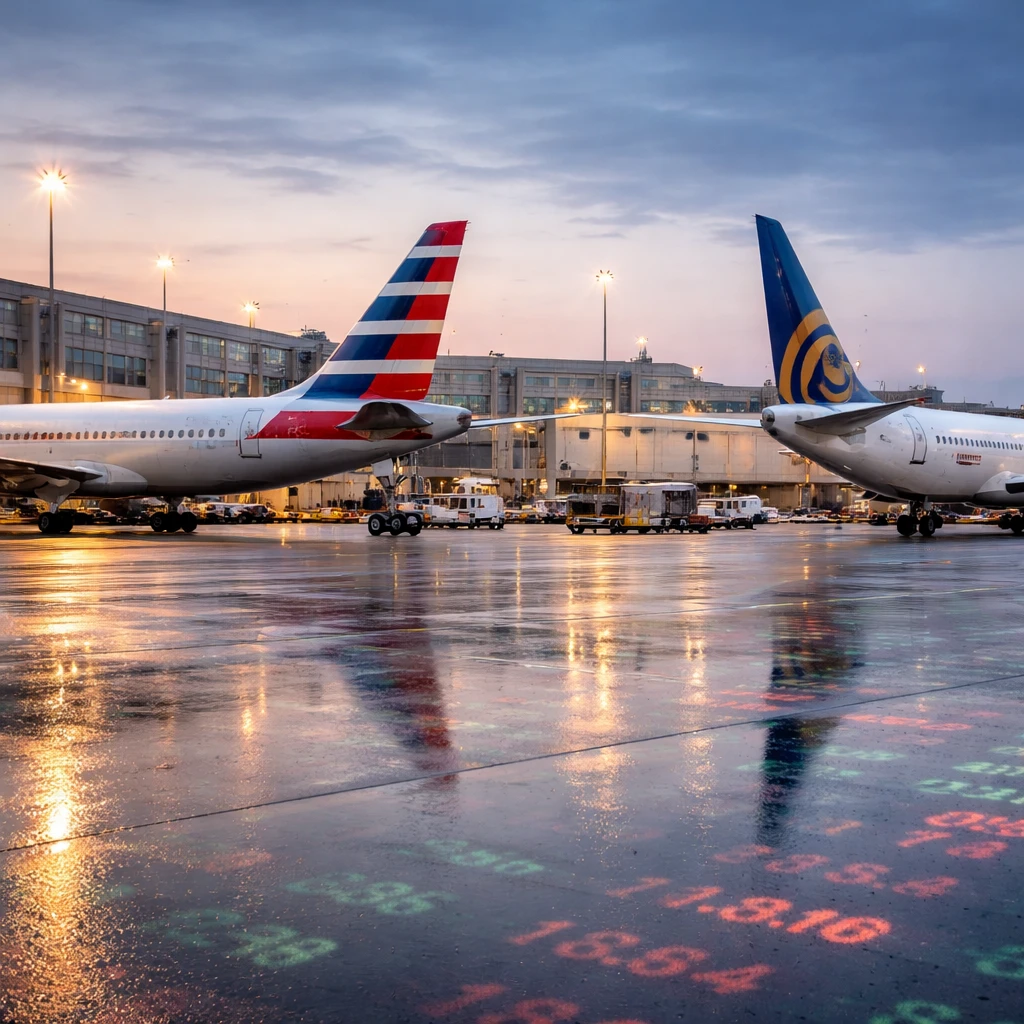
American Airlines’ stock moved lower in premarket activity after the carrier denied any interest in combining with United Airlines and said no discussions on that topic had taken place. The carrier warned that a merger between the two would harm competition and consumers, and said it would be at odds with its interpretation of the Trump administration's stance on antitrust enforcement.
By 05:43 ET, American's shares were down 2.7% in premarket trading.
American's statement made clear that, while it recognizes broader changes in the airline industry may be necessary, a transaction with United would be detrimental to market competition and passenger interests. The company additionally signaled that such a deal would conflict with its reading of how antitrust policies are being applied by federal authorities.
Separately, United Airlines Chief Executive Scott Kirby raised the idea of a possible merger to President Donald Trump during a meeting at the White House in late February. He argued that a combined carrier could be better positioned for international competition and invoked the administration's emphasis on trade deficits as part of the rationale.
That proposal met with skepticism close to the White House, according to people familiar with the matter, who pointed to concerns that a merger could reduce competition and push up ticket prices. Those concerns were particularly salient given attention at the administration level to rising costs for consumers ahead of the midterm elections in November.
A union between American and United would concentrate the U.S. domestic market further, which is already largely controlled by four comparably sized carriers. By available seat capacity, United and American were already the world's two largest airlines in 2025, according to OAG data.
Industry executives have highlighted rising fuel costs as a factor that could encourage consolidation, suggesting that carriers facing financial pressure might seek partners or divest assets. Kirby has also argued that larger scale is necessary for U.S. airlines to compete effectively with state-backed foreign carriers for international travelers.
The discussion about a potential tie-up has had immediate market implications, with American's premarket decline reflecting investor reaction to the carrier's public rejection of merger talks. The episode underscores how questions about consolidation, regulatory scrutiny and operating costs intersect for the airline sector and for investors watching major carriers' strategies.
Contextual note: Some market commentary and investment services evaluate United Airlines (UAL) and other carriers using quantitative models and historical performance. One such service referenced UAL in the context of algorithmic stock selection and highlighted past winners identified by its system, including Super Micro Computer and AppLovin, with cited historical returns. Readers should consider that such references reflect the views and methods of those services rather than new developments described above.