
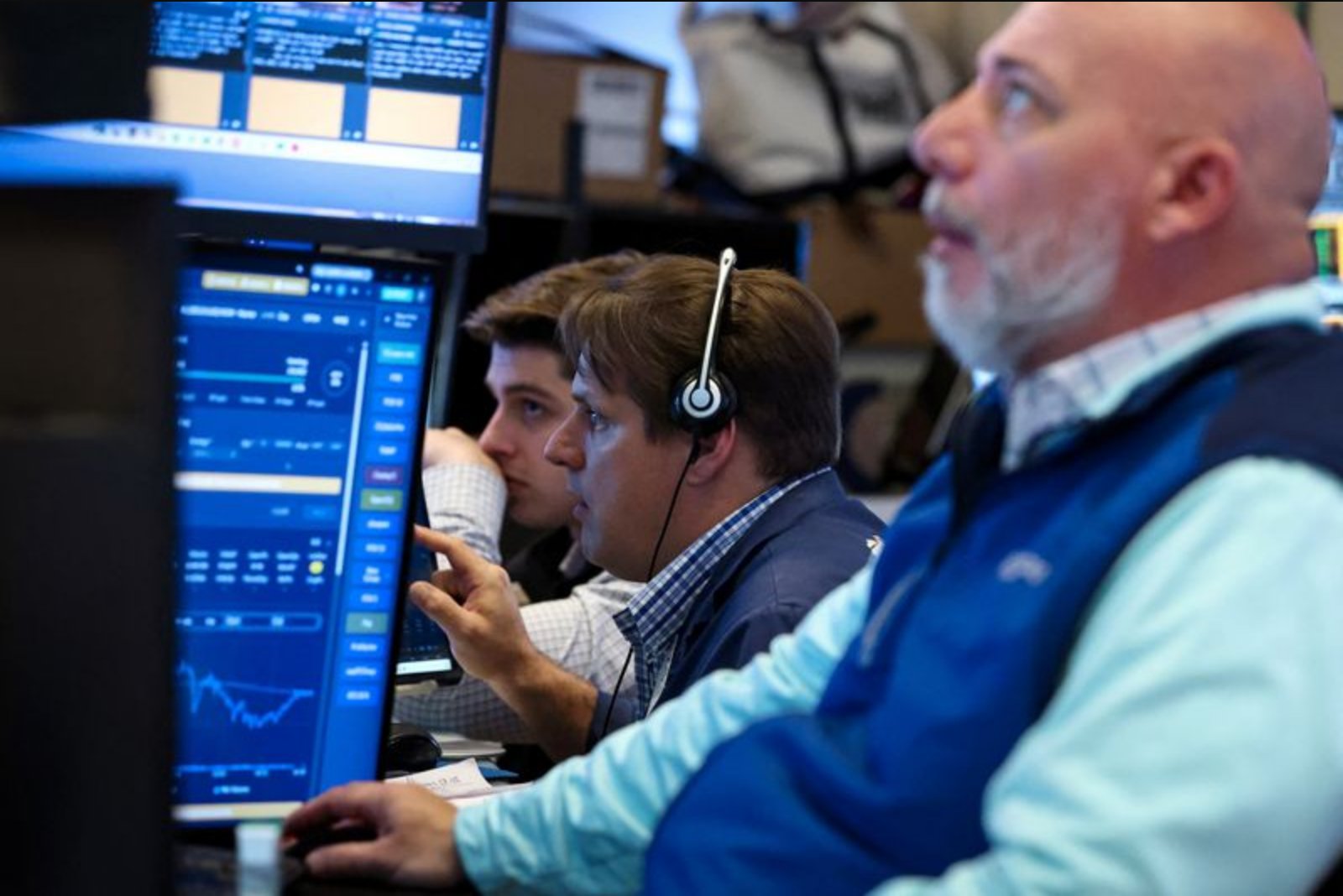
U.S. equity futures dipped on Monday after Wall Street posted a string of record closes last week, as renewed strains in the Iran conflict prompted investors to trim exposure to risk assets. The temporary reopening of the Strait of Hormuz last Friday - which had triggered broad buying and helped push the S&P 500 and the Nasdaq to record highs for a third straight session - was followed by a reclosure once tensions escalated again.
The rebound in risk appetite that lifted equities late last week gave way to greater caution as reports emerged that U.S. forces had seized an Iranian cargo vessel that attempted to breach a blockade. Iran’s foreign ministry said on Monday there were no plans for a second round of talks with the United States, citing the blockade and persistent differences over Tehran’s nuclear program.
Oil responded sharply to the developments, trading higher by about 5% on Monday, and U.S. energy stocks were firmer in premarket action. Among large energy names, Exxon Mobil rose about 2%, Chevron was up roughly 1.9%, and Occidental Petroleum gained near 2.5% in early trading.
Mohit Kumar, an economist at Jefferies, noted the risk of near-term escalation as parties seek leverage in negotiations. "Near-term escalation to gain an upper hand in negotiations cannot be ruled out," he said, while also expressing a view that a deal is being approached and that neither side benefits from prolonged conflict. Kumar added that domestic political considerations and the objectives of Iran’s Islamic Revolutionary Guard Corps shape the bargaining dynamics.
At 04:50 a.m. ET, index futures were lower across the board. Dow E-minis were down about 303 points, or 0.61%; S&P 500 E-minis had fallen roughly 35.75 points, or 0.50%; and Nasdaq 100 E-minis were lower by approximately 140.5 points, or 0.52%. The CBOE Volatility Index - Wall Street’s so-called "fear gauge" - rose to about 19.73, a one-week high, after slipping across the previous eight sessions.
Futures tied to the Russell 2000 small-cap index declined near 0.9%, following a record high for the benchmark on Friday. The shift in sentiment comes as investors weigh how the renewed Iran-related friction might affect near-term corporate performance and the wider economy.
Quarterly earnings will be a particular focus this week as companies report and analysts gauge whether the conflict reverberates through corporate results. Defense manufacturers such as Lockheed Martin and RTX are scheduled to announce results later in the week, alongside technology firms including IBM and ServiceNow. Tesla will be the first of the major tech cohort often dubbed the "Magnificent Seven" to report on Wednesday.
In premarket stock-specific moves, Marvell Technology climbed about 6% after a report that Alphabet’s Google is in discussions with the chipmaker to develop two new chips aimed at running artificial intelligence models more efficiently. QXO shares moved lower by about 3.6% after the construction supplies distributor agreed on Sunday to acquire building products distributor and installer TopBuild for approximately $17 billion.
Market participants will monitor the trajectory of geopolitical developments, oil prices, and earnings results through the week for signals about risk appetite and economic resilience.
Note: This article focuses on market moves and company-specific news reported in the early trading session and does not include subsequent developments that may occur later in the trading day.