
Hook and thesis
CF Industries has the kind of footprint you want when fertilizer prices spike: low-cost U.S. natural gas access, scale in nitrogen products and cash generation that looks durable when the cycle turns your way. Recent market action has priced in a medium-term extension of elevated nitrogen prices and supply dislocations tied to geopolitical friction around the Strait of Hormuz. I think shares are higher for longer, and the setup today gives a defined-risk entry to participate.
My trade thesis is straightforward: buy CF for a long-term push (180 trading days) with a clear stop and a target that reflects cyclical upside plus modest re-rating. The company is trading around $124.72, carries a market cap near $19.16 billion, generated roughly $1.8 billion of free cash flow in the most recent reported period, and prints an EPS around $9.47. Those numbers support a conservative valuation expansion if elevated fertilizer prices persist or if the company converts a larger share of profit into shareholder returns.
What the company does and why the market should care
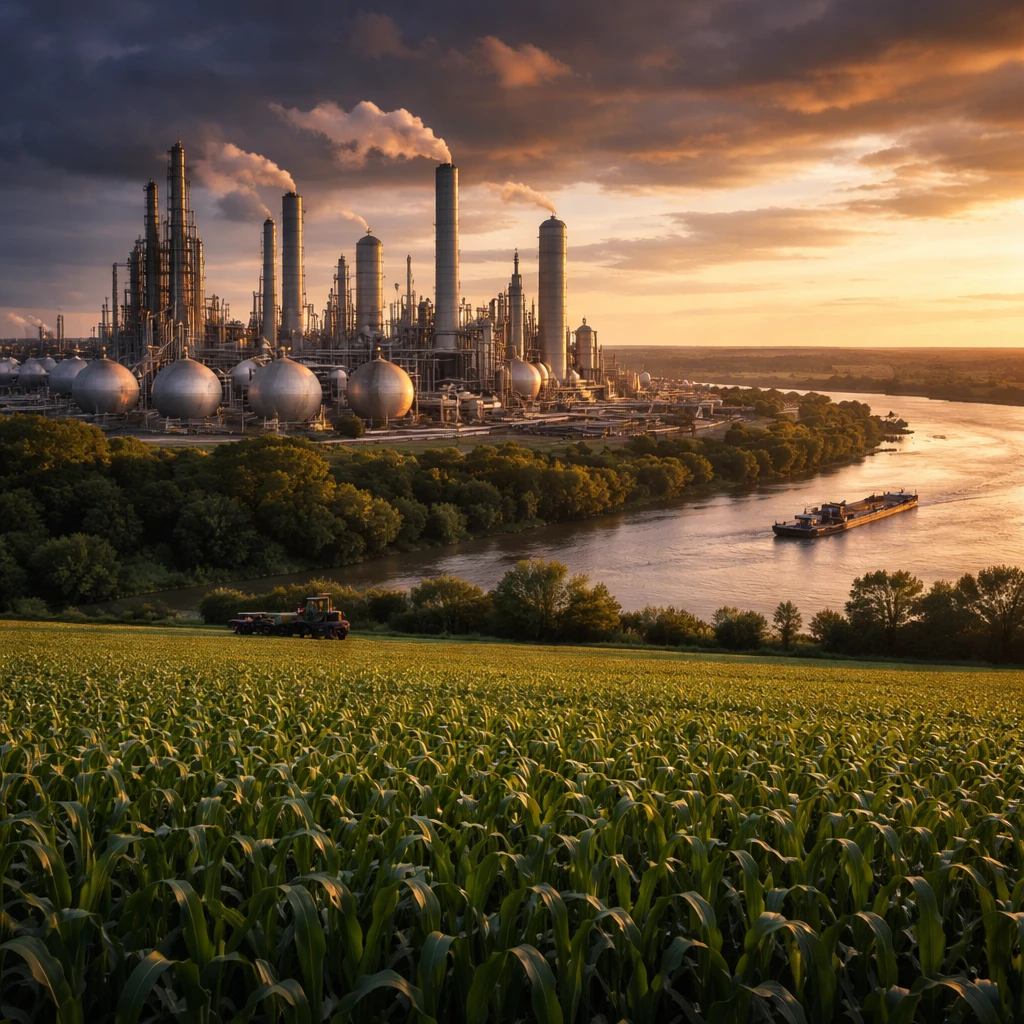
CF Industries manufactures and distributes nitrogen fertilizer products - ammonia, granular urea, urea ammonium nitrate (UAN), ammonium nitrate (AN) and related chemicals (diesel exhaust fluid, nitric acid, urea liquor, aqua ammonia). It is vertically focused on nitrogen, and its U.S. plants give it a structural cost advantage when North American natural gas prices are lower than global peers.
The market cares because nitrogen fertilizer is both cyclical and strategic: crop-planting seasons compress demand into windows, while supply shocks (logistics, regional closures, or export disruptions) can push prices materially higher for months. Recent geopolitical friction has removed a chunk of seaborne fertilizer and feedstock capacity, tightening global balances. When that happens, integrated producers with domestic gas access—like CF—tend to convert a larger share of higher prices into cash flow and free cash flow.
Numbers that matter
| Metric | Value |
|---|---|
| Current price | $124.72 |
| Market cap | $19.16B |
| EPS (trailing) | $9.47 |
| P/E | ~13x |
| Free cash flow (recent) | $1.802B |
| Debt / Equity | 0.66 |
| Return on equity | 30.1% |
| 52-week range | $73.56 - $141.96 |
| Dividend (quarterly) | $0.50 |
How that supports the bull case
With EPS near $9.47 and a P/E roughly 13x at current prices, the market is not assigning an aggressive multiple. If CF sustains even two or three quarters of materially higher realized nitrogen prices, earnings could surprise to the upside, and a one- to two-turn multiple expansion would translate into meaningful share gains. Equally important: CF produces substantial free cash flow ($1.8B most recently), which provides optionality for buybacks, increased dividends, or strategic investments into higher-margin adjacencies like green ammonia or clean energy projects.
Catalysts (what to watch)
- Extended supply disruption in seaborne fertilizer flows - continued bottlenecks keep nitrogen prices elevated and widen spreads for domestic producers.
- U.S. natural gas price stability or declines relative to global feedstock benchmarks - preserves CF's margin advantage versus export-dependent peers.
- Announcements or progress on green ammonia or clean-energy projects that lift forward-margin visibility and investor sentiment.
- Quarterly results showing FCF conversion and earnings above consensus; management commentary on capital return plans.
- Seasonal demand cycles (planting windows) that tighten inventories into pricing windows.
Valuation framing
CF trades around $124.72 with a market cap near $19.16 billion and a P/E in the low-teens. That P/E is modest for a company with a 30% ROE and nearly $1.8 billion of free cash flow. The business is cyclical by nature, so a single-year P/E multiple is noisy; a better frame is enterprise cash yield and expected cyclically-adjusted earnings. An investor paying $124.72 is effectively buying FCF yield north of mid-single digits (given the $1.8B FCF against a $20.39B enterprise value). If fertilizer prices stay elevated, modest multiple expansion to the mid-teens would justify a move to the $150s without demanding heroic execution.
Trade plan (actionable)
Direction: Long
Entry price: 124.72
Target price: 155.00
Stop loss: 110.00
Horizon: long term (180 trading days) - I expect the company to benefit from seasonal demand and any sustained commodity-price tailwinds over the next several quarters. This horizon gives time for earnings to reflect improved pricing and for management to deploy cash to shareholders or strategic projects that lift the multiple.
Execution notes: stagger size if you prefer a better average; use the $110 stop to limit downside risk – $110 is below the 50-day structural support and provides room for intraday volatility tied to commodity headlines.
Risks and counterarguments
CF is not without meaningful risks. Below are principal downside scenarios and a counterargument to the bull case.
- Geopolitical easing: If hostilities around the Strait of Hormuz cool abruptly and shipping routes normalize, seaborne supply and competitor pricing could return quickly, removing price support for nitrogen and compressing CF's margins.
- Natural gas spike: CF's cost advantage is tied to U.S. gas prices. A sustained surge in natural gas would erode margins and could convert strong operating cash flow into weaker earnings.
- Cyclical demand pullback: Agricultural demand is seasonal and tied to planting and farmer economics. If crop prices fall materially or farmer incomes weaken, fertilizer demand could soften.
- Regulatory and ESG execution risk: Ammonia producers face environmental scrutiny and permitting hurdles, which can delay brownfield/greenfield projects and increase compliance costs.
- Operational risk: Plant outages or unplanned maintenance at key facilities would reduce available volumes and could accelerate price declines if markets read the outages as signs of weaker supply-side discipline.
Counterargument: Even with a P/E near 13x, CF is still a cyclical commodity producer. If consensus earnings materially re-rate lower (for instance, if elevated fertilizer prices prove short-lived and 2026 earnings revert toward long-term averages), the stock can give back gains quickly. In that scenario the current valuation looks less like a discount and more like a fair price for volatile earnings. Traders should respect that volatility and use the stop.
What would change my mind
I will revise the bullish view if any of the following occur: a sustained break and close below $110 on deteriorating volume (which would indicate a change in market internals); persistent natural gas price increases that undermine CF's margin profile; or clear evidence of global inventory rebuilding and falling fertilizer spreads over multiple report cycles. Conversely, I would grow more constructive if management sets a higher pace of buybacks, materially increases dividends, or if quarterly results show consistent upside to FCF and earnings guidance.
Bottom line
CF Industries is a pragmatic way to express a constructive view on commodity-driven fertilizer prices and U.S. feedstock advantaged production. The balance sheet and cash flow profile are solid, the current P/E is not demanding, and there are tangible catalysts that could push shares higher over the next 180 trading days. The trade is actionable with a clear entry at $124.72, a $110 stop to limit losses, and a $155 target that assumes modest margin durability and limited multiple expansion. Respect the cyclical nature of the business, stay watchful of natural gas and geopolitical headlines, and size the position to your portfolio risk.