
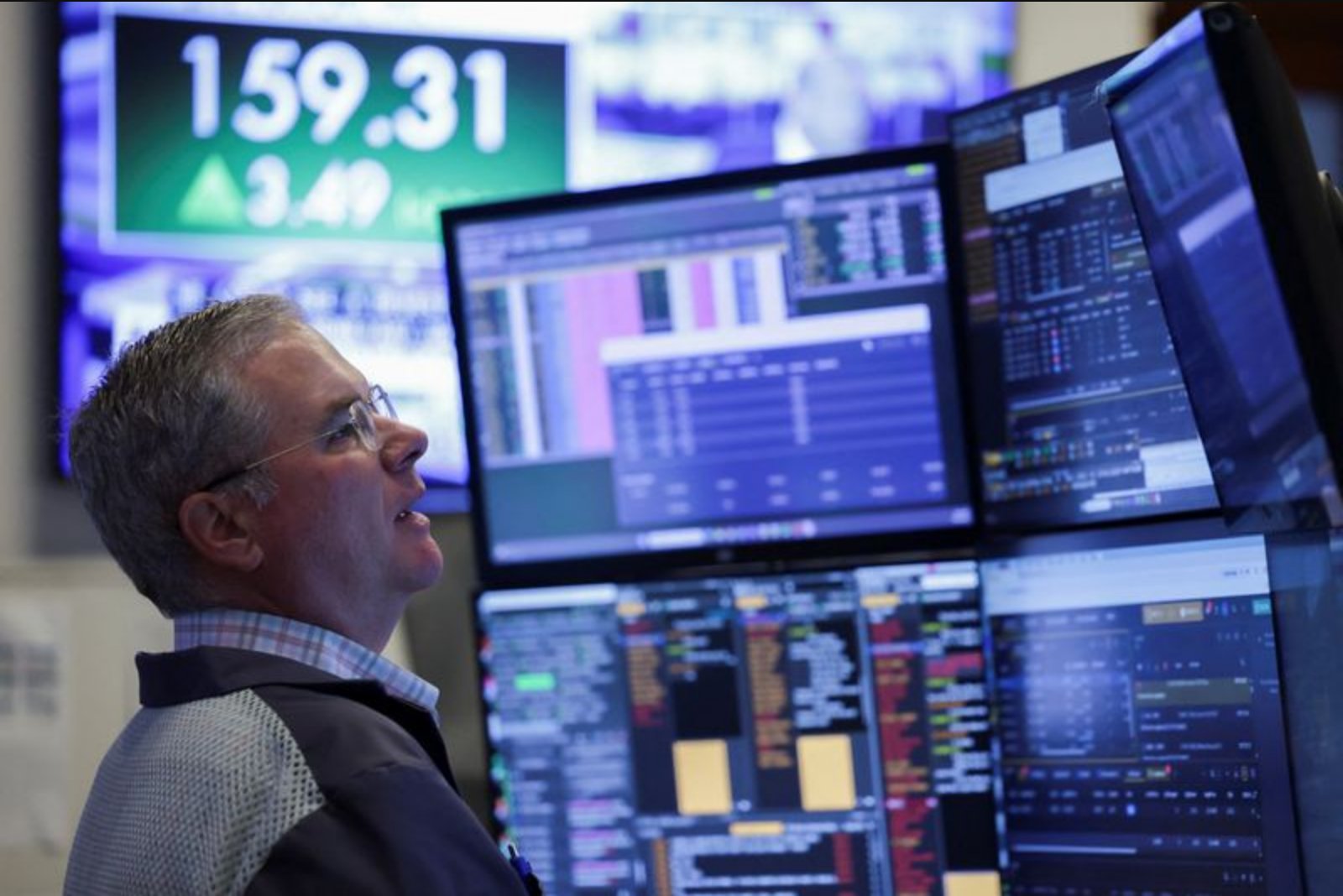
A note from Goldman Sachs published late Thursday reports that systematic hedge funds purchased $86 billion of stock exposure over the most recent five trading sessions.
These funds, often referred to as Commodity Trading Advisors or CTAs, rely on algorithmic and trend-following strategies that extend positions while market signals remain favorable and scale back when those signals dissipate. Goldman Sachs characterized the recent inflows as among "the largest in history" for CTAs.
World equities remained close to record highs on Friday and were positioned for a third straight week of gains. Market participants were awaiting an important weekend viewed as having the potential to clear a path toward a near-term resolution to the war in the Middle East - an outcome investors considered relevant to sentiment and risk appetite.
Key takeaways from Goldman Sachs' calculations include:
- One of the largest trading demands on record for CTAs occurred during the last five sessions.
- Since markets turned higher at the start of April, hedge funds that use systematic approaches have been net buyers of equities, effectively betting on continuing asset price appreciation.
- The speed at which these speculators accumulated global equity positions over the week ranks in the top five buying paces of all time.
- Goldman Sachs estimates these trend-following speculators could extend buying into the next interval, potentially adding up to an additional $70 billion of equity exposure over the next five sessions.
- The last periods in which global CTAs showed comparable buying intensity were August 2024, November 2023 and September 2019.
Goldman Sachs' note underscores the role of algorithm-driven strategies in amplifying market moves while trend signals persist. Because CTAs base decisions on market signals rather than fundamental company-level views, their flows can follow momentum until those signals weaken.
Implications for markets and sectors
The surge in CTA-driven demand has direct implications for equity market liquidity and momentum. Sectors sensitive to broad risk appetites - including cyclicals and financials - are likely to feel amplified moves when trend-following strategies are active. Geopolitical developments tied to the Middle East war are a contemporaneous factor shaping investor positioning and could influence the persistence of these flows.
What remains uncertain
- Whether CTAs will follow through on estimated additional purchases of up to $70 billion over the next five sessions.
- How a potential near-term resolution or further escalation in the Middle East will affect risk appetite and the momentum CTAs are exploiting.
- The durability of current trend signals, given that trend-following strategies typically reverse course once those signals peter out.