
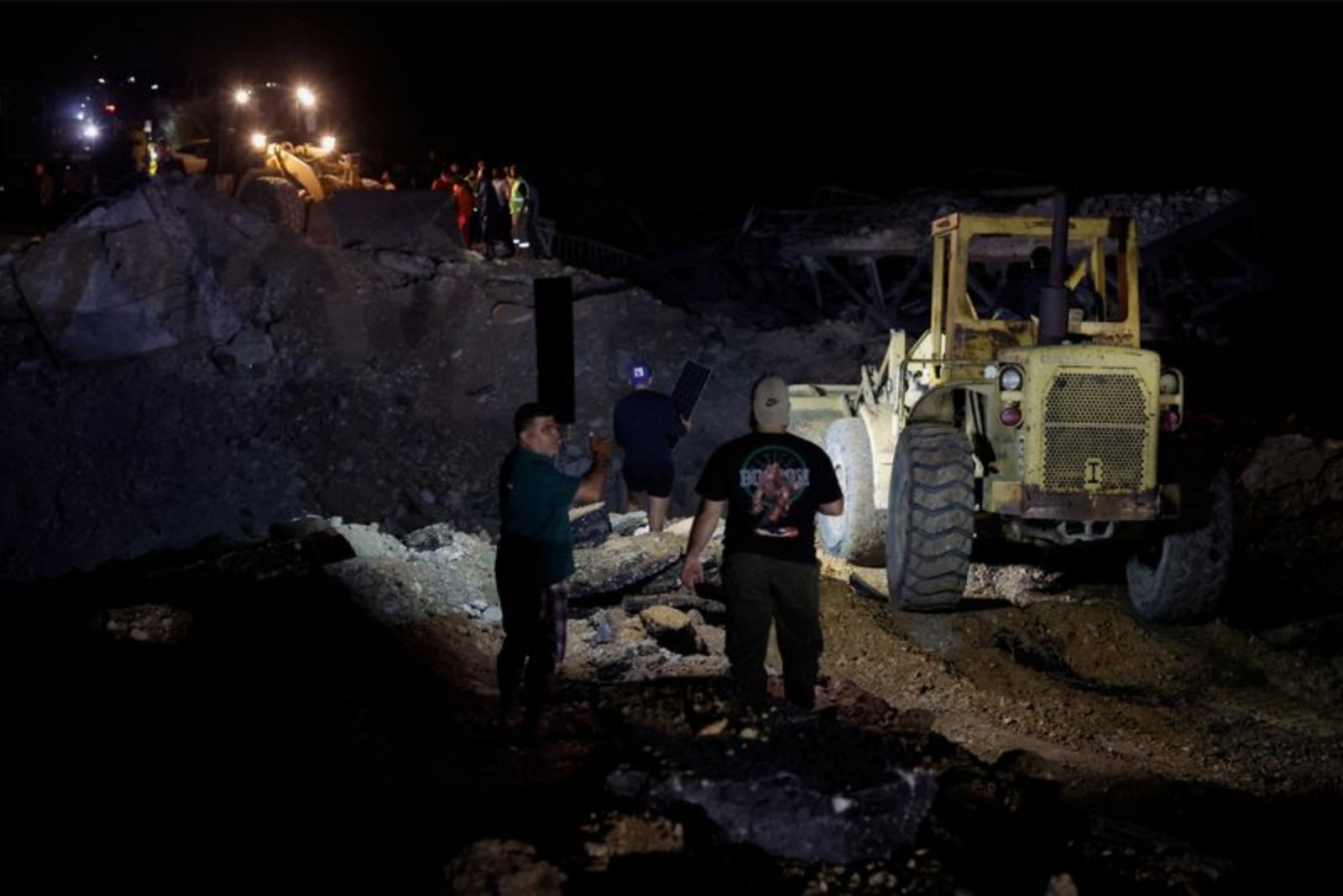
Israel and Lebanon agreed to a U.S.-backed cessation of hostilities that went into effect on April 16 at 2100 GMT for an initial 10-day period, according to a text of the accord released by the State Department. The pause is framed as a window to launch direct peace negotiations between the two states, but it leaves several contentious elements of the conflict unresolved.
Core terms of the agreement
The deal requires Lebanon's government, supported by international assistance, to take "meaningful steps" to stop Hezbollah and other groups from conducting attacks against Israeli targets. It also states that Israel and Lebanon recognise Lebanon's state security forces "as having exclusive responsibility for Lebanon's sovereignty and national defense", a reference to the Lebanese government's long-standing effort to disarm Hezbollah.
On the Israeli side, the agreement explicitly preserves Israel's right "to take all necessary measures in self-defense, at any time, against planned, imminent, or ongoing attacks." Beyond this reservation, the text says "Israel will not carry out any offensive military operations against Lebanese targets, including civilian, military, and other state targets, in the territory of Lebanon by land, air, and sea."
The cessation of hostilities is set for an initial 10-day term and can be extended by mutual consent as talks proceed. The document ties any extension to Lebanon's ability to convincingly demonstrate it can assert its sovereignty, another nod to the focal issue of Hezbollah's arms and autonomy within the country.
What the agreement does not settle
Notably, the text does not require Israel to withdraw from positions it holds in southern Lebanon. Israeli operations in that area have included the destruction of villages and infrastructure and orders for civilians south of the Litani River to evacuate. The region under Israeli control accounts for roughly 8 percent of Lebanese territory.
Israeli defence officials have described troops stationed as far as 10 km inside Lebanon as forming a "buffer zone" designed to prevent Hezbollah attacks, and they view many of the villages in that pocket as Hezbollah strongholds. The ceasefire preserves Israel's right to defensive action but does not include a symmetrical clause granting Lebanon an equivalent right in the same language; that contrasts with a prior 2024 truce that explicitly recalled both sides' inherent right to self-defense in line with international law.
The new agreement also does not set out a requirement that Hezbollah be disarmed. It does, however, specify which six Lebanese state security forces are authorised to carry arms under the terms. Disarmament of Hezbollah has been a central Israeli demand; Hezbollah rejects disarmament, arguing its weapons are part of national defence against Israel.
The document does not address the fate of hundreds of thousands of displaced Lebanese who left areas south of the Litani River, though some have begun returning to their homes. The lack of a clear mechanism in the text for return, reconstruction, or restitution of property leaves significant humanitarian and logistical questions.
Responses from Hezbollah and historical context within the accord
Hezbollah halted fire at Israeli targets once the ceasefire came into effect but did not formally endorse the agreement. The group said any pause must not grant Israel what it called "freedom of movement" within Lebanon and asserted that the continued presence of Israeli forces on Lebanese soil gives people there "the right to resist."
Elements of the current pact echo earlier arrangements. In November 2024, Israel and Lebanon agreed to an open-ended, U.S.-brokered truce that called on Lebanon's government to disarm Hezbollah and limited the right to bear arms to defined state forces. In June 2025 the United States put forward a roadmap to Lebanese officials proposing a full disarmament of Hezbollah in exchange for Israel halting strikes and withdrawing troops from five positions it still occupied in southern Lebanon. Hezbollah and its principal Shi'ite ally, the Amal Movement led by Parliament Speaker Nabih Berri, have insisted that Israel must first withdraw and stop strikes before any discussion over Hezbollah's weapons can proceed.
Despite the 2024 truce, Israel continued to conduct strikes on sites it described as Hezbollah depots and fighters; international medical charity Medecins Sans Frontieres has said such attacks killed 370 people in Lebanon. That continuation of kinetic activity underlaid the need for yet another negotiated pause.
Wider regional parallels
The new Lebanon agreement follows a pattern of U.S.-brokered ceasefires in the region. In Gaza, Israel and Hamas reached a U.S.-brokered deal last October to halt fighting and allow aid deliveries. A U.S. plan tied disarmament of Hamas to Israeli troop withdrawals and reconstruction of Gaza, but many elements of that plan have so far not been realised. Israel has continued operations in Gaza since that ceasefire, with reports that more than 750 Palestinians have been killed since the pause. Israeli officials argue ongoing strikes are aimed at preventing attacks by Hamas and other factions, while providing limited public evidence of specific plots. At least four Israeli soldiers have been killed by Gaza militants since October.
Implementation questions remain
The new 10-day cessation is designed to open space for talks, but it does not resolve the two central cleavages: the location and status of Israeli forces inside Lebanon, and the presence of Hezbollah's armed capabilities. Both items are baked into the negotiating preconditions the agreement references, but the document leaves sequencing and enforcement mechanisms unclear. How Lebanon will demonstrate the "ability to assert its sovereignty" and what international support will look like are not spelled out in the text. The asymmetry in the wording about rights of self-defense also leaves room for differing interpretations of permitted military activity.
This agreement provides a temporary halt to large-scale exchanges, but without details on withdrawal, disarmament, and protection for civilians it may serve more as a framework to begin talks than as a definitive resolution of the conflict.