
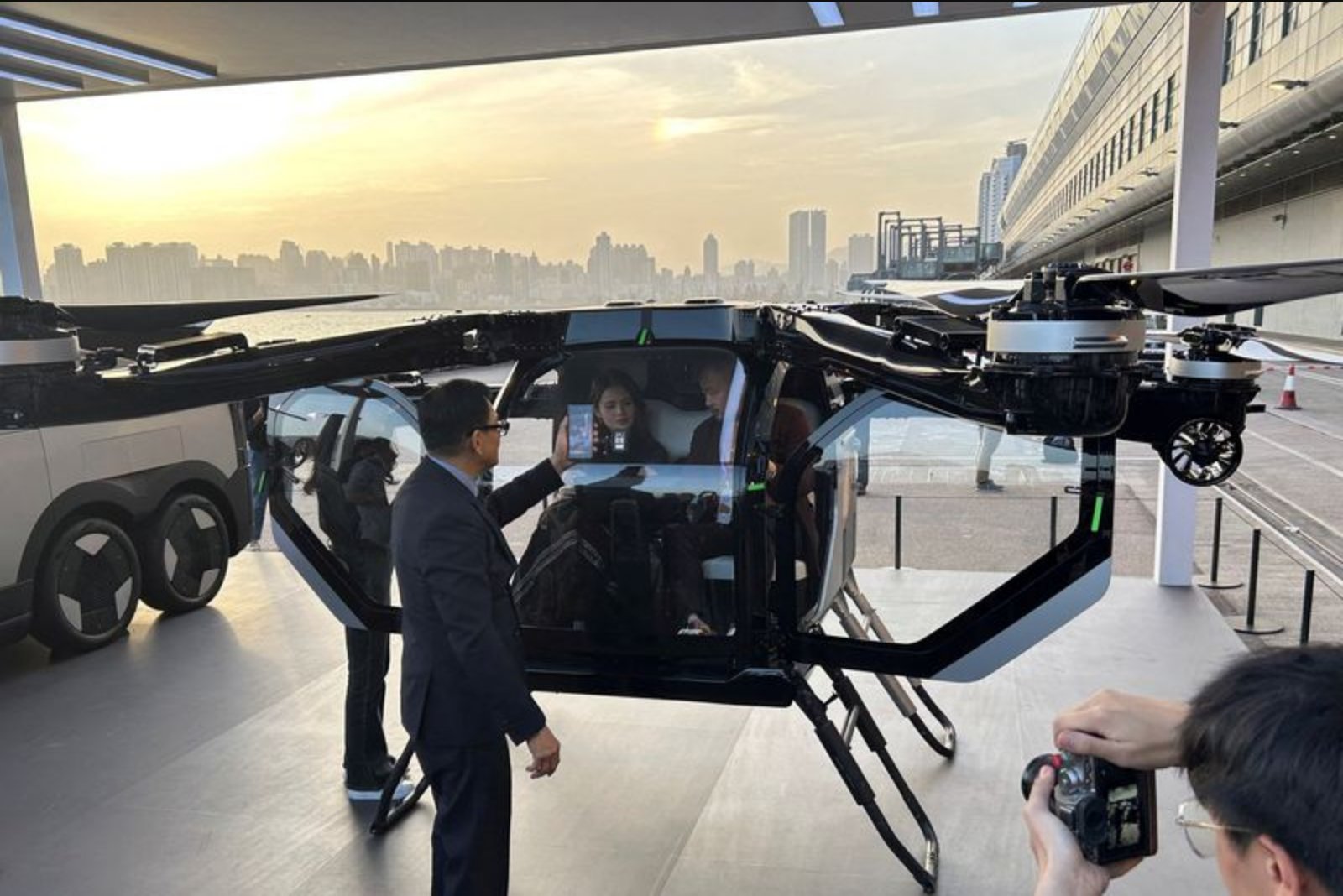
In Beijing on April 23, Xpeng outlined timelines for several next-generation products and reiterated its push into international markets and strategic partnerships. Company president Brian Gu said the firm expects to enter large-scale production of its so-called "flying" cars next year and to begin manufacturing humanoid robots in the fourth quarter of 2026.
Gu said Xpeng has secured more than 7,000 orders for its flying vehicles, with the majority of those reservations coming from customers inside China. The company is actively pursuing approval from China's aviation authorities as part of its path to commercial deployments.
On the robotics front, Gu described the initial applications for Xpeng's humanoid machines as front-line customer-facing roles - reception and sales positions where robots interact directly with consumers. He projected that over a longer horizon - within 10 to 20 years - the humanoid robotics business could eclipse the automotive division in scale, as a broader array of use cases emerges for such machines in daily life.
Gu also provided a timeline for autonomous vehicle services. He said robotaxi testing will begin this year in Guangzhou, in southern China, and characterized 2027 as a pivotal year for global testing with partners. Over the next 12 to 18 months, the company expects to produce anywhere from hundreds to thousands of robotaxis as it scales testing and deployment efforts.
Partnerships form a central strand of Xpeng's strategy. Gu pointed to what he called "tremendous potential" for deeper cooperation with Volkswagen, noting that Volkswagen last month began mass production of its first electric vehicle model developed jointly with Xpeng. He said Xpeng remains open to working with a variety of automakers and plans to be nimble in forming region-specific alliances.
International expansion is already under way. Gu said Xpeng now operates in about 60 countries beyond China. He reported that, in the prior year, roughly 10% of the company’s sales volume and about 15% of revenue were generated from overseas markets. Looking ahead, Gu said he expects the share of revenue coming from outside China to rise substantially, projecting that in the next five to 10 years more than 50% of Xpeng’s revenue should originate from international operations.
The company’s product roadmap combines advanced air-capable vehicles, humanoid robotics and autonomous ground mobility, and its stated timelines place intensive testing and initial production runs over the next two to three years. Xpeng’s commentary emphasized regulatory clearance for aviation-related products, the scale-up of robotaxi production, and the cultivation of partnerships as key enablers of its planned expansion.