
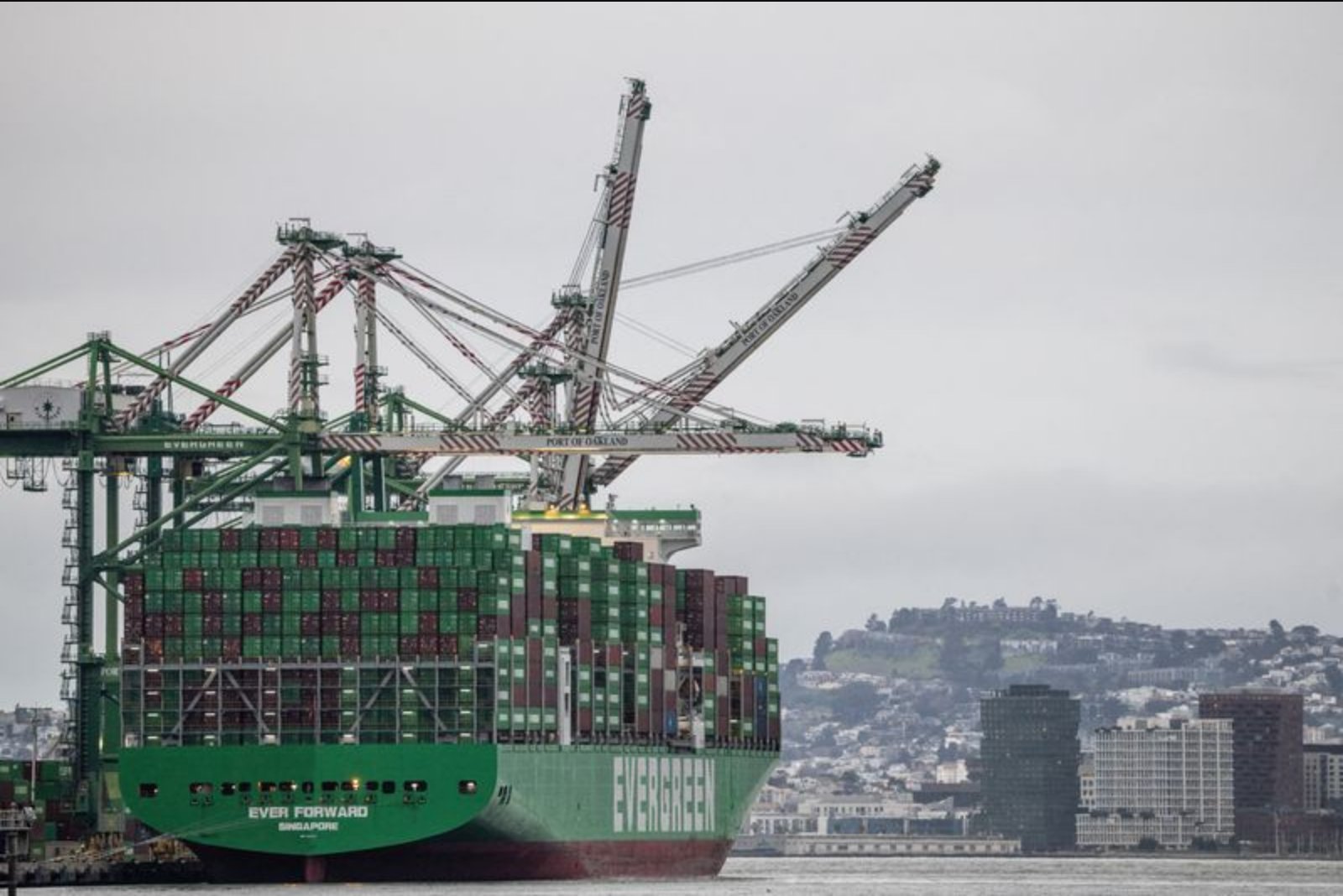
The U.S. government is opening a new portal designed to reimburse importers for tariffs the Supreme Court last month struck down, but businesses preparing claims say a smooth start is not guaranteed. U.S. Customs and Border Protection said it completed development of the initial phase of the refund system, called CAPE, which will centralize payments so eligible importers receive a single electronic refund - with interest where applicable - rather than a refund processed entry by entry.
Officials said the system is intended to streamline what critics of the tariff program had pressed for, after a year in which an expanding schedule of levies upended global supply chain planning and forced firms to decide who ultimately bore the added costs. The Supreme Court in February rejected the administration’s use of a law intended for national emergencies to justify the tariffs, setting in motion efforts by importers to recoup duties paid.
Customs reported that as of April 9, a total of 56,497 importers had completed the steps required to be eligible for electronic refunds - representing $127 billion in claims, or more than three-quarters of the roughly $166 billion in tariffs eligible to be refunded. Court filings show that more than 330,000 importers paid the contested tariffs on approximately 53 million shipments.
Importers ready but cautious
Several company executives Reuters contacted described a mix of relief and apprehension. Jay Foreman, CEO of toymaker Basic Fun - the company behind brands such as Tonka, Care Bears and K'Nex - said he is "locked and loaded" for the portal’s opening on Monday but warned that many things could still go wrong. "You have to be worried about what they could possibly do to jam things up," he said. Basic Fun is pursuing an estimated $7 million in refunds.
Matt Field, chief financial officer of heavy truck manufacturer Oshkosh, said his company does not disclose the exact amount it paid in what had been called emergency tariffs, but that the sum was "impactful." He said Oshkosh plans to file for a refund when the portal is available but may delay for a short time to allow the system to stabilize.
Executives at other firms raised similar concerns about start-up reliability. With tens of thousands of importers potentially filing claims at once, some worry the portal could experience heavy traffic and technical problems. "It’s not like Taylor Swift tickets going on sale," Foreman said, noting the danger a rush could pose to the portal’s capacity. "With so many companies looking for a refund at the same time, there’s no telling if it crashes the portal."
Practical hurdles in the registration process
Beyond load concerns, companies described administrative frictions. Jason Cheung, CEO of Huntar Co., a U.S.-based toy firm with manufacturing in China, said the portal’s registration requires entering bank account information despite the government already having that data for customs payments. Cheung also described how minor naming differences held up his registration - it took five attempts because of small variations such as "company" versus "co."
Still, Cheung said his firm is accustomed to bureaucratic forms and expects to receive a refund. "It’ll be nice to get that money back," he said, and added that he has "no concerns" about ultimately securing a refund after completing registration.
Rick Woldenberg, chief executive of educational toy maker Learning Resources - one of the plaintiffs in the court action that led to the tariffs’ reversal - acknowledged that "there are wrinkles," but said he is "pleased to see the government do the right thing." Learning Resources is seeking more than $10 million in refunds.
Cross-border implications and system testing
The refund portal reaches beyond U.S. borders because refunds can be claimed only by the legal entity that paid the tariffs - the importer of record. German fan manufacturer ebm-papst told officials it has already registered, but cautioned that because CAPE is a newly built functionality, it is unclear how well it will handle bulk processing of many claims at once.
Customs has a potential legal backstop to consider. The agency has until early May to appeal a Court of International Trade order that required creation of the tariff refund portal. Importers and trade groups have noted that a late appeal or other legal maneuver by the administration could slow the refund timetable or affect its mechanics.
Who ultimately benefits
One of the thornier issues importers face is determining how to allocate any refunded amounts. Austin Ramirez, chief executive of Husco International, a Wisconsin-based supplier of hydraulic systems used across automotive and off-road machinery, said the immediate challenge after securing reimbursements will be deciding whether to retain refunded amounts or pass them on to customers.
"The real complexity here is how to deal with my customers, assuming we get the tariffs back," Ramirez said. "The question is what we do with it, do we keep it, pass it on to them?" He emphasized that arrangements may be unique to each customer relationship.
Politically, the choice of recipient has attracted attention. The refund system is set up to return funds to the importer of record - not to end consumers who may have paid higher prices while tariffs were in place. At a congressional budget hearing, U.S. Trade Representative Jamieson Greer, who was involved in designing the tariff program the court invalidated and in crafting replacement levies, said the attorneys general for Democratic-led states had asked that the money go back to companies. "The Democrat attorneys general asked for this and they’re getting what they asked for," Greer said, reflecting the administration’s position on the destination of refunds.
Outlook and remaining unknowns
Customs’ consolidation of refunds into CAPE aims to simplify the return process for importers, and a substantial share of eligible claimants have already registered. Nevertheless, importers interviewed stressed that the portal’s durability, the administrative exactness required for registration, and potential pending legal actions create substantial uncertainty about the timing and completeness of reimbursements.
For companies across manufacturing and retail sectors that experienced higher input and retail prices because of the tariffs, the portal’s launch is an important step toward recouping those costs. But the fact that refunds will go to importers of record, combined with variable customer contracts, means that whether consumers ultimately benefit remains an open question divergent across firms and customer relationships.
Impacted sectors
- Manufacturing - heavy trucks, components, toys and industrial equipment
- Retail - consumer-facing toy and educational product sellers
- Supply chain and logistics - importers and customs brokers handling claims