
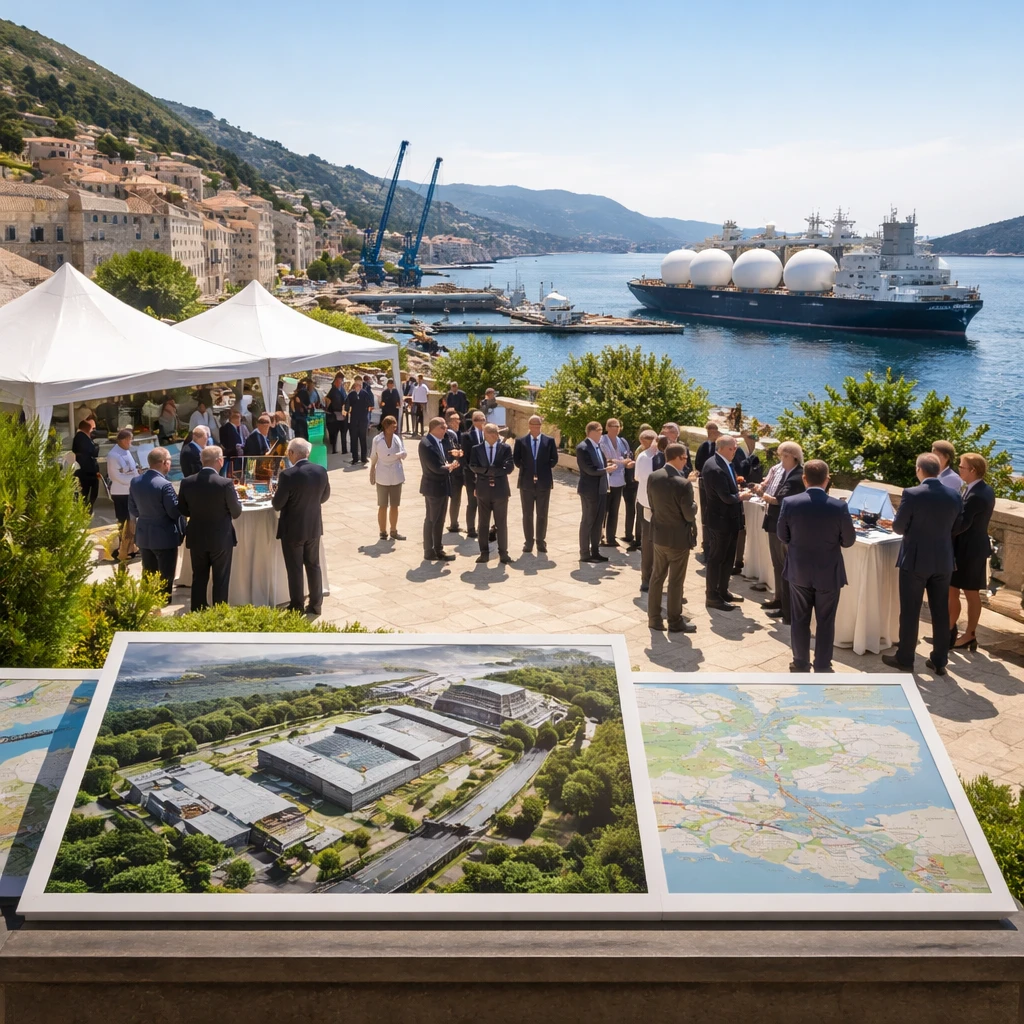
DUBROVNIK, Croatia, April 28 - U.S. representatives and American firms signed several contracts worth billions of dollars with Balkan nations on Tuesday, expanding Washington's footprint in regional energy markets and supporting AI infrastructure initiatives.
Speaking at the Three Seas Initiative business forum in Dubrovnik, U.S. Energy Secretary Chris Wright framed the events as part of a broader strategic opening. "President Trump is opening a new era of cooperation with southern, and central and eastern Europe," Wright said to reporters.
In Tirana, an accord was formalised when U.S. ambassador to Greece Kimberly Guilfoyle signed a $6 billion, 20-year agreement between Venture Global and Aktor LNG USA to deliver liquefied natural gas to Albania. Guilfoyle described the pact on X as strengthening both "energy security - and national security - across the entire region." The agreement follows a long-term deal signed last year to export U.S. LNG to Greece and is presented as a step toward diversifying supplies away from Russian gas.
Wright also confirmed U.S. endorsement for a Bosnia and Herzegovina-Croatia pipeline agreement that would transport U.S. natural gas from an LNG terminal on the Croatian island of Krk to Bosnia. The pipeline project is planned to be financed and led by U.S. company AAFS Infrastructure and Energy LLC, which is run by Jesse Binnall and Joseph Flynn. AAFS has stated it would invest approximately 1.5 billion euros in the venture.
Croatia and the United States additionally issued a joint statement indicating cooperation in civilian nuclear energy, while separate commercial arrangements targeted AI and data infrastructure.
Croatian engineering firm Rade Koncar and U.S.-based investment group Pantheon Atlas LLC signed a letter of intent to take part in an AI development and data centre project in central Croatia that is estimated at 50 billion euros. Project plans envisage a facility with 1 gigawatt of power capacity dedicated to AI computing and cloud services, with tentative construction start in 2027 and operations projected by 2029. Those timelines and the expected power capacity are conditional on securing the necessary permits and on upgrades to the electricity grid.
The agreements collectively underscore an intensifying U.S. role in Balkan energy supply chains and an interest in enabling large-scale AI infrastructure, while several of the proposed projects remain dependent on regulatory approvals, financing arrangements and grid improvements.