
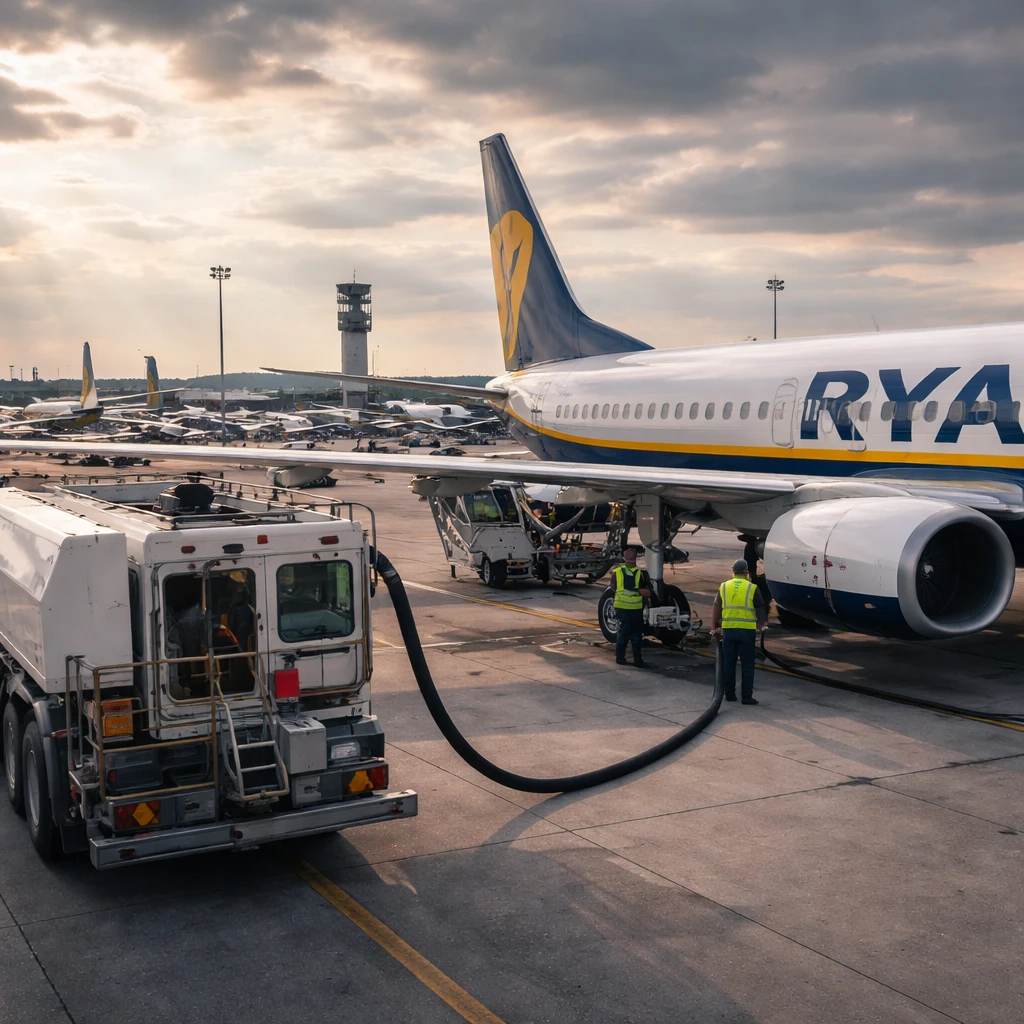
Ryanair's chief executive, Michael O'Leary, told delegates at the Norges Bank Investment Management Conference in Oslo that continued high jet fuel costs could precipitate failures across European airlines if prices remain elevated over the summer months.
O'Leary said his carrier has protected around 80% of its fuel bill through hedging arrangements. He pointed to a sharp move in Jet A-1 benchmark pricing since late February, saying the fuel traded at about $80 per barrel in March but has risen to roughly $150 per barrel since the Strait of Hormuz was blockaded after the outbreak of the Middle East war on Feb. 28.
Speaking to CNBC's Ben Boulos, O'Leary warned: "If pricing stays higher for longer this summer, we think a number of our airline competitors in Europe are going to face real financial difficulties." He added that a sustained price level near $150 per barrel through July, August and September would likely bring about airline failures across the region.
O'Leary framed that potential industry consolidation as something that could prove advantageous to Ryanair over the medium term. He described his airline as the most hedged among European carriers and said the company can offer customers protection against fare increases and fuel surcharges regardless of how supply conditions evolve during the peak travel season.
On operational supply, O'Leary noted there had been worries about fuel availability in the United Kingdom two to three weeks prior to his remarks, but he said that situation now appears to have improved.
Market reference: RYAAY
The comments underscore the sensitivity of the airline sector to input-cost shocks, particularly sudden spikes in jet fuel. Airlines that lack extensive hedging or sufficient balance-sheet resilience may be more exposed if high prices persist through peak summer months.