
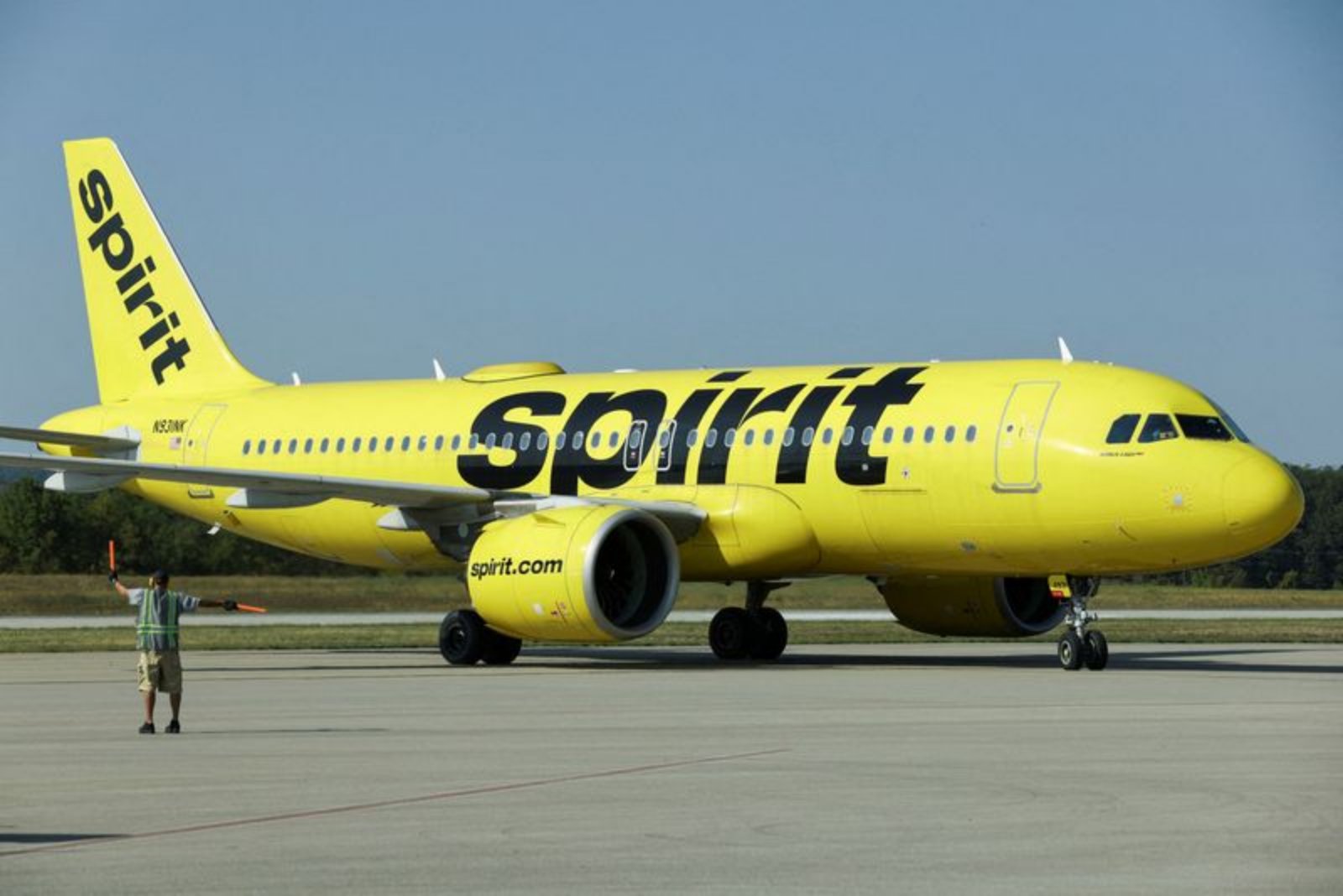
Spirit Airlines on Friday requested hundreds of millions of dollars in emergency aid from the Trump administration to help offset sharply higher fuel costs and to avert a possible liquidation, according to people familiar with the matter.
Government-level attention to the finances of smaller carriers is accelerating. Executives from several low-cost carriers are expected to meet with Transportation Secretary Sean Duffy early next week, the Department of Transportation said it had requested the meeting to review the financial health of the nation's smaller airlines.
Spirit did not immediately respond to a request for comment.
The airline's parent, Spirit Aviation Holdings, is in the midst of an intensive restructuring program designed to reduce expenses and shore up its balance sheet after the carrier filed for bankruptcy protection twice within a single year. Spirit completed a second Chapter 11 filing in August 2025 when it operated a fleet of 214 aircraft. The airline had emerged from its first bankruptcy in March of the previous year.
As part of its restructuring plan, Spirit announced last month that it intends to cut its fleet to between 76 and 80 aircraft by the third quarter of 2026. The downsized fleet will be concentrated mainly on Airbus A320 and A321ceo jets, according to the company's plan.
The airline industry at large has been jolted by rising jet fuel costs tied to the conflict in the Middle East. Those higher fuel prices have forced carriers to lift fares and to revise their financial outlooks, pressuring already constrained margins and complicating recovery plans for carriers that are restructuring.
Context and implications
- Spirit's request for emergency funding underscores the acute impact of elevated fuel prices on carriers with narrow margins and heavy exposure to unit-cost volatility.
- The DOT-led meeting with smaller carriers and the Transportation Secretary signals a broader regulatory review of sector stability amid an adverse cost environment.
- Large fleet reductions and focused aircraft types are central to Spirit Aviation Holdings' strategy to cut costs and rebuild finances following two bankruptcy proceedings within a year.
What remains unclear
- The exact amount being sought and the form any potential federal assistance might take have not been disclosed by the company or officials.
- The near-term operational plan for the airline as it transitions toward a much smaller fleet has not been fully detailed beyond the target aircraft types and timing through Q3 2026.