
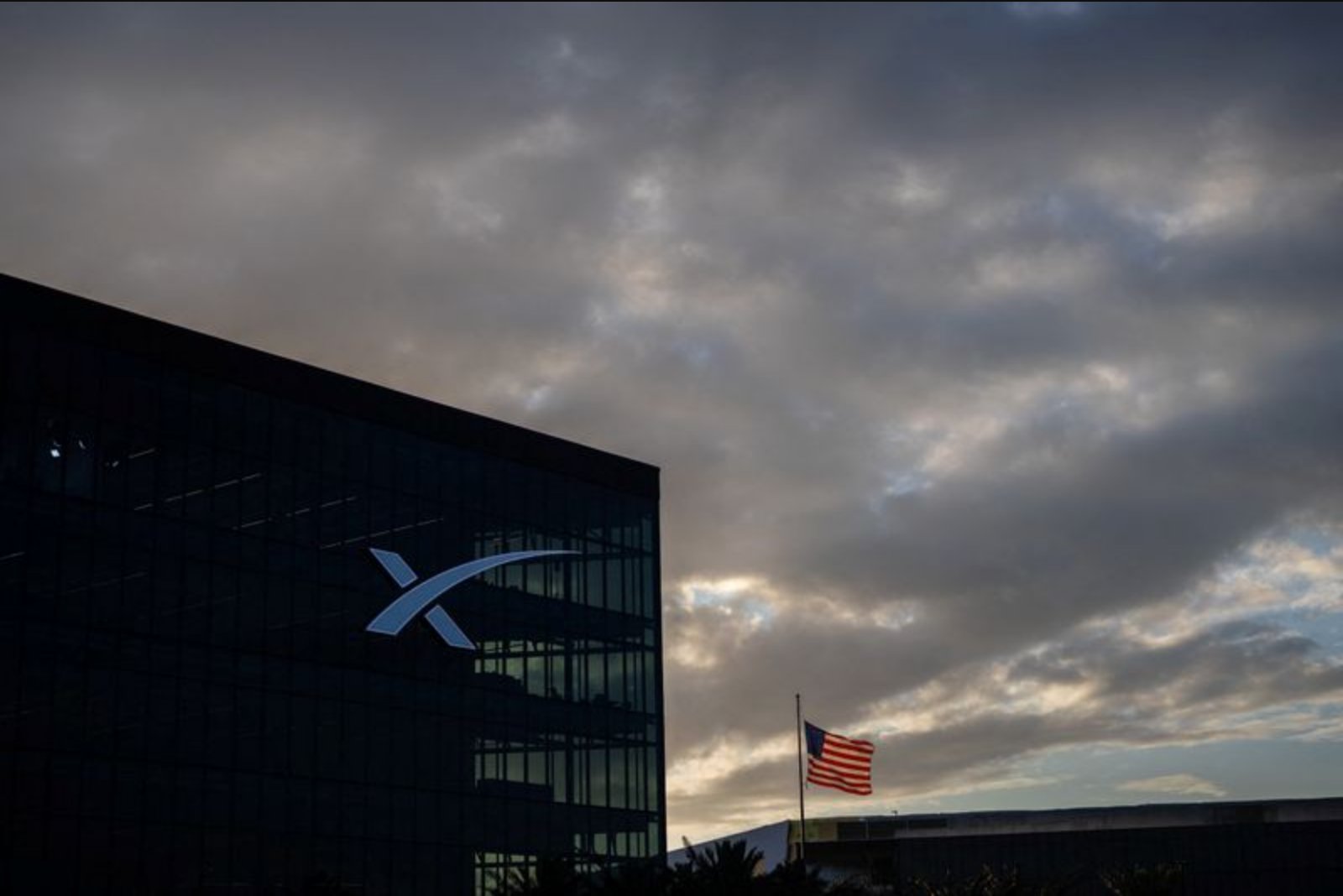
Summary: SpaceX has disclosed in its S-1 registration that it plans to spend heavily to develop artificial intelligence capabilities and related infrastructure, including an item described as "manufacturing our own GPUs." The company also told prospective investors it does not maintain long-term contracts with many of its direct chip suppliers and expects to rely on third-party compute hardware, a dynamic that could constrain growth if Terafab and other efforts do not materialize as expected.
Capital plans and investor warning
In documents filed as part of preparations for an initial public offering estimated at $1.75 trillion and expected this summer, SpaceX flagged substantial capital expenditures tied to AI and other technology development. Among the line items cited in excerpts of the S-1 registration reviewed by Reuters is a reference to "manufacturing our own GPUs." The filing is part of the standard disclosure companies make to the U.S. Securities and Exchange Commission before going public.
SpaceX did not immediately respond to requests for comment on the filing, and the S-1 excerpts did not quantify how large the GPU-related spending might be. The disclosure adds to earlier public comments and planning around the Terafab complex, an advanced chip manufacturing project being developed in partnership among SpaceX, Musk-affiliated unit xAI and Tesla.
Terafab and the scope of chip ambitions
The Terafab initiative has been described by company officials as a broad manufacturing effort intended to supply chips for cars, humanoid robots and space-based data centers. However, until now many specifics - including whether the plant would produce GPUs or other AI processors - were not clear from public statements. SpaceX's S-1 reiterates that the company may undertake internal GPU production, though it does not detail where production would occur, which exact processor types would be made, or a timeline for bringing manufacturing online.
It also remains unclear from the filing which companies will operate key fabrication technologies inside any Terafab facility - whether the Terafab partners themselves would perform those steps or whether a partner such as Intel would provide fabrication services. In discussions with Tesla analysts, Elon Musk indicated that by the time Terafab scales, Intel's next-generation 14A manufacturing process "will be probably fairly mature or ready for prime time" and "seems like the right move," though the S-1 does not specify whether Terafab would use that node.
Supply chain and contract exposure
SpaceX's S-1 cautioned investors about its chip supply and contracting posture. "We do not have long-term contracts with many of our direct chip suppliers," the filing states, and adds: "We expect to continue sourcing a significant portion of our compute hardware from third-party suppliers, and there can be no assurance that we will be able to achieve our objectives with respect to TERAFAB within the expected timeframes, or at all."
Those statements highlight an acknowledged vulnerability: even as SpaceX contemplates internalizing some GPU manufacturing, it remains dependent on external suppliers for at least a material portion of its compute needs. That dependency carries both timing and cost uncertainty for projects that will be compute-intensive.
Technical challenges of GPU production
The S-1 and related public commentary underscore the difficulty of producing the kinds of processors that power modern AI workloads. Industry leaders in GPU architecture, such as Nvidia, have historically concentrated on design while outsourcing complex fabrication steps to specialist foundries. Those foundries, including Taiwan Semiconductor Manufacturing Co., have invested heavily over many years to develop the advanced manufacturing processes and operational experience needed to produce leading-edge chips.
Modern chip manufacturing involves a division of labor across firms and processes - fabricating, packaging and testing are often handled by different specialized companies. Musk has said the Terafab concept envisions managing each element of chip production, including design, within the same complex. The S-1 does not detail how the company plans to assemble the required capabilities or the timeline for integrating those functions.
Context and unanswered questions
SpaceX's filing provides direct disclosures about its capital intentions and supply relationships but leaves several material questions unanswered in the public record. The exact scale of capital investment required for any GPU manufacturing is not disclosed. The S-1 does not specify when production would begin, which exact chip types would be produced under the label "GPUs," or which outside partners will perform fabrication steps if any. The company also makes clear that its continued reliance on third-party compute hardware could persist even as Terafab is pursued.
Key points
- SpaceX's S-1 lists "manufacturing our own GPUs" among significant capital expenditures tied to its AI and technology plans ahead of an expected $1.75 trillion IPO this summer.
- The S-1 warns the company lacks long-term contracts with many direct chip suppliers and expects to continue sourcing substantial compute hardware from third parties, introducing timing and supply risk for growth initiatives.
- Terafab is planned as a comprehensive chip production complex involving SpaceX, xAI and Tesla, but the filing leaves open which firms or processes will handle advanced fabrication and when Terafab objectives will be met.
Risks and uncertainties
- Supply risk - SpaceX states it does not have long-term contracts with many direct chip suppliers and anticipates ongoing sourcing from third-party compute hardware vendors, which could constrain its ability to scale.
- Execution risk - The company acknowledges there can be "no assurance" it will achieve TERAFAB objectives within expected timeframes, or at all, creating uncertainty around capital deployment and operational plans.
- Manufacturing complexity - Advanced chip fabrication requires specialized processes and experience; the filing does not specify how SpaceX would replicate or procure those capabilities, leaving open technical and operational challenges.
Conclusion
SpaceX's disclosure in its S-1 confirms the company is contemplating a significant move into AI hardware production, explicitly referencing GPU manufacturing among planned capital expenditures. At the same time, the filing makes clear the company remains exposed to third-party compute suppliers and faces uncertainty in executing the Terafab plan and securing the chip supply needed to support growth.