
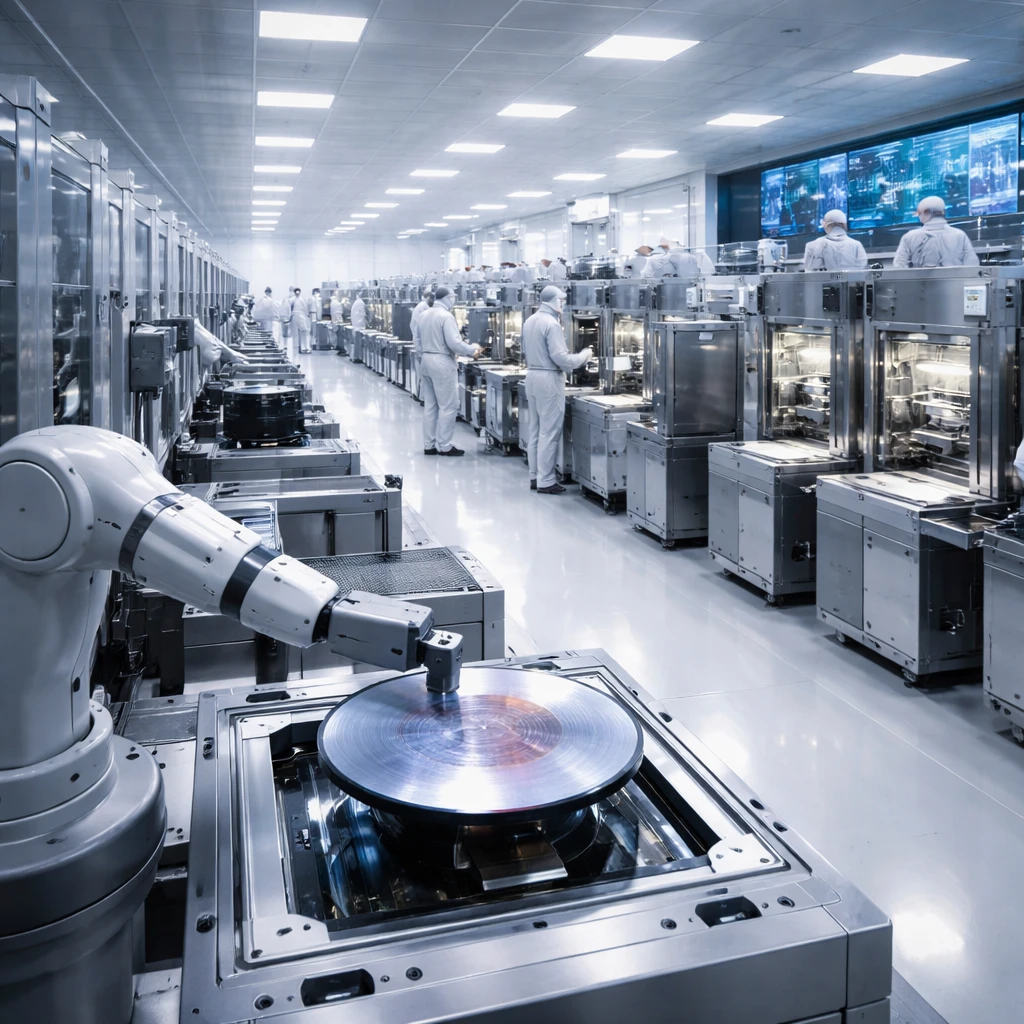
Elon Musk said on Wednesday that Terafab, the semiconductor joint venture he unveiled this year with SpaceX, Tesla and xAI, plans to rely on Intel's 14A manufacturing process to produce chips. The remark came during Tesla's post-earnings analyst call, where Musk addressed a question about technology choices for the new facility.
Musk described Intel's 14A node as "not yet totally complete," adding that it will likely be "probably fairly mature or ready for prime time" by the time Terafab "scales up." He did not attach a specific timeline to that projection, leaving the schedule for production ramp and commercial availability undefined.
Investors responded to the update: Intel Corporation (NASDAQ:INTC) shares rose 2.5% in after-hours trading. The company had earlier signaled participation in Terafab when it said in April that it would join the venture to provide chipmaking technology, although the scope and mechanics of Intel's involvement were not disclosed.
Terafab was announced as a fully integrated semiconductor manufacturing operation intended to produce chips tailored for artificial intelligence workloads. Musk has set an ambitious target for the project - to deliver 1 terawatt per year of compute capacity - a figure he noted is well beyond current global chipmaking capacity, including that of the world's largest contract manufacturer, Taiwan Semiconductor Manufacturing Co (NYSE:TSM).
Intel's 14A process is positioned by the company as a technology aimed at competing with TSMC's offerings, but Intel has not released additional technical details in public commentary referenced during the call. That leaves industry observers and participants without fuller clarity on performance characteristics or deployment timing for the 14A node.
While the comments provide a clear design preference for Terafab's fabrication process, several material elements are still open: the readiness of the 14A node, a firm timetable for scaling the facility, and the exact nature of Intel's support. All of these factors will affect how and when Terafab contributes to AI-focused chip supply in the United States.