
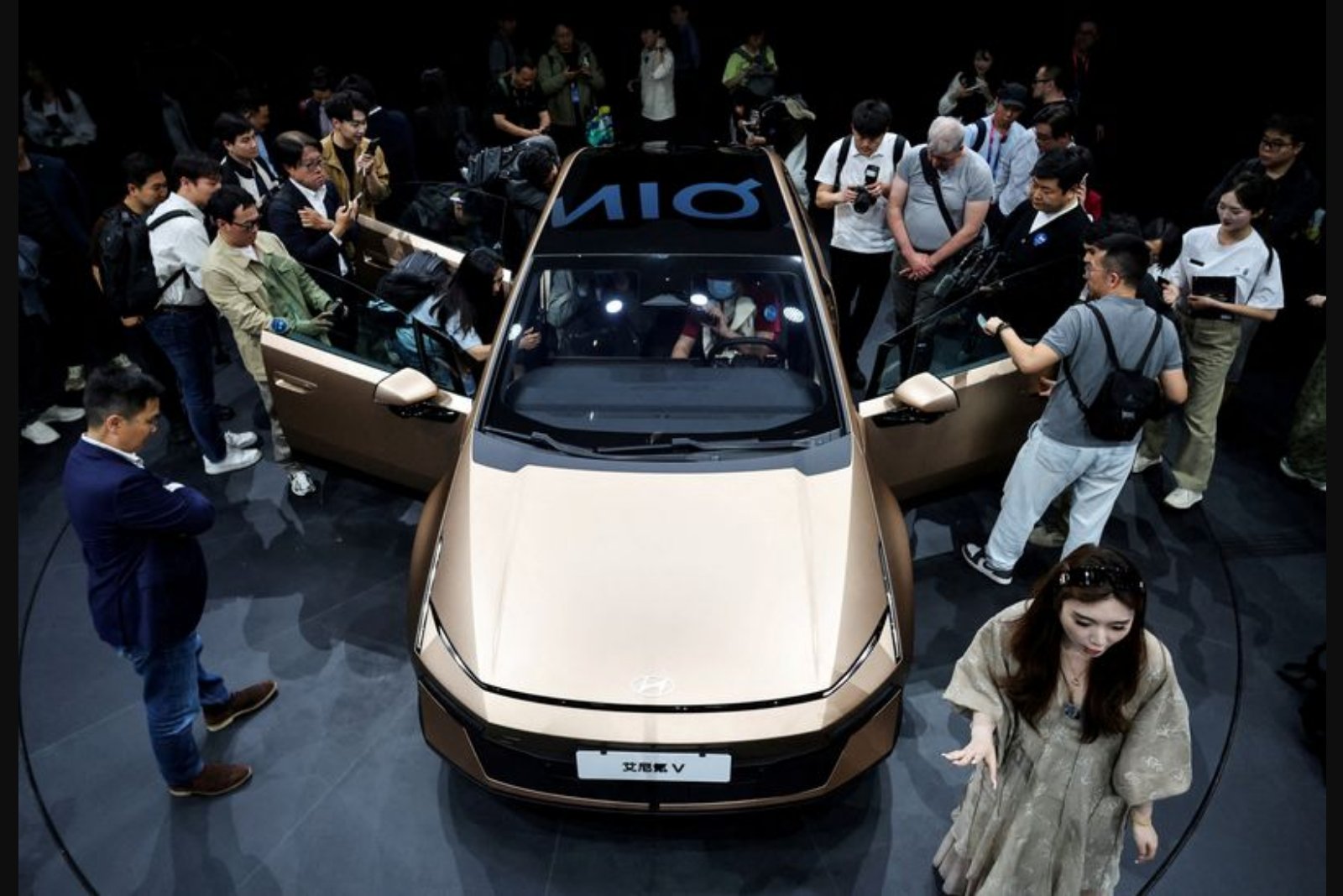
Hyundai Motor said it will introduce 20 new models in China across the next five years as part of a concerted effort to regain momentum in the country’s competitive auto market. The plan, developed together with joint venture partner Beijing Automotive Group, represents what the company called its most ambitious product expansion in China.
At the Beijing auto show, Hyundai revealed a China-specific, all-electric IONIQ V that incorporates autonomous driving technology supplied by Chinese developer Momenta. The company also announced plans to add another sport utility vehicle model in the first half of next year.
Hyundai and its affiliate Kia Corp are together the world’s third-largest automaking group by sales, but the South Korean company has faced a prolonged period of weak market share in China amid intense competition from domestic electric-vehicle manufacturers. The new lineup and local partnerships form the core of Hyundai’s stated strategy to improve its position.
Hyundai has set an annual sales objective for China of 500,000 vehicles by 2030 - a figure that includes exports and would represent more than a doubling of its current volume in the market. Company leadership framed exports from China as an objective conditional on first achieving strong performance domestically.
"We want to really export to other markets from China, but we want to be successful here first," CEO Jose Munoz told media at the event, listing Britain, Europe and the Middle East as potential destinations for the China-made cars. "We don’t want China to be just an export hub, but also an export hub."
As part of localisation efforts, Hyundai said it was strengthening cooperation with Chinese autonomous driving developer Momenta and battery maker CATL. Company officials in Beijing indicated the expanded partnerships mirror moves by other foreign automakers that have sought local technology and supply agreements to better compete in China.
Hyundai also signalled a customer targeting strategy aimed at younger Chinese buyers, with lineups to include plug-in hybrid vehicles intended to differentiate the brand from other foreign carmakers that are pursuing local collaborations.
Separately, the published coverage included a trading reference to the equity 005380 in an adjacent market commentary on the reporting page.
The company’s announcement combines a product-heavy cadence of launches with deeper local ties to technology and battery suppliers, and sets an explicit sales milestone tied to both domestic recovery and future export potential. Execution of the program will depend on consumer acceptance, the performance of local partners, and the competitive dynamics with domestic EV makers mentioned by the company.