
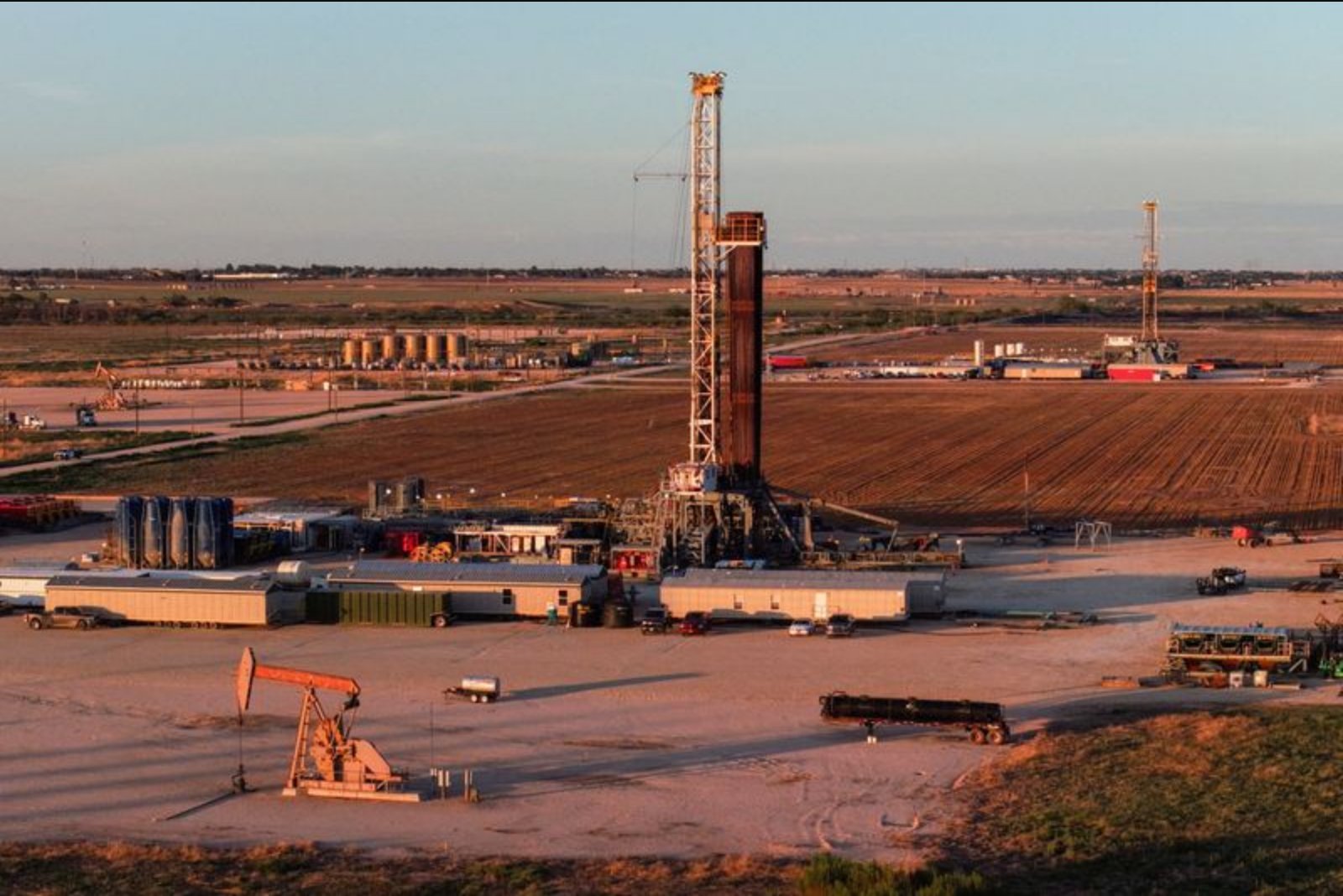
Major oilfield services providers SLB and Baker Hughes on Friday told investors they anticipate a rise in spending on oil exploration and production as the Middle East conflict tightens global supplies and underlines the importance of energy security. Management said the immediate disruptions have focused attention on the need for more investment, particularly in North America, while regions closer to the conflict continue to suffer operational setbacks.
Executives noted the scale of recent supply dislocations: the U.S.-Israeli war with Iran has halted about 20% of the crude that normally transits the Strait of Hormuz and resulted in roughly 9 million barrels per day of production being taken offline. Those losses prompted Asian and European buyers to scramble for alternative supplies and sharpened discussion among producers and consumers about supply diversity.
"There is a growing need for increased upstream investment to expand global production capacity and ensure we can meet rising demand," Baker Hughes CEO Lorenzo Simonelli said on a post-earnings conference call. Simonelli added he foresees a possible acceleration of investment decisions for liquefied natural gas projects in North America, reflecting a regional shift in investment priorities driven by concerns over supply security.
SLB CEO Olivier Le Peuch made similar points, saying many countries will likely prioritize supply diversification and increase exploration spending once the conflict eases. He expects expanded investment in projects across North America and Latin America, and specifically called out opportunities in deepwater offshore markets. Le Peuch also predicted oil prices will trade at higher levels following the war than they did before it.
Oilfield services companies supply the equipment, services and labor that oil and gas producers rely on to explore for and bring hydrocarbons to market. That business model leaves them exposed to both regional activity swings and global commodity-price shifts.
Operational and financial impacts in the region
SLB reported a 10% decline in revenue from the Middle East and Asia in the first quarter, bringing that segment to $2.69 billion. The company attributed the drop to multiple pressures: Qatar's force majeure declaration on gas exports, production constraints and security-related disruptions in Iraq, and limitations on offshore operations across the wider region. SLB said it expects the ongoing conflict to reduce second-quarter earnings by 6 to 8 cents per share on a sequential basis, although revenue from other international markets should offset part of the hit.
Baker Hughes saw an even steeper revenue decrease in the region, with sales down 19% to $1.15 billion for the quarter. The Middle East remains the single largest market for both firms, accounting for more than one-third of their quarterly revenue.
Investors have responded to the evolving picture in energy markets. Baker Hughes shares rose to $68.61, a level not seen since 2007, while SLB shares climbed to $56.55, their highest since 2023.
Sector-wide strains and repair demand
Halliburton, another major oilfield services company that reported earlier in the week, also documented regional weakness. It said Middle East revenue fell 12.7%, citing lower activity in Saudi Arabia and fewer drilling-related services in Qatar. The company warned the disruptions stemming from the Iran conflict and the effective closure of the strait could shave 7 to 9 cents from current-quarter earnings per share. Halliburton also noted that rerouting supplies has raised logistics costs and pushed up raw material prices.
Despite the near-term pressures on revenue and margins, some analysts point to longer-term demand tied to infrastructure repairs and rebuilding once hostilities subside. One estimate called out potential repair costs for energy-linked infrastructure that could drive work for the industry. James West, an analyst at Melius Research, said he expects seasonal recoveries globally and a resurgence of activity in the Middle East as the conflict winds down. West highlighted 2027 and 2028 as years likely to show strong growth based on what he described as a permanent change in oil market fundamentals resulting from the conflict.
Quarterly profit moves
SLB's net income for the quarter declined 5.6% to $752 million. By contrast, Baker Hughes reported a 12% rise in adjusted net income attributable to the company, which came in at $573 million.
The companies face a bifurcated outlook in which short-term regional revenues and margins are being eroded by operational disruptions, while capital allocation and investment patterns may shift toward projects and geographies perceived as less exposed to geopolitical risk. Management commentary emphasized the potential for higher upstream spending and a redirection toward North American projects, including LNG, as buyers and governments weigh supply security considerations.
For oilfield services firms, the near-term imperative will be managing the immediate revenue impact in the Middle East while positioning to capture incremental spending on exploration, production and post-conflict repairs as markets normalize.