
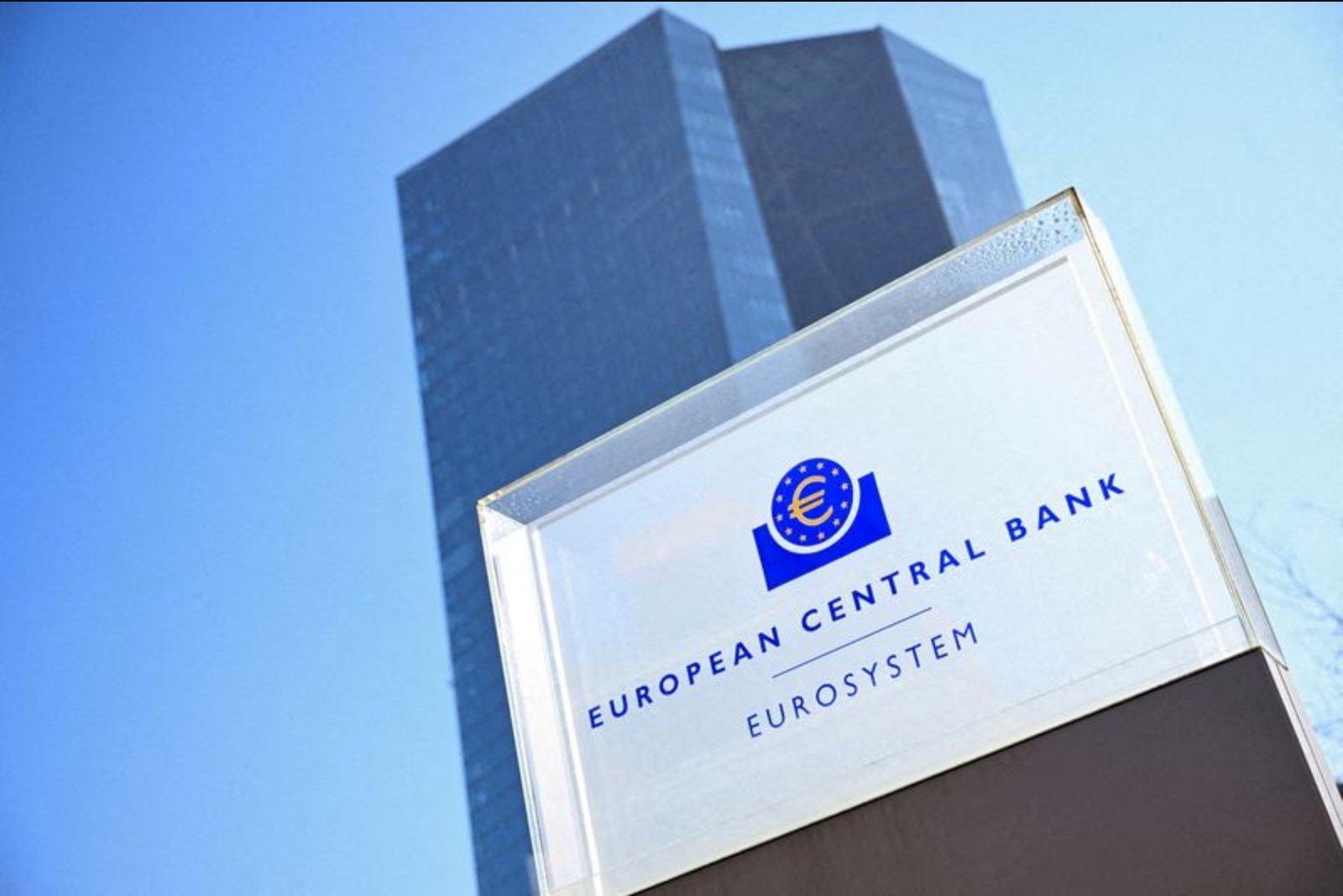
The European Central Bank (ECB) convenes next Thursday amid a delicate improvement in the global energy outlook following a ceasefire in the Iran conflict. That lull has reduced the urgency for an immediate tightening of policy after a recent spike in oil that briefly pushed futures near $120 a barrel. With prices retreating to around $100, the bar for the ECB to raise rates at this meeting appears lower than it did weeks ago, but policymakers will signal they are ready to act if risks re-emerge.
Traders had been moving towards a near-term hike when oil shot up, but the temporary easing in prices has pushed most market participants back toward expectations that the ECB will hold rates at 2% for now. Officials have publicly downplayed the likelihood of an imminent increase while emphasising the need to keep options open for subsequent meetings. Observers will be watching for how the bank’s assessment of the outlook has evolved since its March guidance.
Deutsche Bank’s chief European economist, Mark Wall, summarised the prevailing view: "The ECB can afford to sit tight at the April meeting, collect more evidence, and decide whether it would be appropriate to lean against this shock come the June meeting." That encapsulates the approach policymakers appear poised to take - use the upcoming meeting to gather more information rather than move immediately.
1. What will the ECB do?
Most analysts expect the ECB to leave its policy rate unchanged at 2% at the upcoming meeting. That represents a notable shift from market pricing just a few weeks earlier, when a surge in oil had increased bets on an immediate increase. The ceasefire that followed has brought energy prices down from their highs, taking some of the most acute inflationary pressure off the table. Still, with oil trading above pre-conflict levels, the bank will likely emphasise that it is keeping future options open.
2. Has the ceasefire changed the ECB’s calculus?
Yes, at least in the near term. The retreat in oil has brought the outlook closer to the bank’s March baseline, which projected inflation peaking near 3% this quarter. ECB President Christine Lagarde has noted that lower natural gas and oil costs mean an adverse scenario - where inflation would peak above 4% in the second half of 2026 - has not materialised. Market expectations for rate hikes this year have also softened as a result.
Still, uncertainty remains about how quickly oil production and shipping through key chokepoints can be restored. Anatoli Annenkov, senior European economist at Societe Generale, cautioned that while the ceasefire helps near-term prospects, "there are a lot of concerns about how long it will take to ramp up (oil) production and get the flow going again." That uncertainty tempers how much the ECB can relax its vigilance.
3. What effect is the conflict having on the wider economy?
To date, the main direct economic impact has been through higher energy costs, which pushed headline inflation up. At the same time, indicators of business activity have softened, signalling weaker growth. Germany has already lowered its 2026 and 2027 growth forecasts and raised its inflation projections in response to the conflict.
While headline inflation rose to 2.6% in March, measures that strip out food and energy, along with services inflation, actually eased. That suggests it is still too early to see a broad-based pick-up in inflation that would force the ECB’s hand. Euro zone business activity contracted in April, with services particularly weak. Meanwhile, factories have reported sharp rises in production costs, and prices leaving the factory gate climbed at the fastest pace in 37 months.
4. How is this energy shock different from 2022?
Economists argue that the inflationary footprint of the current energy shock is likely narrower than what was seen in 2022. Key early-warning indicators that flagged the 2022 spike are not flashing now, according to Citi economists referenced in market commentary. The broader macro backdrop differs: the economy and labour markets are weaker than they were in 2022, when pent-up post-pandemic demand amplified inflationary pressures.
Before the Iran conflict began, inflation was close to the ECB’s 2% target, whereas in 2022 it was well above that threshold. Fiscal space is tighter now and monetary and financing conditions are not as loose as they were in the immediate post-pandemic period, limiting the scope for large policy support. Europe is also not scrambling to replace a single major supplier to the same extent as during the earlier shock, and the current disruption is global in nature. The euro has remained relatively stable, whereas in 2022 its decline had made the earlier shock worse.
5. Are rate hikes later in 2026 still likely?
Yes. Market pricing implies at least two hikes later in the year, with June cited as a likely starting point. However, the outlook is finely balanced because the timing of any normalisation of flows through the Strait of Hormuz remains unclear. Investment managers note that if oil holds below $100, the case for hikes could weaken: Insight Investment characterises the situation as a coin toss between two hikes and no moves should oil stay under that level.
Analysts say a modest lift in rates later in the year would probably not materially damage the economy but would help anchor wage-setting behaviour and keep inflation expectations in check. David Zahn, head of European fixed income at Franklin Templeton, put it plainly: "They do need to put up rates a little bit just to make sure that secondary effects don’t kick in."
What about investment opportunities in 2026?
The question of where to allocate capital depends on clearer data. One market advisory referenced in recent commentary argues that stronger, institution-grade datasets and AI-driven insights can improve decision-making. That advisory highlights a product called InvestingPro, which it says combines institutional-grade data with AI-powered insights designed for investors. The same commentary suggests using a research assistant named WarrenAI as a starting point for identifying opportunities in 2026, while leaving final decisions to individual investors.
For now, the outlook for policy hinges on whether the recent easing in energy prices proves durable and whether economic indicators confirm a return toward the ECB’s baseline projections. Policymakers appear content to monitor fresh data ahead of any move, keeping the door open for action if the situation deteriorates.