
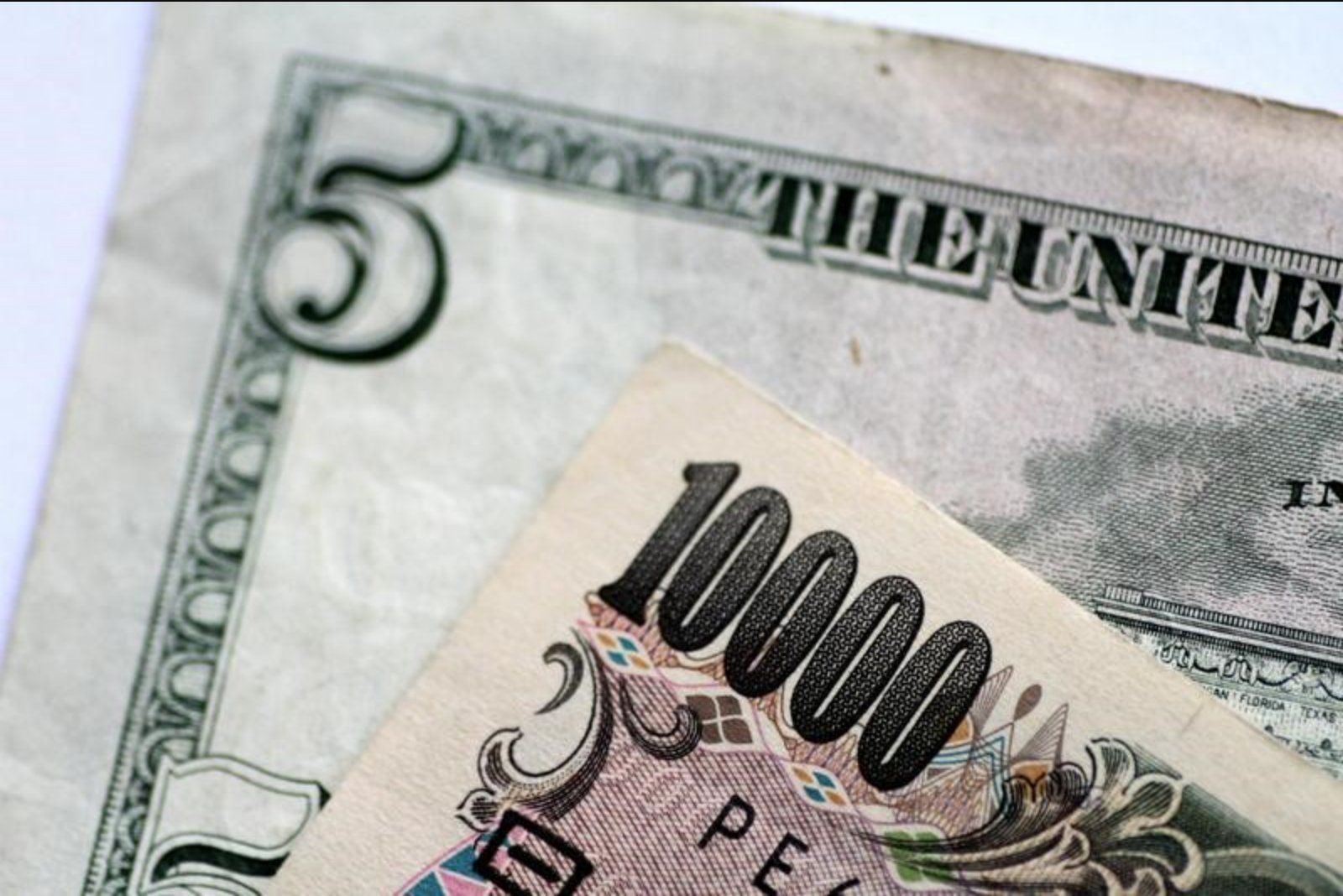
Most Asian currencies firmed on Monday while the dollar slipped slightly as attention shifted to the Bank of Japan and Federal Reserve meetings scheduled in the days ahead. Market caution persisted around the Middle East after the U.S. and Iran pulled out of talks in Pakistan over the weekend, leaving geopolitical risk elevated.
Investors are also braced for a series of important economic releases in the coming days that could shed further light on the wider market implications of the Iran conflict.
Japanese yen holds below 160 as BOJ decision approaches
The USD/JPY pair eased a touch on Monday, remaining beneath the closely watched 160 yen threshold. The Bank of Japan is broadly expected to leave its policy rate unchanged at 0.75% when it meets on Tuesday, though a minority of analysts continue to see a possible 25 basis point hike on the table.
Observers anticipate the BOJ will present a relatively hawkish policy outlook amid persistent inflation and price pressures linked to the Iran situation. At the same time, a decision to hold and an outlook that is less hawkish than markets expect could exert downward pressure on the yen. The currency has been recovering from significant losses in March and lacked a clear direction in April as investors weighed the BOJ’s capacity to raise rates further.
Dollar edges lower ahead of Fed meeting
The dollar index and related futures each declined by about 0.1% in Asian trade, retreating slightly after posting strong gains in the previous week. The greenback had been supported recently by safe-haven flows tied to the Iran conflict, as well as expectations for tighter policy from various global central banks.
The Federal Reserve meets later this week and is widely expected to keep interest rates unchanged amid the growing economic uncertainty stemming from the Iran war. The Fed meeting could coincide with a shift in leadership - U.S. lawmakers indicated on Sunday they would allow the Senate confirmation process for Fed Chair nominee Kevin Warsh to move forward. That development followed the Department of Justice’s recent decision to drop an investigation into current Chair Jerome Powell, a move taken after pressure from Republican lawmakers.
Kevin Warsh has told Congress that he would not commit to cutting interest rates if confirmed as Fed chair, and was viewed as a less dovish candidate than some market participants had anticipated.
Regional FX moves and data calendar
Across Asia, currencies generally gained as risk sentiment improved modestly, helped in part by U.S. President Donald Trump saying he remained open to talks with Iran. An Axios report indicated that Iran had put forward a proposal to the U.S. to help reopen the Strait of Hormuz, although that proposal reportedly included postponing discussions over Tehran’s nuclear program, an element that could prove problematic for Washington.
Among individual pairs, the Australian dollar climbed, with AUD/USD up 0.3%, reflecting some revival in risk appetite. Market participants were also positioning for a potentially strong first-quarter consumer price index print due later in the week, a release likely to influence expectations for more rate increases from the Reserve Bank of Australia.
The Chinese yuan strengthened marginally, with USD/CNY down 0.1%, keeping the currency close to its three-year high. Chinese purchasing managers index readings for April are due this week and are expected to provide further clues on the trajectory of business activity after March prints showed some pickup; attention is now on whether that momentum will persist.
Other Asian moves included a 0.4% fall in USD/KRW and a 0.1% decline in USD/SGD. By contrast, the Indian rupee underperformed, with USD/INR moving further above the 94 rupee mark.
Outlook and near-term drivers
With central bank meetings at the BOJ and the Fed taking center stage, and a docket of regional data including Chinese PMI and Australian CPI due, markets are poised for potentially renewed volatility. Geopolitical developments related to the Iran conflict and the evolving diplomatic back-and-forth will remain a key influence on safe-haven flows and risk appetite in the near term.