
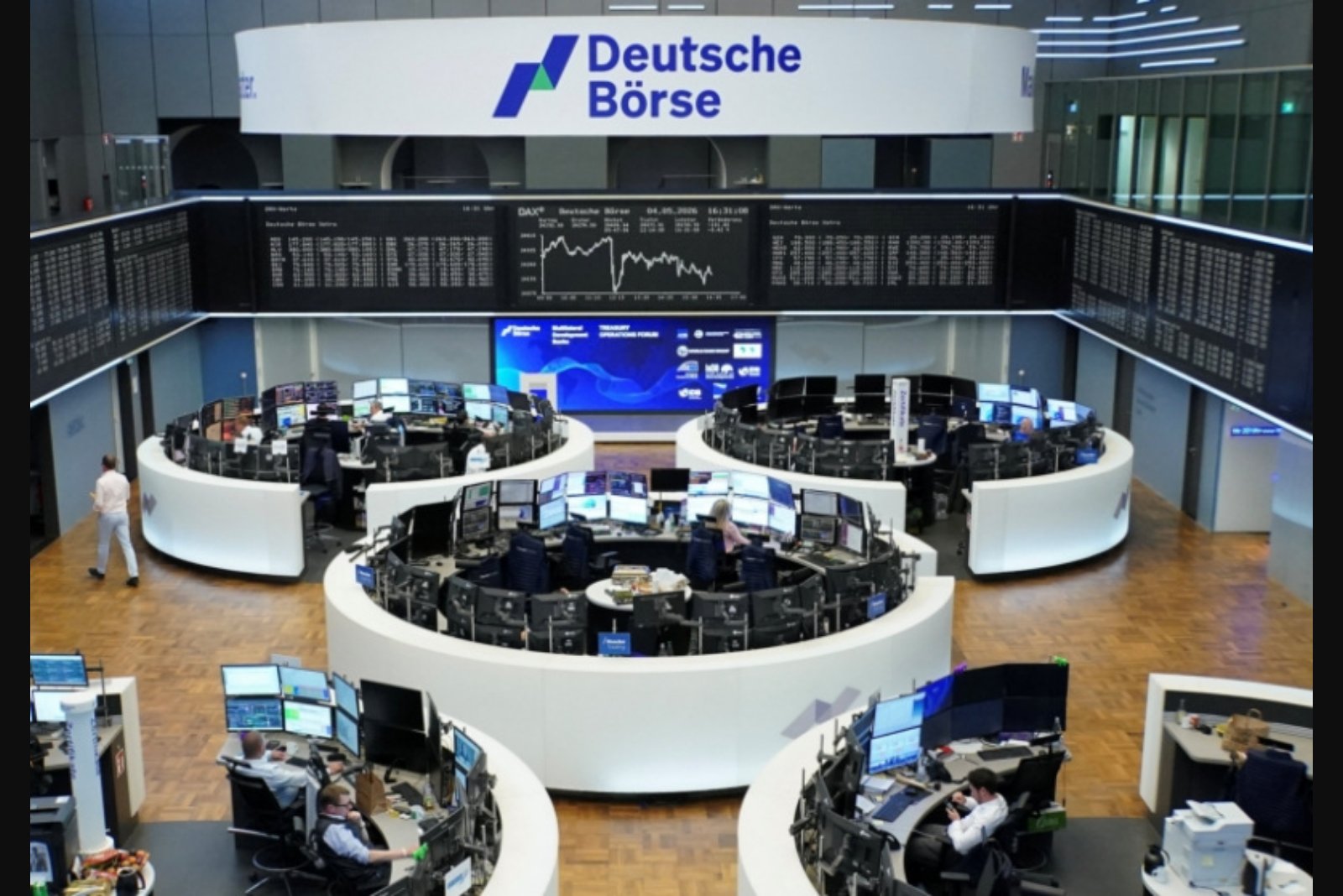
European equities declined on Friday as diplomatic stalemates between the United States and Iran dented risk appetite, tightened energy markets and fed renewed concerns about slowing economic activity. The pan-European STOXX 600 traded down 0.8% at 611.27 points as of 0703 GMT and looked set to post a weekly loss if that momentum continued.
Regional benchmarks tracked the broader weakness. Germany's DAX lost about 1% while France's CAC 40 fell roughly 0.8% in early trading. Market moves were influenced by comments from U.S. President Donald Trump, who said his patience with Iran was running thin and noted agreement with China's Xi Jinping that Tehran should not be allowed to acquire nuclear weapons and should re-open the Strait of Hormuz - a maritime chokepoint that normally handles close to a fifth of global oil and liquefied natural gas flows.
With the Strait of Hormuz remaining effectively closed, crude oil prices advanced by more than 1% during the session, reflecting the market's sensitivity to disruptions in a route that underpins a substantial portion of global energy shipments. Inflation readings released this week showed that the war in Iran is beginning to feed through to higher consumer and producer prices, an effect that has increased pressure on markets.
European economies, which rely heavily on imported energy, appear particularly exposed to these developments and have lagged behind some global peers that rebounded from March lows. That vulnerability has translated into underperformance for regional stock indices as higher energy costs and inflationary pressures complicate the outlook.
Individual stock moves included a 0.8% decline for LVMH after the luxury conglomerate reached an agreement to sell fashion label Marc Jacobs to a joint venture formed by brand manager WHP Global and apparel company G-III Apparel Group. In contrast, Stellantis rose 1% after announcing a roughly 1-billion-euro agreement with Chinese partner Dongfeng to manufacture vehicles under the Peugeot and Jeep brands in China.
The session's price action highlighted how geopolitical friction in the Middle East, energy-market reactions and incoming inflation data are combining to keep investors cautious about risk assets across European markets.
Summary
European shares declined amid stalled U.S.-Iran negotiations that spooked markets, elevated oil prices after the Strait of Hormuz remained closed, and rising inflation readings showing early transmission of war-related energy costs into consumer and producer prices.