
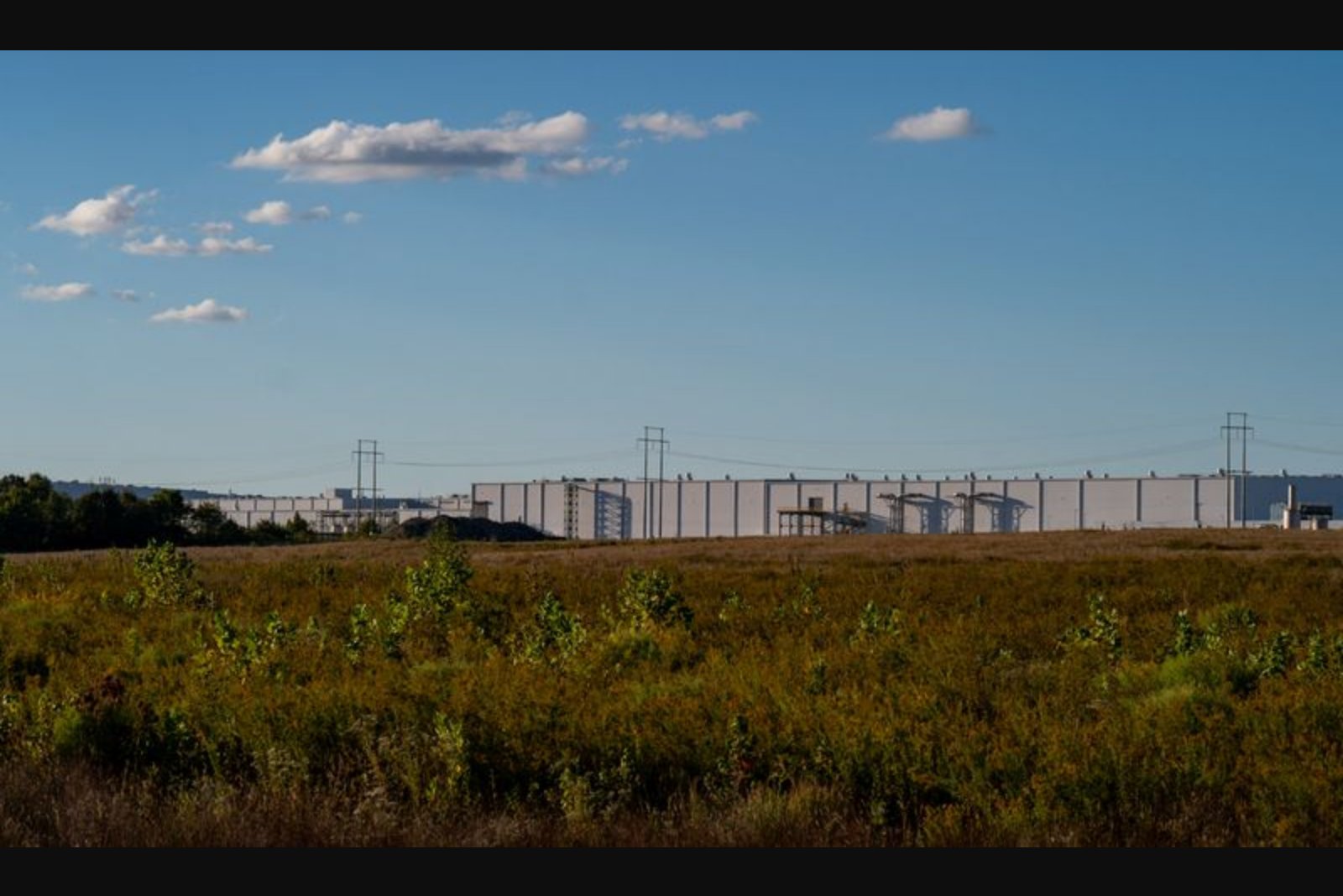
Automakers and battery producers are racing to redeploy underused electric-vehicle battery factories toward stationary energy-storage systems as demand for electricity and data-center power grows. Yet the transition is neither straightforward nor rapid, and it will not quickly erase the substantial excess capacity now sitting idle after a shakeout in U.S. EV demand.
Over the last decade, a cohort of automakers and Asian battery suppliers including General Motors, Ford Motor, Japan’s Panasonic Holdings, and South Korea’s Samsung SDI and LG Energy Solution invested or set aside more than $100 billion to build battery plants intended to serve a U.S. EV market that has been weakened by shifting policy and consumer dynamics. Stationary storage systems rely on lithium-ion cells - the same basic cell technology used in EVs - to capture electricity, often from renewable sources such as wind and solar, and release it when grids or data centers need power.
Executives and analysts say the growth in electricity consumption tied to artificial intelligence and cloud computing presents a meaningful market opportunity. But a Reuters review of projected U.S. battery-factory output this decade shows that anticipated demand for storage will fall well short of the volume of cell capacity installed for the auto industry.
U.S. demand for EVs had already been trailing automakers’ earlier forecasts before a $7,500 consumer tax credit expired on September 30, a development that coincided with sales falling by more than 25% over the subsequent six months. The resulting downturn has left producers with substantial unused capacity and elevated the urgency of finding other end markets for cells.
Converting plants to produce the chemistry and form factors most commonly used in stationary storage is expensive and complicated. Bob Lee, head of North America for LG Energy Solution, said his company is converting three North American factories to produce batteries intended for storage systems, and he warned that the region will continue to face excess capacity - a form of "fallout" from the EV bust. "Like any other industry that goes through a difficult period like this, I don’t think it’s going to be all rosy," he said.
Ford has announced a plan to invest $2 billion over the next two years to establish a battery-storage business, describing the move as a bid to build a diversified and profitable revenue stream. General Motors’ joint venture with LG Energy Solution - Ultium Cells - said it will convert an EV cell plant in Tennessee to produce cells for storage. The GM-LGES joint venture also disclosed a $70 million program, including retraining workers, to refit a plant south of Nashville.
Despite such moves, the scale mismatch between installed capacity and demand is stark. Benchmark Mineral Intelligence projects North American demand for stationary batteries at 76 gigawatt-hours this year, while battery-factory capacity built for the auto sector is roughly 275 GWh. Even if storage demand nearly doubles to 125 GWh within five years, that level would still leave substantial unused plant space.
Some battery companies are committing to large conversions. LG Energy Solution said it aims to be able to produce up to 50 GWh of storage batteries annually in North America by year-end through a mix of its own facilities and joint ventures with automakers including General Motors, Honda and Hyundai. Still, 50 GWh would represent about one-third of the company’s total regional capacity, underscoring the magnitude of the excess capacity problem.
Most stationary storage systems use lithium iron-phosphate, or LFP, cells. LFP chemistry is cheaper than the nickel-heavy chemistries more commonly used for EVs in North America, which creates a substantive production shift for plants built around nickel-rich cells. Battery executives told Reuters that converting existing factories to produce LFP can take as long as 18 months and may cost several hundred million dollars.
U.S. battery makers also face the reality that China dominates LFP technology and its supply chain. Producers in the United States are working to reduce dependence on Chinese materials in order to qualify for federal tax credits designed to incentivize domestic battery production. Those incentives, introduced during the Biden administration and left in place under the subsequent administration, require manufacturers to progressively phase out Chinese content to secure the full set of tax benefits.
Trade restrictions further complicate the economics of sourcing. Benchmark Mineral Intelligence notes that U.S. tariffs on Chinese-made cathode and anode materials - the electrode components that shuttle charge within a cell - are set at 35%, raising costs for firms relying on those imports.
Major automakers and battery suppliers have accelerated their pivots to storage in recent months. Ford said in December that it will repurpose some underutilized space in a Kentucky plant to produce storage batteries. General Motors and LG Energy Solution expanded conversion plans earlier in the year. Those moves are partly driven by the lead Tesla has established: the EV maker has spent roughly a decade developing its energy-storage business and has seen that division become one of its fastest-growing areas.
Tesla’s energy-storage offerings reportedly delivered about $430 million in revenue last year from sales to xAI, providing a concrete example of AI-driven data-center demand translating into battery orders. The company’s storage products, such as Megapack units, have seen expanding deployments and have been cited as more profitable than Tesla’s vehicle manufacturing in recent results. In 2025, Tesla’s energy-storage arm had gross margins of about 30%, compared with roughly 15% for its automotive business when excluding regulatory credits.
Kurt Kelty, GM’s head of battery operations and a former Tesla executive, said in January that the company is committed to establishing a U.S.-based battery industry and supply chain. "Whether it’s for EVs or storage systems, it really doesn’t matter," he said, emphasizing the goal of building domestic manufacturing capability.
The path forward is pragmatic but fraught. Converting millions of square feet of factory space, adapting supply chains away from Chinese-dominated inputs, and aligning product mixes to LFP chemistry will require time, capital and skilled labor. Even with significant corporate investments and retraining programs, storage demand in North America is projected to remain well below the capacity built for EVs, meaning excess factories are likely to persist for some time.
Summary
Automakers and battery suppliers are attempting to redirect EV-focused battery plants toward stationary storage to meet growing electricity and data-center demand. However, conversion is costly and time-consuming, China controls much of the LFP supply chain, and projected storage demand will not be sufficient to absorb the large surplus of EV battery manufacturing capacity in North America.
Key points
- North American demand for stationary batteries is forecast at 76 GWh this year, while installed EV-focused battery capacity is about 275 GWh, leaving significant excess.
- Converting factories to produce cheaper LFP chemistry used in storage can take up to 18 months and cost several hundred million dollars, complicating redeployment efforts.
- Major automakers and battery suppliers - including Ford, GM, LG Energy Solution, Panasonic and Samsung SDI - are pursuing storage strategies, but China’s supply-chain dominance and U.S. trade barriers add cost and risk.
Risks and uncertainties
- Policy and trade risks: Tariffs on Chinese cathode and anode materials are 35%, and manufacturers must phase out Chinese content to secure full domestic production tax credits - factors that can raise costs and slow conversions.
- Market mismatch: Even with near-term growth in storage demand, projected volumes (125 GWh in five years) are insufficient to absorb the substantial EV-focused capacity already in place, suggesting persistent oversupply in the battery sector.
- Execution and cost risk: Converting plants to LFP production is resource-intensive, potentially requiring hundreds of millions of dollars and up to 18 months per conversion, along with workforce retraining and supply-chain changes.