
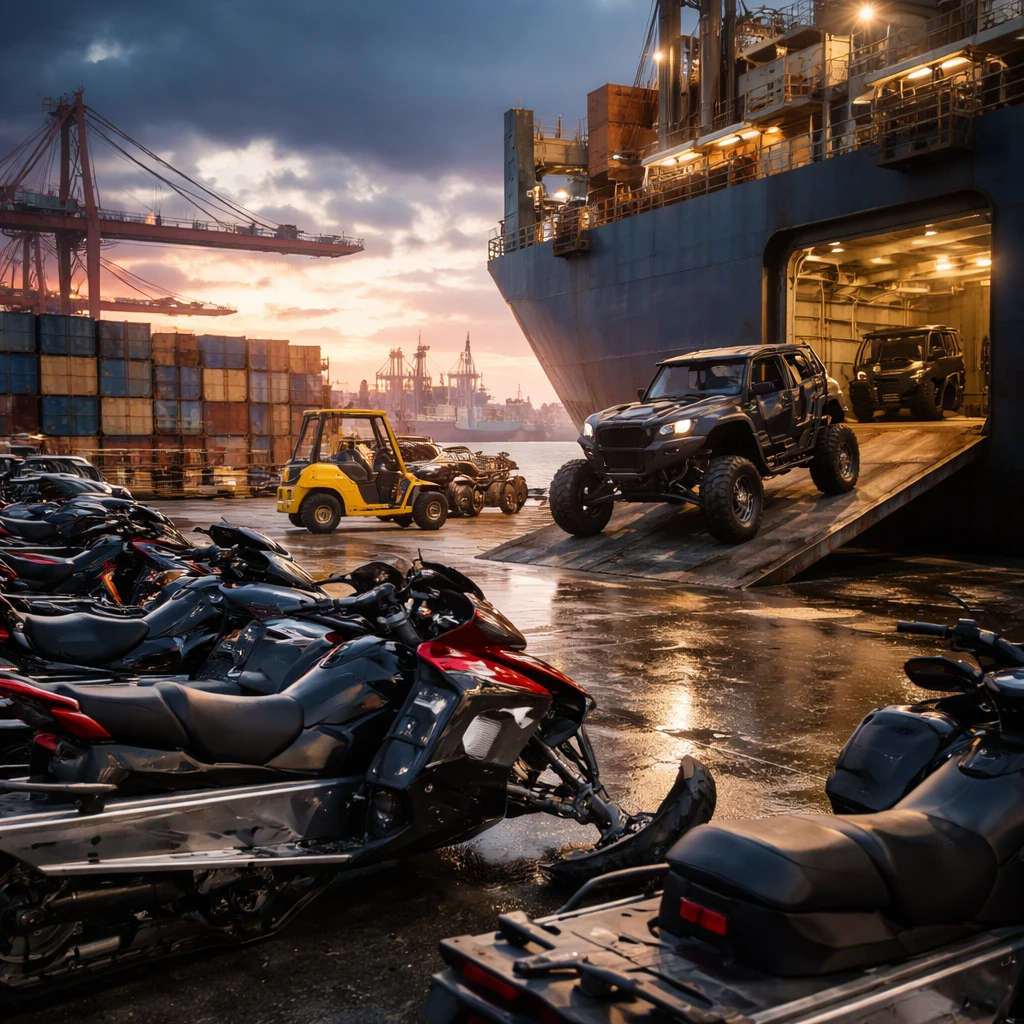
Polaris Inc. (NYSE:PII) saw its shares decline 11% on Wednesday morning following an announcement from competitor BRP Inc. (NASDAQ:DOO) that suspended its full-year fiscal 2027 guidance. BRP made the move in response to a recent change in U.S. tariff policy that the company said materially affects the economics of its imported product lines.
BRP's stock fell sharply, down 24% after the announcement. The Canadian manufacturer identified a specific amendment to Section 232 tariffs on steel, aluminum and copper imports into the United States as the driver behind its guidance suspension. That amendment, which took effect on April 6, 2026, replaces the previous tariff approach with a 25% duty on the total value of imported snowmobiles and most off-road vehicle models, where earlier rules had applied a 50% tariff only to the metal content of applicable products.
In its statement, BRP estimated that the change could create potential incremental tariff costs in excess of $500 million for the remainder of the fiscal year, before accounting for any mitigation measures the company might be able to deploy. That prospective cost burden prompted BRP to pause its outlook for fiscal 2027 while it assesses the full financial impact.
The drop in Polaris stock reflects investor concern that the tariff amendment may have parallel effects on other manufacturers with similar import exposure. Polaris, based in Minnesota, produces snowmobiles, off-road vehicles and motorcycles - product categories that overlap with BRP's portfolio.
Denis Le Vot, President and CEO of BRP, commented on the operating environment: "Like many manufacturers, we are operating in a highly volatile and unpredictable tariff environment that continues to create uncertainty across the market. Despite the material burden of these tariff changes, we expect that, with our solid balance sheet, the agility of our teams and the strong start of the year, we will be able to manage our business through this challenge and continue to push BRP forward."
Both companies compete within the powersports market and produce similar lines of recreational vehicles. The tariff amendment cited by BRP has prompted investor concern about potential cost pressures not only for BRP but for other manufacturers whose imported products rely on metals now covered by the revised Section 232 duties.
Bottom line - The tariff amendment has prompted BRP to suspend guidance and disclose potential hundreds of millions in incremental costs, a development that has put pressure on peers including Polaris as investors reassess import-related cost exposure across the powersports manufacturing sector.