
U.S. officials are exploring whether to request that Israel hand over some of the Palestinian Authority (PA) tax revenues it has been withholding so that the funds can be used to support President Trump’s Board of Peace and its blueprint for rebuilding Gaza, five sources familiar with the matter told reporters.
Three of those sources, identified as officials with knowledge of U.S. deliberations with Israel, said Washington has not yet made a final decision on whether to lodge a formal request. Two other sources, Palestinians who were briefed on the talks, said the concept under discussion would allocate a share of the withheld taxes to a U.S.-backed transitional government for Gaza while directing other portions back to the PA contingent on the PA carrying out specified reforms.
Palestinian officials place the value of the tax revenue that Israel has withheld at about $5 billion. That sum, they say, is well over half of the PA’s annual budget and has precipitated a deep fiscal squeeze in the West Bank, where the PA remains the limited administrative authority. The Palestinian Authority has not exercised control in Gaza since it was expelled following a brief civil war with Hamas in 2007.
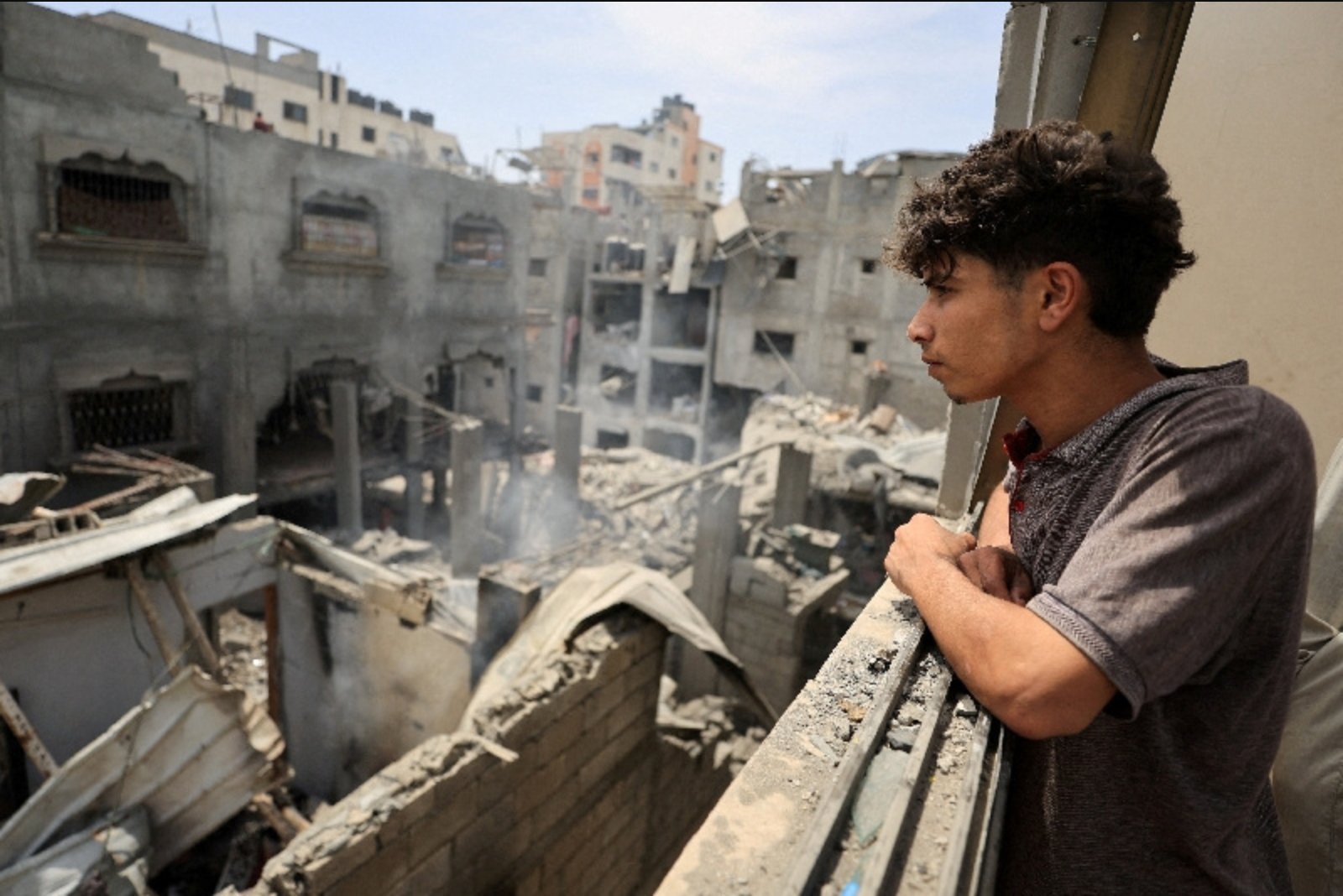
Officials involved in the discussions framed the potential reallocation as a way to marshal resources for a large-scale reconstruction program. A Board of Peace official declined to comment directly on whether transferring PA tax funds was being considered, but said the Board had urged all parties to mobilize resources in support of the administration’s Gaza rebuild project, which it estimates will cost $70 billion.
"That includes the Palestinian Authority and Israel. There is no doubt that money held in a bank does nothing to further the President’s 20-Point Plan," a Board official said.
The remark appears to reference PA tax receipts that Israel has retained in an ongoing dispute over the PA’s payments to Palestinians jailed by Israel and to families of those killed by Israeli forces. Under a longstanding arrangement, Israel collects import taxes on behalf of the PA and is required to transfer the proceeds. The PA uses those funds to pay civil servants and to finance public services.
Sources close to the discussions did not disclose the specific share of the withheld tax money that the United States might seek to have transferred to the Board of Peace, and U.S. State Department, Israeli government and PA representatives did not immediately respond to requests for comment on the proposal.
The tug-of-war over the withheld revenue is rooted in U.S. and Israeli pressure on the PA to end its payments to Palestinian prisoners and to families of those killed in the conflict, which Washington and Jerusalem contend encourage violence. Palestinian leaders, however, regard those payments as social welfare for inmates they view as national heroes.
In response to international pressure, the PA announced reforms to the payment system in February 2025, but U.S. officials said the measures did not go far enough. As a result, Israel began withholding customs revenues it collects for the PA. Palestinian officials say the withheld amount has reached $5 billion, triggering a fiscal crisis that has forced the PA to cut salaries for thousands of civil servants in the West Bank.
Israel has accepted a U.S. invitation to participate on the Board of Peace; the PA was not invited. Under the architecture set out in the Trump plan, a group of Palestinian technocrats known as the National Committee for the Administration of Gaza would assume control of the territory from Hamas as the militants agreed to disarm.
Nickolay Mladenov, the Board of Peace’s envoy for Gaza, said at a press briefing in Jerusalem that reconstruction planning was well advanced. "We’re doing it sector by sector. We’re costing things. We’re coordinating with donors and we’re ready to begin in earnest once the conditions allow it," Mladenov said. He did not address the question of the withheld tax revenue.
If Washington were to ask Israel to repurpose PA-held tax receipts for the Board’s Gaza plan, the move could further marginalize the PA while injecting a contentious source of funds into an already fraught political and humanitarian context. The discussions as described by sources leave key questions unanswered - including precise amounts, legal mechanisms for transfer, and conditions under which remaining funds would be returned to the PA - and no formal request has been confirmed.
For now, the proposal remains among the options being weighed by U.S. policymakers and discussed with Israeli counterparts, according to those familiar with the deliberations.