
Economy May 19, 2026 02:27 PM

U.S. intercepts Iran-linked tanker Skywave in Indian Ocean amid renewed threats of strikes

Seizure follows sanctions on the vessel and comes alongside separate U.S. port blockade in the region

By Ajmal Hussain

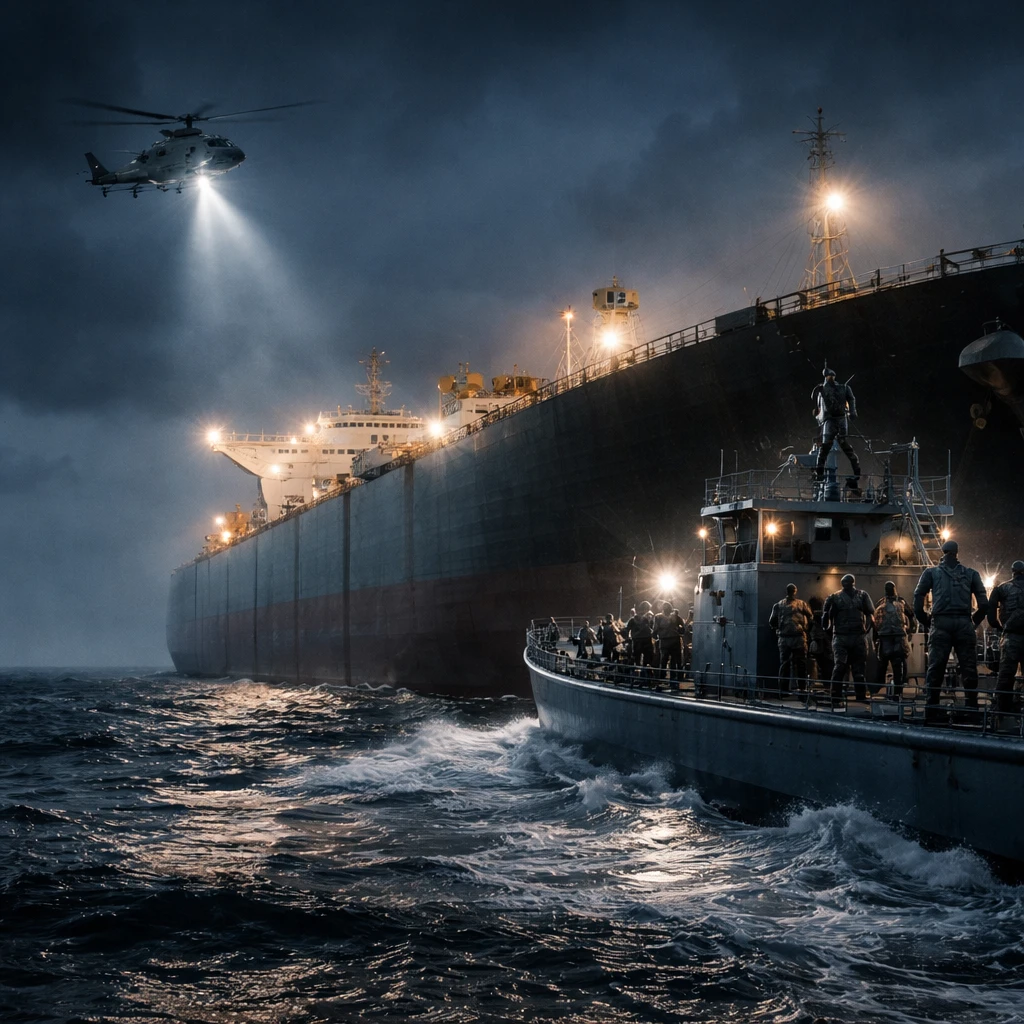
U.S. authorities seized an oil tanker tied to Iranian oil exports overnight in the Indian Ocean, according to three U.S. officials, at a time when President Trump has threatened to resume military strikes on Iran. The vessel, identified as the Skywave and previously sanctioned by the U.S., had transited the Malacca Strait and was tracked just west of Malaysia. Brokers and maritime intelligence indicate the ship likely carried over one million barrels loaded at Iran's Kharg Island in February. U.S. actions against Iran-linked tankers form part of broader operations that are distinct from a separate blockade of Iranian ports in nearby seas.

U.S. intercepts Iran-linked tanker Skywave in Indian Ocean amid renewed threats of strikes

Key Points

  • Seizure of the Skywave — a vessel sanctioned in March for transporting Iranian oil — took place overnight in the Indian Ocean and was reported by three U.S. officials.
  • Tracking data placed the tanker west of Malaysia after passing through the Malacca Strait; brokers and Lloyds List Intelligence say it likely carried more than one million barrels loaded at Kharg Island in February.
  • This is at least the third U.S. seizure of a tanker tied to Iran-linked shadow-fleet activity; these seizures are separate from a U.S. blockade of Iranian ports in the Gulf of Oman and the Arabian Sea. Sectors affected include energy, maritime shipping, and defense/security.

The United States seized an Iran-linked oil tanker in the Indian Ocean overnight, according to three U.S. officials, as President Trump has threatened to resume military strikes on Iran.

The ship has been identified as the Skywave. U.S. authorities had placed sanctions on the vessel in March for its role in transporting Iranian oil.

Ship-tracking information showed the Skywave sailing just west of Malaysia on Tuesday after it passed through the Malacca Strait. Brokers and data from Lloyds List Intelligence indicated the tanker was likely loaded with more than a million barrels of crude at Iran's Kharg Island in February.

This seizure is at least the third occasion in which U.S. forces have taken custody of an oil tanker tied to what officials describe as Iran-linked shadow-fleet operations. Those seizure actions are being conducted separately from a U.S. blockade of Iranian ports that is in place in the Gulf of Oman and the Arabian Sea.


Key factual elements:

  • The Skywave was sanctioned by the U.S. in March for transporting Iranian oil.
  • Ship-tracking data placed the vessel just west of Malaysia after transit of the Malacca Strait.
  • Brokers and Lloyds List Intelligence estimate the ship was likely carrying in excess of one million barrels loaded at Kharg Island in February.
  • This represents at least the third U.S. seizure of an oil tanker linked to Iran-related shadow-fleet activity.
  • The seizures are distinct from an ongoing U.S. blockade of Iranian ports in the Gulf of Oman and the Arabian Sea.

The factual record in this account is limited to the details reported by U.S. officials and maritime intelligence cited above. The timing of the seizure, the vessel's sanctioned status, its likely cargo and prior transit route are the core reported facts. Parallel U.S. naval and enforcement measures directed at Iranian maritime activity are noted as separate operations in nearby waters.

Risks

  • Renewed threats of military strikes by President Trump raise the possibility of increased geopolitical tension - this risk primarily affects energy and defense sectors.
  • Ongoing U.S. enforcement actions against Iran-linked vessels, now totaling at least three seizures, create uncertainty for maritime shipping routes and tanker operations in the region - this risk affects shipping and logistics.
  • Concurrent U.S. measures, including seizures and a separate blockade of Iranian ports in the Gulf of Oman and the Arabian Sea, leave open uncertainty about scope and duration of maritime restrictions - this risk affects energy markets and regional trade flows.

More from Economy

Ecolab Prices $5 Billion Investment-Grade Bond Package to Back CoolIT Purchase May 19, 2026 UK defence chief calls for security-first approach amid Labour leadership turmoil May 19, 2026 30-Year Mortgage Rate Rises to 6.75% as War Concerns Push Yields Higher May 19, 2026 Nashville Secures First-Ever Super Bowl for 2030; Game Slated for New Nissan Stadium May 19, 2026 Acting AG Says He Cannot Guarantee Trump-Linked Settlement Funds Won’t Reach January 6 Assailants May 19, 2026