
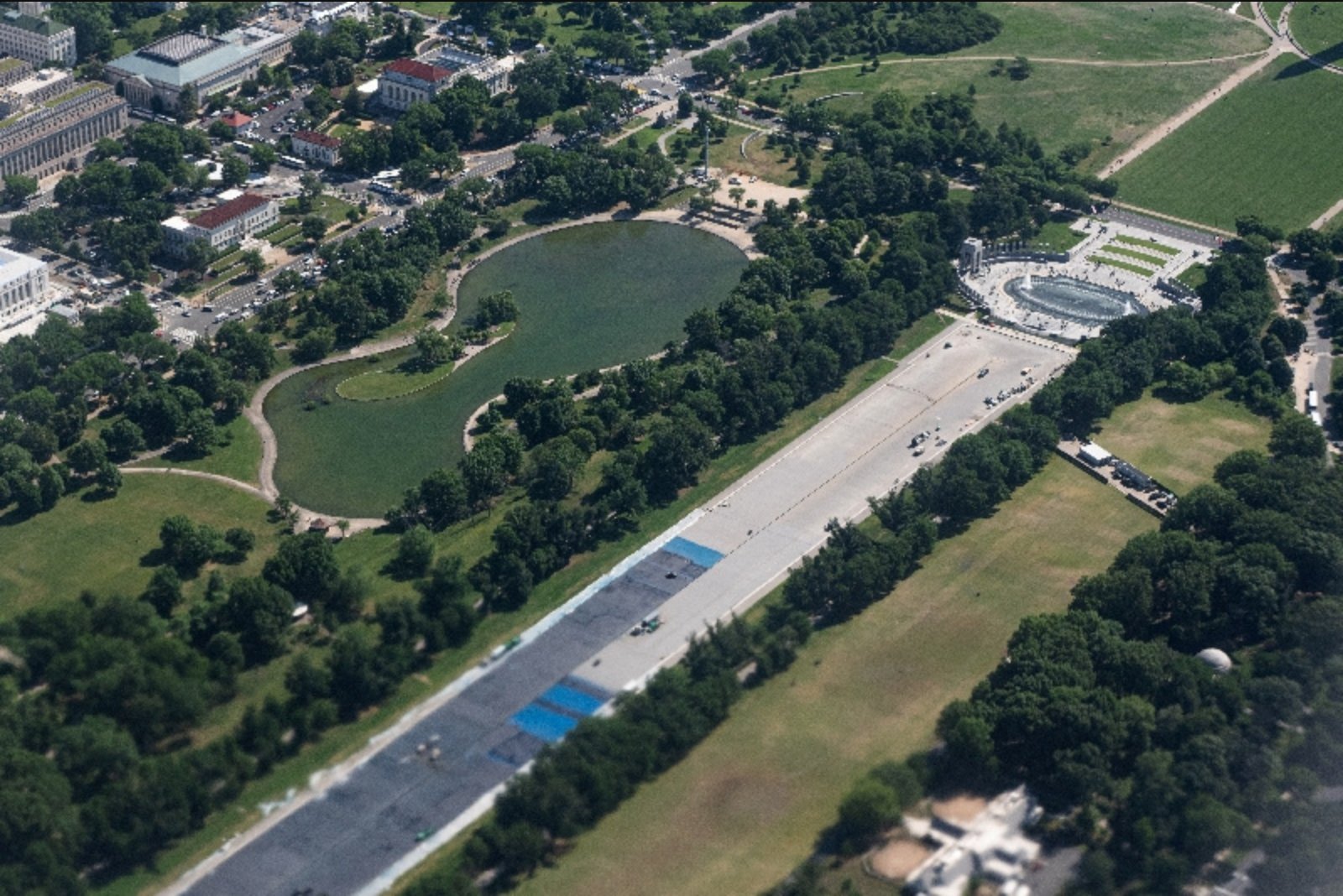
President Donald Trump has launched an extensive program to alter prominent sites in Washington, pursuing projects that range from a multi-story subterranean ballroom at the White House to large-scale public monuments and renovations of cultural landmarks. The scope of the efforts has invited sharp criticism from preservation advocates and ordinary Americans increasingly concerned about costs and the treatment of historic property.
White House ballroom
At the center of the administration’s most ambitious construction plan is a 90,000-square-foot ballroom adjacent to the White House. Trump has described the planned facility as "the greatest of its kind ever built," saying it will match the White House in height and scale and accommodate roughly 1,000 guests. Early public estimates described the project at about $400 million, a sum Trump initially said he and private donors would cover. That financing picture has shifted into a public dispute after the administration tied a request for $1 billion in Secret Service funding to security features for the new structure.
Standing in front of the active construction area on a recent Tuesday, Trump spoke about the project in sweltering heat and said the building will extend six stories below ground. He specified features he says will enhance protection, including four-inch-thick windows and a drone base on the roof. He added that the ballroom would include elements intended to increase blast resistance, calling the work "really for other presidents" and predicting the project would be complete when he has about six months left in office.
The ballroom has not been without controversy. Preservation groups and opponents have asserted that administration actions exceeded legal authority when the historic East Wing - which housed the first lady’s offices and the White House movie theater - was demolished to make room for the new structure. Legal proceedings have followed: in April an appeals court permitted continued construction while setting a June hearing to reconsider a judge’s order that had halted the project. The administration has pointed to a shooting at the White House Correspondents’ Association dinner in April as reinforcing the need for enhanced security features, which it says justify the ballroom’s specialized construction such as missile-resistant columns and a military-style bunker.
National Garden of American Heroes
One of the administration’s long-discussed cultural projects is the National Garden of American Heroes. The president announced on social media on May 15 that the garden would be located at West Potomac Park along the Potomac River and positioned to mark the 250th anniversary of U.S. independence this summer. According to the announcement, the park is set to feature statues representing a broad cross-section of figures, including founding fathers, military figures, religious leaders, civil rights activists, athletes, artists and entertainers.
Kennedy Center renovation and renaming
The John F. Kennedy Center for the Performing Arts was originally established to honor the Democratic president assassinated in 1963. That name remained unchanged for decades. Last year, however, a board appointed by Trump voted to rename the venue the Trump–Kennedy Center. The decision coincided with a drop in performances and ticket sales, with multiple shows canceled after the board change.
In February the president announced the property will close for two years beginning July 4 for what he described as a major overhaul. He has cited plumbing problems and crumbling masonry as reasons for the renovation and said he does not plan to demolish the center but to renovate it. Critics note that the administration made a similar assurance about the East Wing before it was demolished. Trump has estimated the Kennedy Center renovations will cost $200 million and said the money will come from tax dollars.
Reflecting Pool restoration
The administration has also moved to restore the Reflecting Pool near the Lincoln Memorial, a site closely associated with Dr. Martin Luther King Jr.’s 1963 "I Have a Dream" speech. The president said he became involved because the pool was in poor condition and that the restoration would be accomplished at what he called a fraction of an earlier estimate. Trump described the resurfacing material as "American flag blue." He also posted an AI-generated image on social media that depicted a shirtless version of himself and other cabinet officials floating in the pool, and said the pool "is going to be reflecting again."
Independence Arch
The president has proposed an Independence Arch to stand on a roundabout across the Potomac River from the Lincoln Memorial. The feature has been described as an arch with eagle statuary and a liberty-like figure atop it, and its height has been estimated at about 250 feet. For comparison, the Lincoln Memorial is shorter, while the U.S. Capitol reaches 288 feet and remains visible from many points across the city. The Arc de Triomphe in Paris stands at 164 feet.
Whether the arch will be realized at the projected 250-foot height is uncertain. Officials have noted the possibility it could interfere with the flight path used by southbound aircraft on final approach to Ronald Reagan Washington National Airport, which is located several miles away.
Oval Office redecorations
Since returning to the White House in January 2025, Trump has made notable changes to the Oval Office. The room’s aesthetic was altered with gold accents, additional statuettes and portraits taken from storage, including some figures described as not easily identifiable. A copy of the Declaration of Independence was placed on the wall behind a black sheet. Busts of Abraham Lincoln and Benjamin Franklin now sit on tables near the president’s desk. The accumulation of objects has given the space a somewhat cluttered, old-library feel when compared with previous administrations, although Trump has expressed satisfaction with the results and has shown the room to visitors.
Rose Garden and White House grounds
Changes extend beyond indoor spaces. The Rose Garden’s longstanding grass lawn has been replaced with a white stone patio and umbrella-covered tables, a configuration the president has likened to the patio at his Mar-a-Lago Club in Florida. He has said the stone surfacing was installed because women wearing high heels were at risk of sinking into the soil. Additional additions to the Rose Garden include statues of Alexander Hamilton and Ben Franklin, as well as an artwork identified as "Freedom’s Charge."
Along the West Wing colonnade adjacent to the Rose Garden, the administration removed a Tennessee flagstone walkway that had been in place for about 60 years and replaced it with black granite. A series of portraits of America’s 47 presidents now lines the colonnade wall, each accompanied by a plaque inscribed with the president’s view of the historical figure. Bitter about his 2020 election loss to Joe Biden, the president replaced Biden’s portrait with an image of an autopen, a device he and other Republicans have criticized Biden for using despite its status as a standard practice for recent presidents. Large flagpoles also now stand on both the North and South Lawns.
Legal, financial and public responses
The administration’s projects have prompted legal challenges and political disagreements. Construction of the White House ballroom continues under an appeals court order while a separate judge’s order to halt work is scheduled for review at a June hearing. Funding disputes with Congress have surfaced over a linked request for Secret Service funds, and cultural institutions affected by the administration’s changes have experienced operational impacts such as canceled shows and declining ticket sales. Preservationists and opponents have raised concerns about overreach when historic spaces have been demolished or significantly altered.
Supporters of the initiatives argue they address security shortcomings and the need to revitalize certain facilities; critics counter that the scope of alteration and the use of public funds merit closer scrutiny. The administration maintains that some projects, including the Kennedy Center renovations and the Reflecting Pool restoration, are necessary repairs rather than full-scale rebuilds.
As these efforts proceed, Washington faces a period of visible transformation, with consequences for federal property management, cultural programming and urban planning. Several projects remain subject to legal review, congressional funding discussions and technical feasibility concerns - factors that will determine the ultimate form and timeline of the president’s redesign of the capital landscape.