
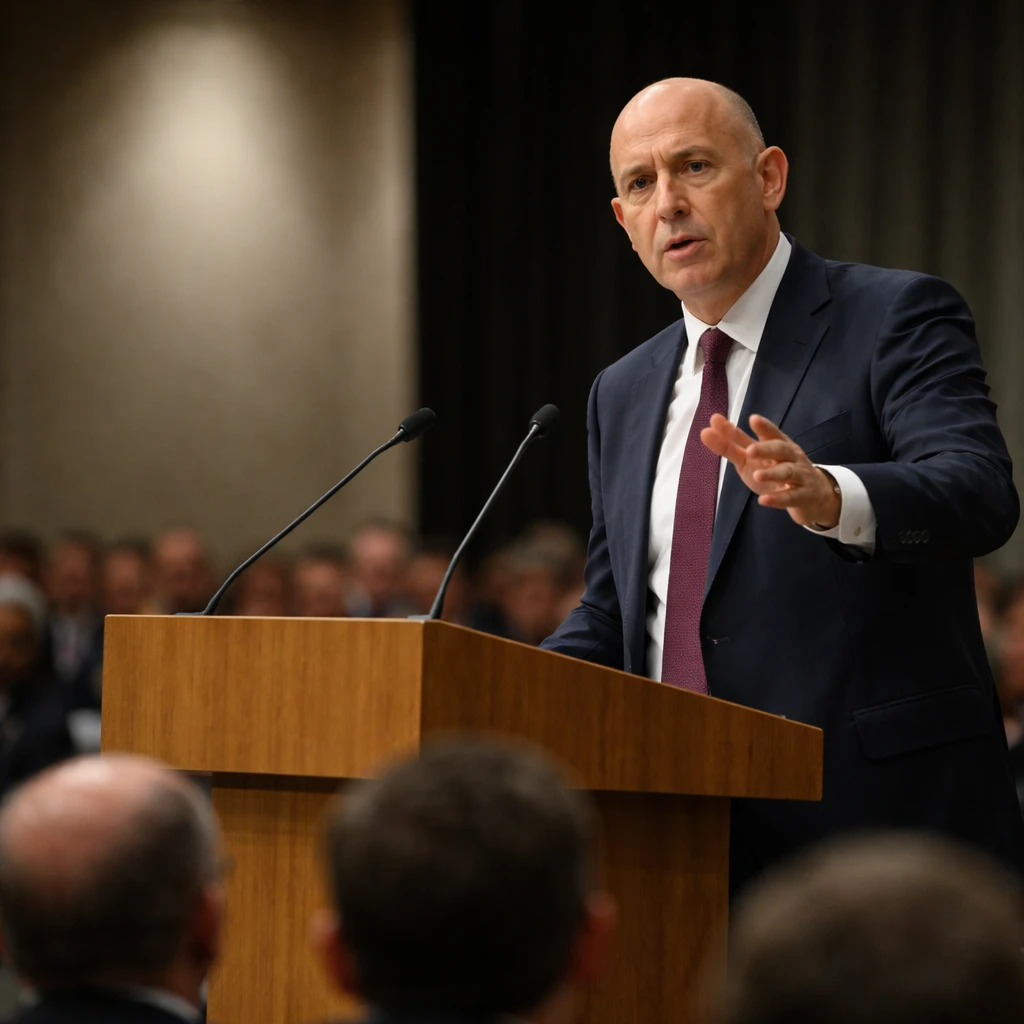
Defense Secretary John Healey warned that Britain’s credibility is at stake amid a leadership crisis within the Labour Party, urging ministers to place national security ahead of political disputes. The remarks were delivered in his first speech since cabinet members began calling for Prime Minister Keir Starmer to resign.
Speaking at the Good Growth Foundation on Tuesday, Healey framed his message as a call for seriousness within government. "It’s not about us, not about the insiders of politics, it’s about the interests of the country," he said, underscoring the need for a broader focus on national priorities.
Healey, 66, who is a known ally of Starmer and has been mentioned as a potential candidate for the prime minister’s position, told colleagues that the government must be capable of guiding the country through ongoing conflicts and looming crises. "We must be a government that steers Britain through the conflicts and looming crises we face," he added.
Although the speech was meant to promote the government’s defence investment agenda, Healey set aside part of his remarks to address the political turmoil that followed Labour’s defeat in local elections on May 7. He sought to connect the investment narrative with the need for a stable ministerial team able to respond to international security challenges.
The leadership tensions have surfaced at a moment when Europe is working to sustain Ukraine’s defence against Russia amid a backdrop of reduced American commitment under President Donald Trump. Healey also pointed to the implications of the US-Israeli war with Iran, saying that the conflict has highlighted limits on Britain’s capacity to deploy military assets far from its shores.
By addressing both defence funding and the intra-party crisis, Healey aimed to shift the conversation toward the practical demands of national security, even as political pressure within Westminster persists.
Key takeaways
- Healey warned that Britain’s credibility is at risk and urged ministers to prioritise national security over political disputes; this has direct relevance for defence policy and government stability.
- The speech linked defence investment priorities to the need for a cohesive government capable of managing international crises, which can affect defence-related sectors and state procurement.
- Heightened political instability arrives as Europe seeks to sustain Ukraine’s defence and as broader regional conflicts reveal limits in Britain’s force projection, with potential implications for military readiness and strategic planning.
Contextual risks and uncertainties
- Political turbulence within the ruling party could undermine coherent decision-making on defence spending and procurement; this primarily affects the defence sector and government contractors.
- Reduced U.S. commitment to Ukraine, as noted in Healey’s remarks, creates uncertainty for European security planning and for markets tied to defence and geopolitical risk.
- Limitations in Britain’s ability to project military power far from home, highlighted by recent conflicts, introduce operational uncertainties that affect defence strategy and related industries.