
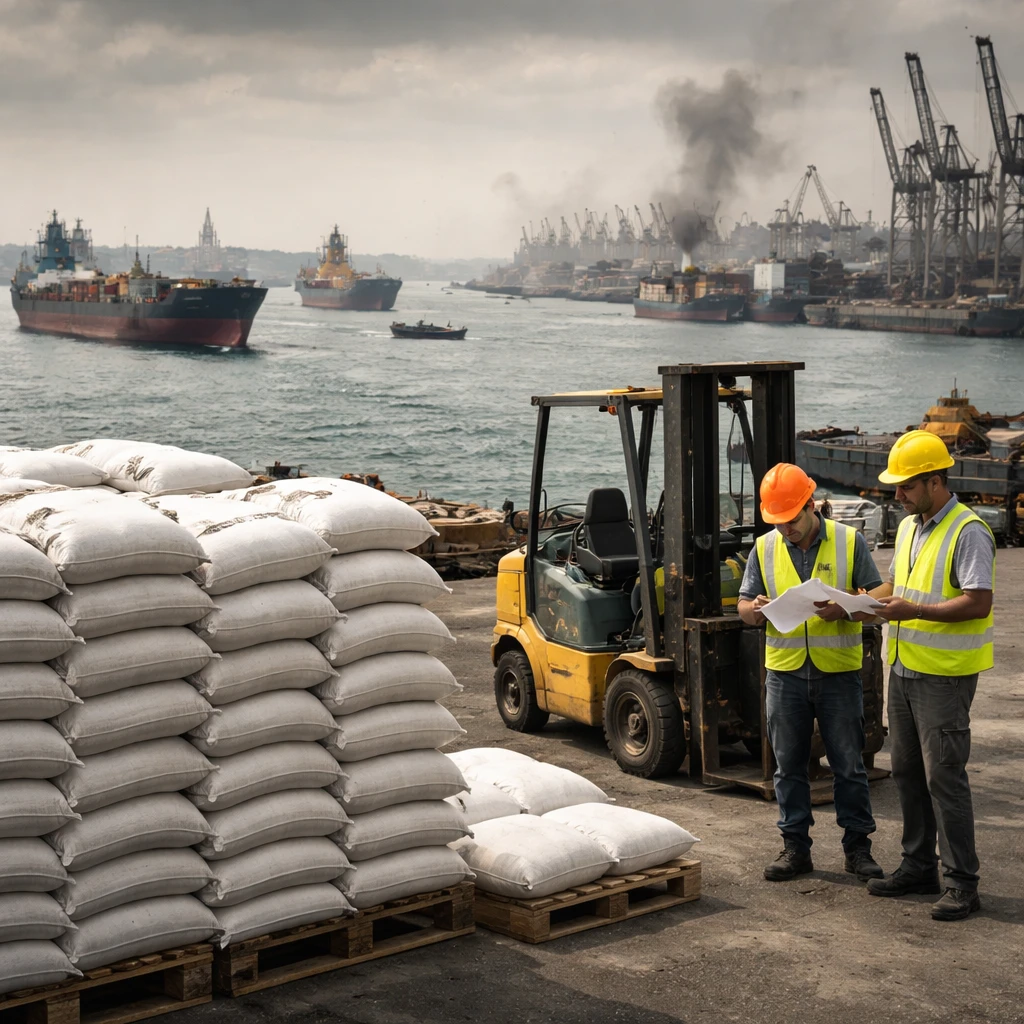
A rapid climb in the cost of nitrogen-based fertilizers, driven by the ongoing conflict in the Middle East and the closure of the Strait of Hormuz, is raising prospects of a secondary wave of food inflation that could play out over the next 15 months.
Analysts at Capital Economics say the immediate worry remains the direct energy price shock, but they flag the rising expense of agricultural inputs - especially urea - as a material source of upward pressure on global food prices. Urea prices have surged by more than 50% amid the disruption.
The core of the problem lies in the nature of nitrogen fertilizers. Production is energy-intensive and depends heavily on natural gas. Roughly 15% of global nitrogen fertilizer supply originates in the Middle East, and the maritime blockade following the closure of the Strait of Hormuz has restricted exports. Even if shipping through the strait resumes, Capital Economics cautions that damaged infrastructure at important hubs could prevent a quick normalization of output.
While several large global producers remain relatively insulated for the current season - which could limit the chance of a full systemic supply failure in the immediate term - the analysts stress the distribution of effects will be uneven. In developed economies the macroeconomic impact on GDP is forecast to be marginal. By contrast, lower-income countries, particularly in Sub-Saharan Africa and South Asia, face a significantly higher risk profile. In those regions, agriculture represents a greater share of economic activity, and the analysts warn that small declines in crop yields can translate into substantial contractions in economic output.
The influence of the fertilizer shock on headline inflation is not expected to be immediate. Planting cycles and the drawdown of existing fertilizer inventories mean that the full effect on consumer prices will lag current market turbulence. Capital Economics projects the peak impact more than a year out from the present moment.
Under its baseline forecast, the research house anticipates that food inflation in the U.K. could rise above 6% by 2027. In the United States and the eurozone, the predicted peaks are nearer to 4%. These projections remain well below the double-digit food-price spikes experienced in 2022, but they nonetheless represent a notable strain on price dynamics, especially for countries and populations with tighter margins.
In sum, the analysts argue the fertilizer price shock introduces a protracted and geographically uneven inflation risk. Energy markets and agricultural commodity chains will be central to how that risk unfolds, and particular attention should be paid to shipping routes, hub infrastructure, and seasonal planting windows that will determine when costs show through to consumers.
Summary
A disruption to nitrogen-based fertilizer supply linked to a Middle East conflict and the closure of the Strait of Hormuz has driven urea prices up by more than 50%. Capital Economics warns this could lift food inflation over the next 15 months, with the largest economic strain falling on lower-income, agriculture-dependent countries.
Key points
- Urea prices have risen by more than 50% amid disruptions to Middle East exports; about 15% of global nitrogen fertilizer supply comes from the region.
- Developed economies are expected to face only marginal GDP effects, while Sub-Saharan Africa and South Asia could see significant economic stress due to their higher reliance on agriculture.
- Peak effects on headline food inflation are expected more than a year out, with projections of U.K. food inflation above 6% by 2027 and U.S. and eurozone peaks near 4%.
Risks and uncertainties
- Persistent supply disruption: The maritime blockade and damaged infrastructure at key export hubs may prevent rapid restoration of fertilizer exports - affecting energy-intensive nitrogen production and agricultural inputs.
- Inflationary lag: Due to planting cycles and existing stockpiles, the full pass-through to consumer food prices is delayed, creating uncertainty about the timing and scale of the peak inflation impact.
- Disproportionate economic exposure: Lower-income, agriculture-dependent regions face higher downside risk to output and livelihoods if yields decline, which could stress local markets and balance sheets.