
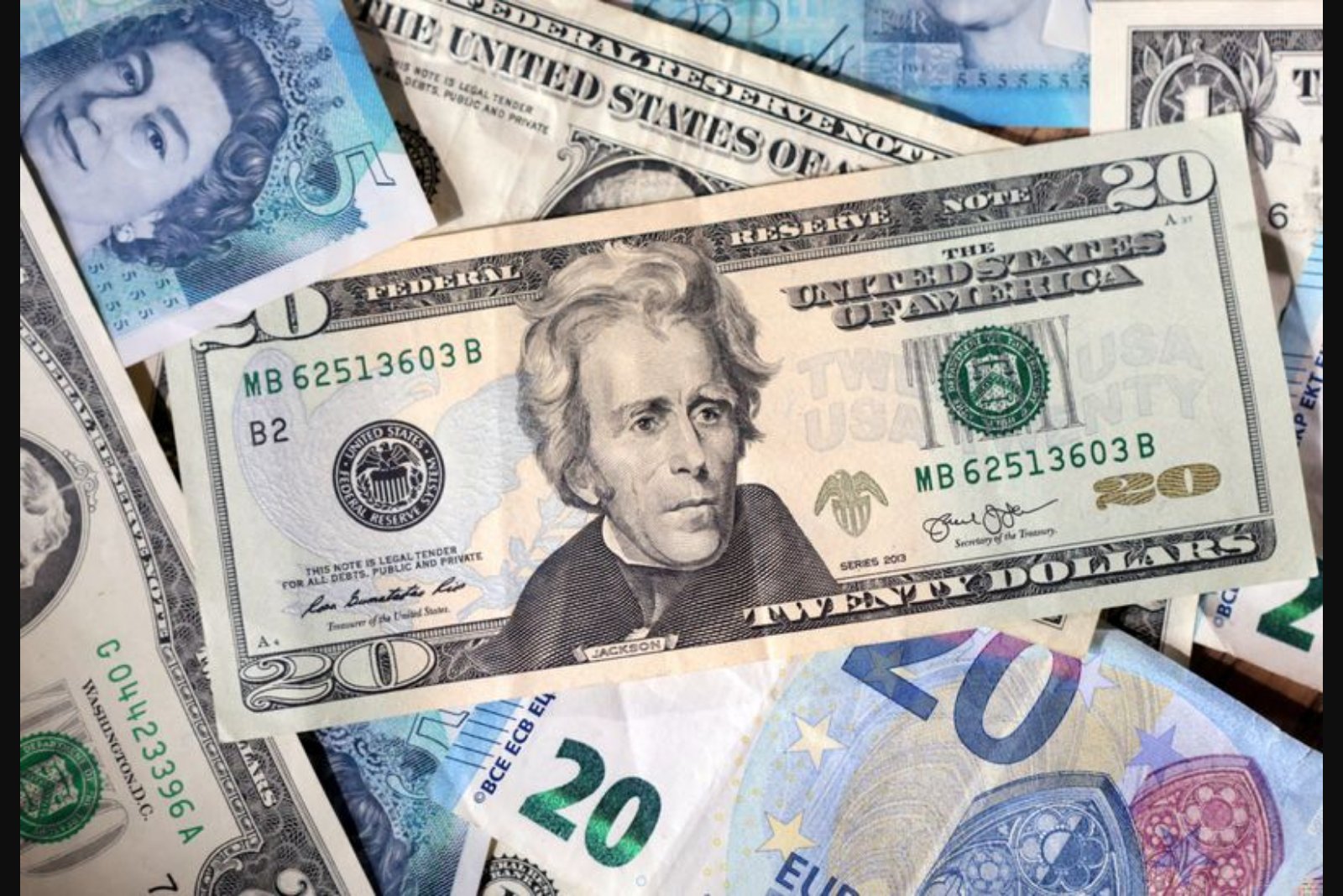
The U.S. dollar has given up most of the surge it recorded after the outbreak of hostilities involving Iran, as a tentative ceasefire restored appetite for higher-risk currencies. Still, market participants say entrenched demand for U.S. assets and a diminished likelihood of Federal Reserve rate cuts create structural supports that make a pronounced decline unlikely.
After the conflict began, the dollar index - which tracks the currency against six major peers - climbed more than 3% to a 10-month peak of 100.64 as investors sought refuge in the greenback. It has since retraced most of that advance and was trading at 98.07, roughly 0.5% above its pre-conflict level.
That episode followed a dramatic move earlier in the year when the dollar slid 11% in the first half of 2025 amid market reactions to President Donald Trump’s tariffs and criticisms of the Federal Reserve. Those developments had prompted concerns about the United States’ safe-haven status. The flight back to the dollar once the Iran war began illustrated that investors continue to view U.S. markets as a refuge during acute geopolitical stress.
Market participants say further dollar weakness is possible, but most expect any retreat to be limited and not to breach 2025’s low of 95.55. The improvement in risk sentiment has also prompted a return of investors to equities after a period of U.S. equity fund outflows in early March tied to heightened volatility.
"For the dollar to keep breaking down, you basically need capital outflows from the U.S. or at least a reduction in the inflow of capital going into the U.S.," said Joaquín Kritz Lara, chief economist and strategist at Numera Analytics. "We just don’t see that happening." Investors point to robust demand for U.S. assets and the yield advantage they offer relative to many peers.
Interest-rate differentials and foreign demand
Federal data show foreign holdings of U.S. Treasuries rose to $9.305 trillion in January from $9.271 trillion in December, reflecting continued foreign appetite for U.S. government debt amid elevated yields and shifting expectations about the timing of Federal Reserve easing. That stock of foreign holdings is up 8% year-over-year, underscoring sustained overseas demand even as Treasury issuance has expanded to finance widening U.S. fiscal deficits.
Markets had been pricing in two Fed rate reductions in 2026, but the shock of higher oil prices linked to the conflict has reduced that to one at most, adding to the dollar’s near-term support. At the same time, central banks in other regions are responding to the energy-driven inflation impulse. The European Central Bank, for example, is expected to adopt a more hawkish stance as it contends with the fallout from the energy shock.
"You would think that that would be bad for the dollar and I think, tactically it probably could be," Numera’s Lara said. "But in the medium-term you care about the level of interest-rate differentials, and the level of interest-rate differentials are still very much in favor of the U.S. relative to Europe."
One gauge of that yield advantage is the 2-year German-U.S. bond spread, which stands at 1.135 percentage points. While this is down from its 2018 high of about 3.57 percentage points, it remains above the 20-year median of 0.93 percentage points, indicating that U.S. assets continue to offer a relative yield cushion versus European equivalents.
Market positioning and geopolitical uncertainty
The current lull in the U.S.-Iran conflict is fragile. Both nations have imposed shipping blockades from the strategic Strait of Hormuz, and the twin blockades retain the potential to escalate tensions and revive safe-haven flows into the dollar. Market strategists caution that the currency should not be assumed to be carrying a zero geopolitical risk premium while negotiations remain unresolved.
"Is there any reason for the dollar to be pricing in a zero geopolitical risk premium? I would argue not," said Paresh Upadhyaya, director of market strategy at Pioneer Investments, in reference to the partial reversal of the war-related dollar gains. He added that a failure of diplomatic talks could quickly restore safe-haven demand for the greenback.
Even those more bearish on the dollar concede the chance of it sliding meaningfully below recent lows in the near term is slim. Elias Haddad, global head of markets strategy in the forex team at Brown Brothers Harriman, points to longer-running structural headwinds - eroding U.S. fiscal credibility, a persistent current account deficit, and worries over the politicization of the Federal Reserve - that weigh on the currency over time.
But in the near to medium term, these opposing forces - strong external demand for U.S. assets, a yield advantage versus Europe, and episodic safe-haven flows when geopolitics flare - combine to make significant moves in either direction less likely. "Over the next six to nine months, the cyclical backdrop for the dollar is neutral," Haddad said.
Implications for markets
In practice, the interplay of geopolitics, interest-rate expectations and capital flows suggests the dollar will remain range-bound for now. A renewed spike in the conflict or an unexpected shift in capital movement into or out of the United States would be needed to drive substantially larger moves. For now, investors appear content to price in a modest war premium while continuing to allocate to U.S. assets that provide relatively attractive yields.