
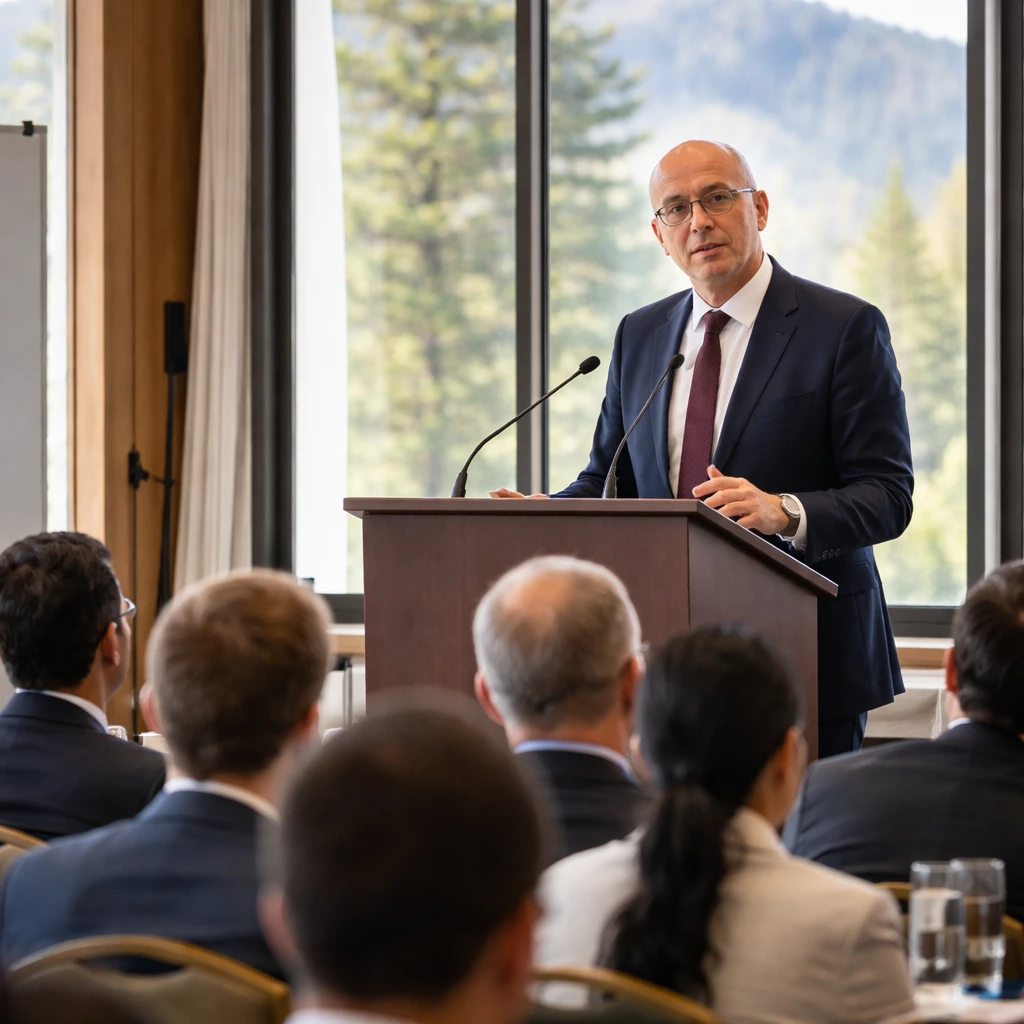
Pablo Hernandez de Cos, general manager of the Bank for International Settlements (BIS), told the U.S. Federal Reserve's Jackson Hole Economic Policy Symposium in Wyoming that stablecoins do not operate credibly as a payment method at scale. In his remarks, de Cos said tokenized deposits represent a stronger option to deploy similar technology for routine payments.
De Cos said the two instruments - tokenized deposits and stablecoins - could coexist, but should play different roles. He said tokenized deposits ought to handle most day-to-day payment needs, while stablecoins would be better suited to narrower, more specialised functions.
The BIS chief addressed a range of concerns he sees with the growing use of dollar-pegged stablecoins. He noted that while some policymakers, including U.S. Treasury Secretary Scott Bessent, have positioned stablecoins as supporting the dollar and generating demand for Treasuries, there are significant trade-offs and risks that merit attention.
De Cos said one potential effect of broad stablecoin adoption is a shift in funds away from traditional banks. That migration could raise bank funding costs and, in turn, push borrowing costs higher for ordinary borrowers, he warned. He also said stablecoins undermine what he called the "singleness" of money - meaning customers face frictions and costs when moving between different instruments because they must sell one product and buy another.
Interoperability is another central issue in his critique. De Cos argued stablecoin platforms do not offer genuine interoperability and that effective controls are difficult to enforce uniformly across platforms. Those limitations, he said, amplify money-laundering concerns because cross-platform rules and enforcement are hard to apply consistently.
On the topic of monetary sovereignty, de Cos expressed concern about the implications of dollar-pegged stablecoins for countries outside the United States. He suggested that if borrowers in other jurisdictions migrate heavily into dollar-denominated stablecoins, domestic monetary policy could be weakened and local economies could become more tightly linked to external policy moves.
In contrast, de Cos described tokenized deposits as a more direct way to harness tokenisation while preserving the foundations of the monetary system. He acknowledged, however, that tokenized deposits are not a panacea; they too must address interoperability, governance and legal questions, including settlement arrangements.
De Cos's remarks come as he is a candidate to replace Christine Lagarde as European Central Bank president next year. He framed his assessment as a technical and policy argument about how best to integrate tokenisation into existing monetary systems while managing associated risks.
Contextual note: The discussion included references to dollar-pegged stablecoins and specific market instruments such as Tether USDt (USDT), which have been central to the debate over stablecoins' role in payments and reserves.