
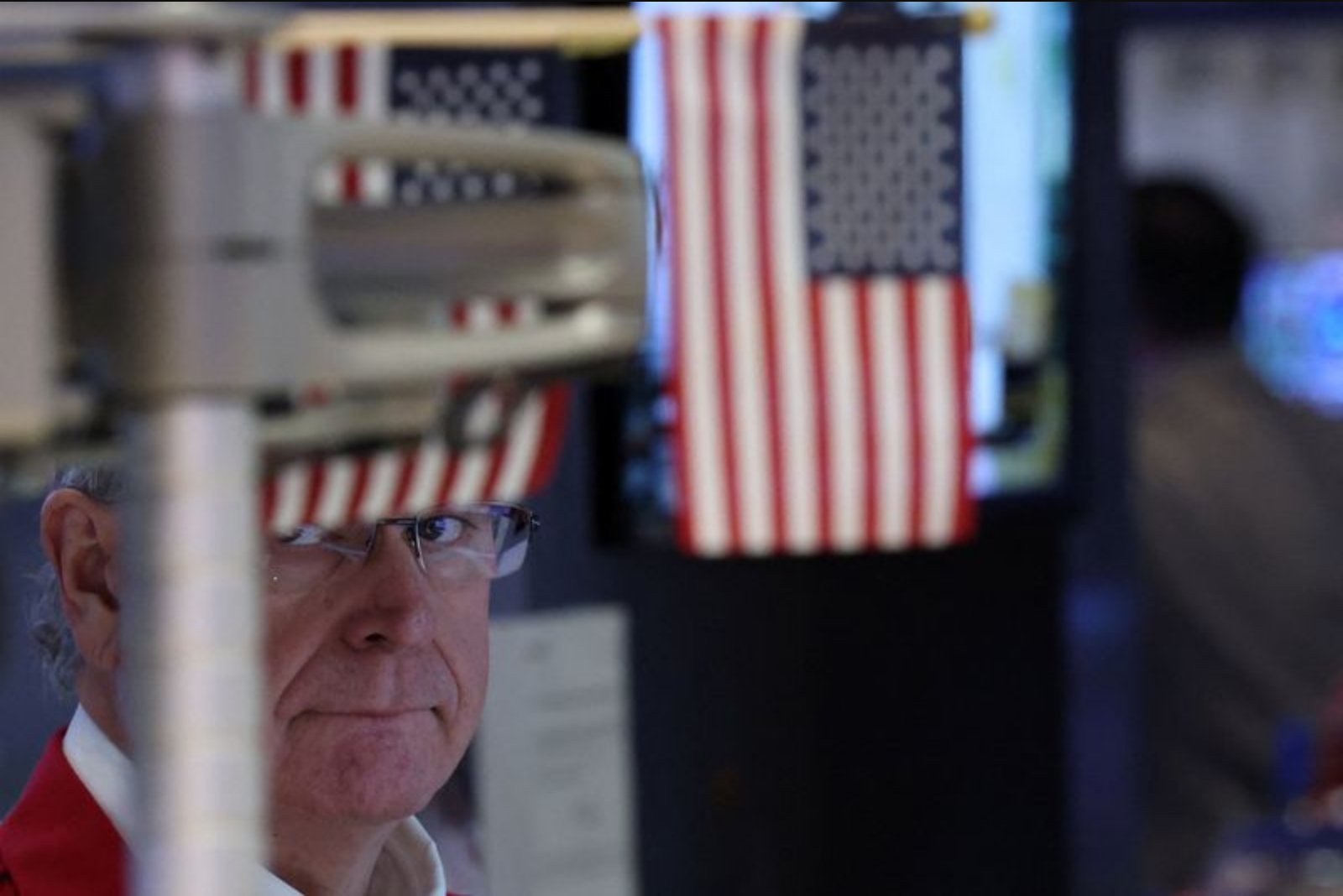
Global financial markets are increasingly behaving as if the recent Middle East hostilities are receding, with major equity indexes moving back toward pre-conflict levels and Wall Street again flirting with record highs. That change in market tone - partly driven by hopes of renewed diplomacy - has capped crude oil prices and given investors room to concentrate on corporate earnings and macroeconomic indicators.
Energy markets were subdued heading into Wednesday, with Brent trading around $96 a barrel and West Texas Intermediate near $92 a barrel. That followed a public comment from President Trump on Tuesday that talks with Iran might resume within days, even as the U.S. military said it had halted Iran's maritime trade as part of its naval blockade of the Strait of Hormuz.
The combination of diplomatic signals and naval measures helped propel another rally on Wall Street on Tuesday. The Nasdaq rose by 2%, while the S&P 500 gained 1% to finish just below its record high. Asian markets continued the advance on Wednesday, with Japan's Nikkei up 0.9% and South Korea's KOSPI surging 3%. European equities traded little changed, and U.S. futures were also flat ahead of the open.
The rebound has not been limited to U.S. stocks: the MSCI all-country index excluding the United States reached its best level since March 2 on Tuesday, underlining a broadly improving risk appetite across regions. Volatility, as measured by the VIX, returned to levels last seen in February, and the dollar retreated from its safe-haven strength to hover near its lowest point since the outbreak of the conflict.
Corporate results are helping bolster the market narrative. The U.S. bank earnings season began in earnest this week with predominantly strong outcomes. JPMorgan reported first-quarter profits that exceeded expectations, supported by solid trading revenues and robust dealmaking activity. Citi posted its strongest quarterly revenue in a decade, driving its shares to the highest levels since 2008. Bank of America and Morgan Stanley were scheduled to report later in the day.
Outside banking, ASML - the leading supplier of chipmaking equipment - contributed to the upbeat tone by beating earnings forecasts and raising its 2026 revenue outlook, attributing the upgrade to AI-driven demand for its tools.
Not all indicators were unambiguously positive. The International Monetary Fund trimmed its global growth forecasts on Tuesday and cautioned that the world could be drifting toward an "adverse scenario" amid the conflict. However, the IMF's baseline projection assumes a short-lived war, and its global growth forecast for 2027 remained unchanged.
On the price front, U.S. producer prices jumped in March, largely reflecting an energy-driven shock. Crucially for markets, the increase was roughly half what economists had been expecting - a welcome sign given that the data period included the immediate aftermath of the Iran conflict.
Chart of the day - Markets and energy sensitivity
As financial markets gravitate back to pre-conflict levels, investors are asking why the March oil shock has not materially altered global growth expectations. One reason cited is the falling sensitivity of the world economy to fossil fuel disruptions: the share of power generated from wind and solar has more than tripled over the past decade, reducing overall dependence on oil and gas for electricity production.
Events to watch today include U.S. March import prices at 8:30 a.m. EDT, remarks from Federal Reserve officials Michael Barr and Michelle Bowman, the Fed's Beige Book release, and corporate reports from Bank of America and Morgan Stanley.
Separately, a webinar scheduled for April 23 will feature a timely discussion on rethinking safe-haven assets in uncertain times, with ROI colleague Jamie McGeever taking part.
Investors' renewed focus on fundamentals - earnings, growth forecasts and inflation measures - comes as crude settles back from earlier spikes. Whether this recalibration endures will depend on how diplomatic efforts, military actions and incoming economic data evolve in the weeks ahead.