
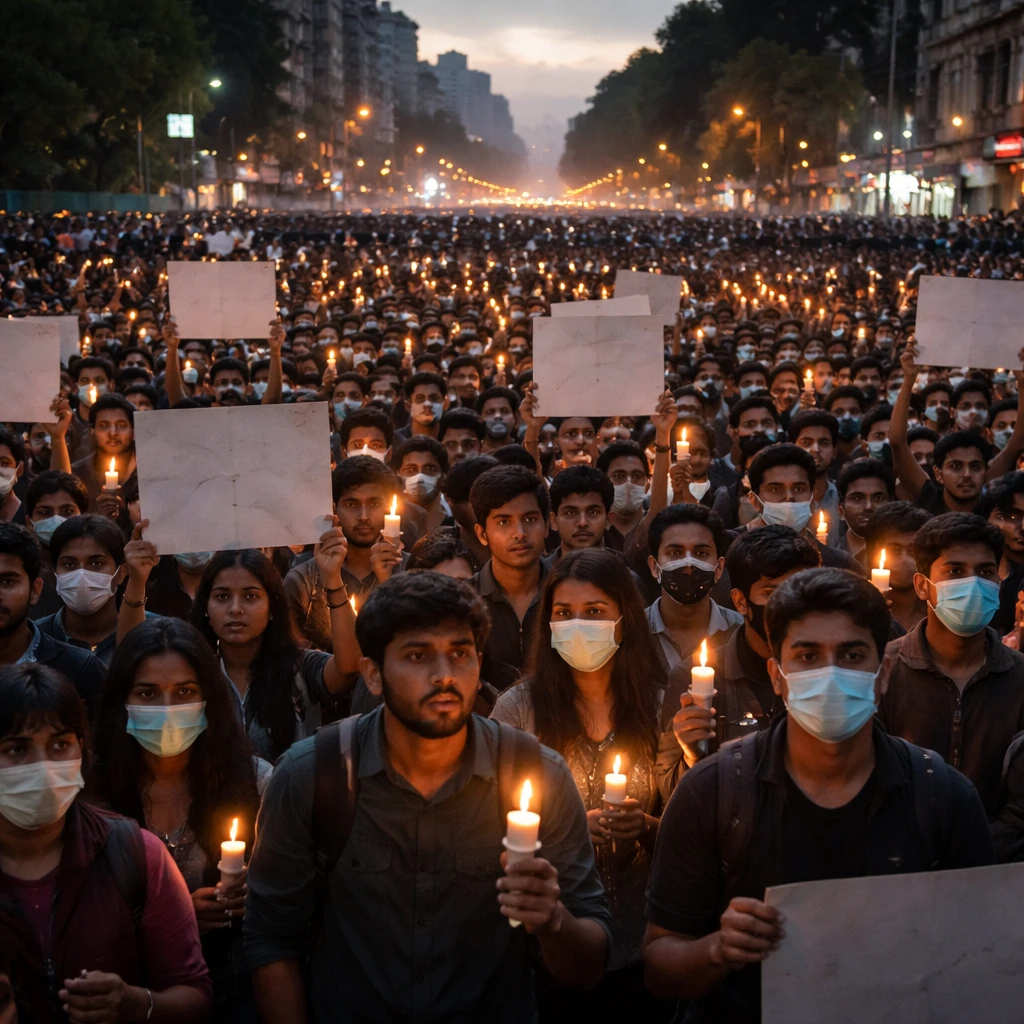
MUMBAI, July 23 - Thousands of supporters of India’s youth-led "cockroach" movement have been on the streets since June, demanding the resignation of the education minister after a series of exam paper leaks. Activists say the leaks revealed widespread corruption - a charge that has drawn people into public demonstrations repeatedly over the years. Organisers and participants describe the current unrest as the most significant challenge Prime Minister Narendra Modi has faced in his third term.
The present wave follows a pattern of high-profile rallies that over the past two decades have been sparked by graft, violent crime and contested policy changes. Below are details of major nationwide mobilisations during that period.
April 2011: Anti-corruption campaigner Anna Hazare launched the first of two hunger strikes to press the government to adopt stronger anti-graft legislation. Hundreds of thousands of people rallied in support across India. Hazare was briefly detained by the then-Congress alliance government. Parliament ultimately enacted an anti-corruption law, but Hazare said it fell short of his demands. A segment of his supporters later formed the Aam Aadmi Party in 2012, which is now a parliamentary opponent of Prime Minister Modi.
December 2012: Public outrage erupted in New Delhi after the gang-rape of a 23-year-old woman on a moving bus. Demonstrators blockaded roads, clashed with police formations and demanded systemic reforms to address violence against women. Many protesters called for the perpetrators to be given the death penalty. The victim died a few days after the assault in a Singapore hospital. In response to the protests, India amended laws to broaden the legal definition of sexual assault and established fast-track courts to accelerate trials in such cases.
December 2019: Passage of a new citizenship law drew hundreds of thousands into the streets and precipitated bouts of sectarian violence that left at least 76 people dead. The Citizenship Amendment Act sought to fast-track citizenship for Hindus, Parsis, Sikhs, Buddhists, Jains and Christians who had arrived from Afghanistan, Bangladesh and Pakistan on or before December 31, 2014. Critics argued that, especially combined with a proposed national register of citizens, the law discriminated against Muslims and contravened the spirit of India’s secular constitution. Some opponents feared that in certain border states the government might strip citizenship from Muslims lacking documentation. The legislation was implemented in March 2024.
September 2020: Thousands of farmers blocked roads and railway tracks in protest against new agricultural laws. Farmers said the changes could enable the government to stop procuring grain at guaranteed prices, exposing them to private buyers. The government defended the reforms, saying they would modernise India’s expansive agricultural sector and permit sales to institutional buyers and large retailers. The protests persisted for more than a year, after which the government repealed the laws.
June 2022: A revamp of military recruitment aimed at bringing in younger and fitter troops and cutting pension liabilities led to rail blockades and demonstrations nationwide. Critics - including new recruits, veterans and opposition figures - objected to the introduction of fixed four-year contracts, arguing that short-term service would hamper veterans’ prospects for other employment. The government declined to reverse the reform but did offer to reserve 10% of state vacancies for those who had served the four-year term.
August 2024: Thousands of doctors staged prolonged street protests after the rape and murder of a trainee doctor in a government hospital in Kolkata. Medical professionals and supporters demanded safer workplaces, stronger action against violence targeting women, and a rapid and thorough investigation of the attack.
Collectively, these episodes show a recurring dynamic in which specific incidents - whether corruption allegations, violent crimes, controversial policy shifts or institutional reforms - have catalysed large public responses. Authorities have at times enacted legal changes, offered policy concessions or defended reform measures while protests continued. The mobilisations have ranged from non-violent hunger strikes and demonstrations to blockades and confrontations that escalated into violence.
As the most recent protests continue, activists point to a broader pattern of public dissatisfaction with perceived impunity and institutional failures. The present movement, driven primarily by young people, underscores how incidents involving education integrity can trigger wider civic mobilisation when they resonate with existing grievances about corruption and governance.