
The U.S. Supreme Court has allowed the Trump administration to terminate Temporary Protected Status (TPS) for Haitians and Syrians, a ruling that could remove work permits and deportation safeguards for hundreds of thousands of people currently living in the United States.
For many in the Haitian community, the decision has immediate, personal consequences. Uthy - a 32-year-old who completed seven years of medical training in Haiti before fleeing to the United States three years ago with her husband and young child - said she now lives in persistent fear that she or family members could be detained and returned at any time. Uthy, who holds TPS and lives in Sunrise, Florida, about 30 miles from Miami, asked that her last name be withheld for fear of retribution. "I live in pain every single day," she said.
TPS is a program created by Congress in 1990 that grants temporary relief from deportation and allows eligible nationals already in the U.S. to obtain work authorization when their home countries are experiencing natural disasters, armed conflict or other extraordinary conditions. Though intended as a temporary measure, some designations have been renewed repeatedly, leaving many beneficiaries in long-term temporary status without a direct route to citizenship.
The Supreme Court decision has sent shockwaves through established Haitian communities in South Florida, New York, Massachusetts and New Jersey, where TPS recipients have invested years in establishing homes, businesses, families, places of worship and careers. Advocates warn that the effects will extend beyond those who may ultimately be deported.
"They’ve spent years building lives on an uncertain legal foundation - raising families, sustaining churches, opening businesses and filling critical jobs in areas like healthcare, hospitality, construction and caregiving," community leaders said, reflecting concerns about broader economic and social ramifications.
Public rhetoric and policy positions at the federal level have intensified tensions around immigration. The ruling follows a period of heightened controversy over statements by then-President Donald Trump and other officials, including repeated criticism that Trump has used racist language toward immigrants of color. During the 2024 election campaign, false claims promoted by Trump and now-Vice President JD Vance alleged that Haitian migrants in Ohio were eating pets. The reporting period also noted that, "As recently as December, Trump referred to Somali immigrants as 'garbage.'"
Despite polling showing that strict immigration enforcement remains unpopular, the court's decision effectively clears the way for the administration to move ahead with ending TPS protections for affected groups. Stephen Miller, White House deputy chief of staff for policy and homeland security adviser, said to reporters after the ruling, "If you no longer have status in this country, then you’re supposed to be deported."
Community response and immediate needs
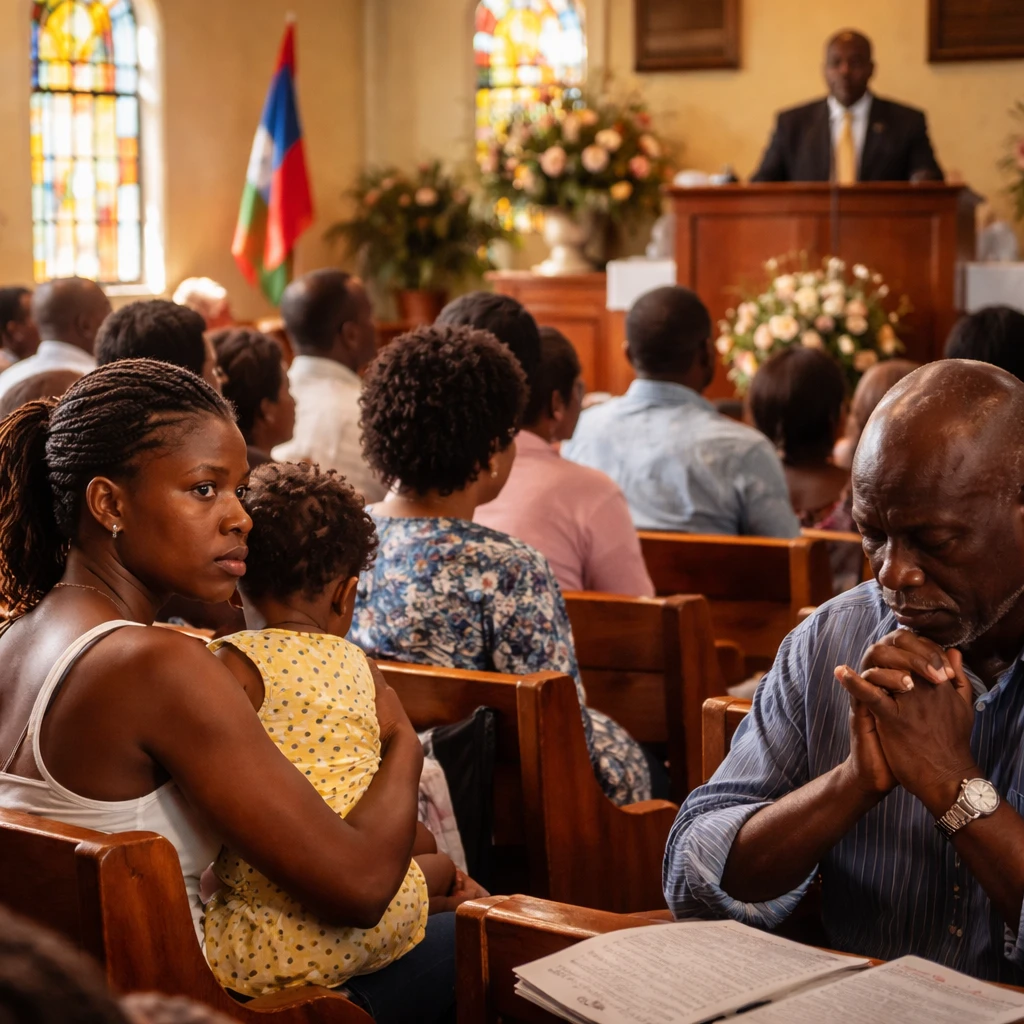
In the hours and days following the decision, Haitian communities began mobilizing social support systems. Churches, relatives, employers and community organizations stepped forward to provide shelter, food and other forms of assistance for those who may lose the right to work.
Jean Marcellin, a Haitian American restaurateur with operations across New York, described a likely wave of reliance on family networks and faith-based institutions. "We’re going to have to give them shelter, and we’re going to have to give them a place to stay and feed them because they won’t be able to work," he said. "Most likely they’re going to rely on family members and community help through churches."
Haitian Emmanuel Baptist Church, located in the Little Haiti neighborhood north of downtown Miami, is one such institution preparing to absorb need. Ronald Eugene, 61, assistant pastor of the church that conducts services in both English and Haitian Creole, used a sermon rooted in Psalm 23 to urge calm and resilience. In an interview after the service, Eugene emphasized the role of the church in providing practical support: "This is when we, as a church, as a body, sometimes might need to step up helping," he said. "Because they won’t have that support."
Religious leaders and community organizers are already weighing how to respond if large numbers of TPS holders lose work authorization. Reverend Daniel Ulysse, a Haitian-born Baptist minister and chair of the Haitian American Republican Caucus, estimated that 10% to 15% of the roughly 60,000 Haitians in parishes across Pennsylvania, Maryland, New York, New Jersey and Connecticut hold TPS. Ulysse recently met with elected officials in Washington, D.C., and said he hopes the decision will be reversed. "Many Haitians voted for this Republican administration. Many people supported it. They were expecting better," he said.
Legal options and uncertainty
Immigration lawyers have reported a surge in inquiries as TPS holders seek avenues to remain in the United States, including asylum and other work-permitting mechanisms. The history of TPS - designed to offer temporary refuge during crises - means many beneficiaries have been in prolonged temporary status precisely because the program can be renewed repeatedly for years.
Not all TPS recipients would be immediately deportable if the designation is ended. Some have pending asylum claims or other legal filings that may allow them to remain in the U.S. temporarily. Still, the legal landscape is fraught with difficulties. Allen Orr, a Washington-based immigration attorney, said his office is working with clients to identify possible legal alternatives, while warning about the near-term hurdles in immigration courts.
"For Haitians who’ve been in the country sometimes many, many years, it’s difficult to provide the documentation to show you have a newfound fear to return back home," Orr said. He also highlighted another fear expressed by clients: the prospect of being sent to countries where they have no ties if deportation directly to Haiti is not feasible because of dangerous conditions there. "The concept of being deported to a place that might not speak your language and which you have no connection to, after you’ve been somewhere in some cases five-plus years, is terrifying," he said.
Advocates point to pending legislation as a potential, though uncertain, lifeline. North Miami City Clerk Vanessa Joseph, an immigration attorney and Haitian American, noted that a bill before the U.S. Senate would extend TPS protections to Haitians by statute. The future of that bill - and of a separate measure passed by the House in April - remains unclear.
Lives and livelihoods at stake
Individual stories exemplify the human dimension of the ruling. Farah Larrieux, 47, a TPS holder living alone in Miramar, Florida, about 30 minutes from Miami, is the owner and founder of THÉLAR Management Group, a communications company that promotes Haitian and Caribbean small businesses. Her office walls are covered with awards recognizing her work across South Florida.
In the days before the court issued its decision, Larrieux said she had anticipated the outcome. She reflected on the symbolic timing, noting it came as the country observed its 250th anniversary. "The United States is still an inspiration for many countries," she said. "And it is a shame that as we are celebrating the 250th anniversary of the country, this country is losing its values."
For many TPS holders, the decision crystallizes immediate anxieties about employment, family separation and community stability. Churches and community institutions are bracing to fill gaps in support, immigration attorneys are guiding clients through limited legal options, and advocates are pursuing legislative remedies whose prospects are uncertain.
The ruling marks a turning point for TPS recipients from Haiti and Syria - and for the communities and sectors that have relied on their labor and civic participation.