
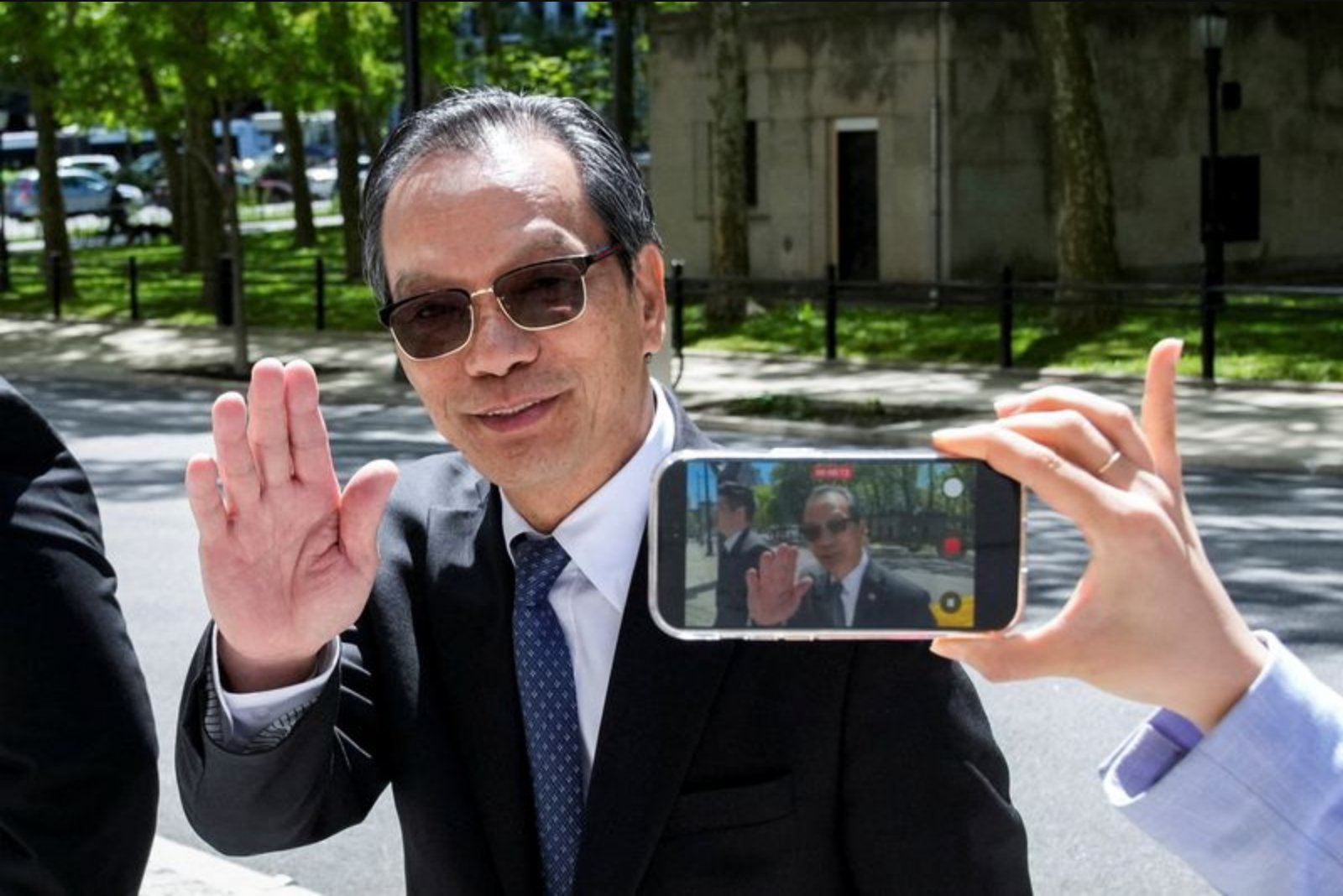
A federal jury sitting in Brooklyn on Wednesday returned a guilty verdict against Lu Jianwang, 64, finding him liable on charges that he acted as an unregistered agent of the Chinese government by helping to open and run an office prosecutors described as a "secret police station" in Manhattan’s Chinatown.
Prosecutors told the court that Lu should have informed the U.S. Attorney General that he was working on behalf of China when he assisted in establishing the center in 2022. They said Lu also aided Chinese authorities in locating a pro-democracy activist residing in California, an allegation that prosecutors presented at trial but did not link to any physical harm against the activist.
Lu was taken into custody in April 2023. He had denied the three felony charges he faced - conspiracy to act as an unregistered foreign agent, acting as an unregistered agent of China, and obstruction of justice - entering not guilty pleas prior to trial. After a weeklong trial, the jury convicted him on the counts brought by federal prosecutors in Brooklyn. He faces a statutory maximum sentence of up to 30 years in prison.
In announcing the verdict, FBI Assistant Director in Charge James Barnacle said the outcome should serve as a warning to others. "May today’s verdict send a message to other foreign agents - the FBI maintains its unwavering resolve to reveal and disrupt the clandestine operations of adversarial nations," he said in a statement released alongside the verdict notice.
The Justice Department has increasingly concentrated resources on cases it characterizes as "transnational repression," pursuing investigations into alleged efforts by foreign governments such as China and Iran to intimidate political opponents living in the United States. Prosecutors in this case framed the activities in Brooklyn as part of that larger enforcement focus.
During opening statements on May 6, prosecutor Lindsey Oken portrayed Lu as a naturalized U.S. citizen with ties to Chinese law enforcement. She said Lu traveled to China in 2022, met with officials there who instructed him to open the center, and then ran the operation out of an otherwise nondescript office building in Chinatown. According to Oken, Lu began by assisting Chinese nationals in New York with renewing driver’s licenses and other documents - activities that, prosecutors argued, should have been disclosed to U.S. authorities if performed on behalf of a foreign government.
Prosecutors also asserted that Lu agreed to help Chinese authorities locate a U.S.-based pro-democracy activist. The prosecution emphasized that locating the activist was part of the alleged work performed for Chinese officials. At trial, prosecutors did not assert that the activist suffered harm as a result of the effort.
Lu’s defense attorney, John Carman, maintained that his client’s motivations were humanitarian. Carman said Lu helped create the center to assist Chinese nationals who, due to COVID-19 travel restrictions, could not return to China to renew documents. He argued that Lu was not acting under direction from Chinese government officials.
A co-defendant arrested with Lu, identified as Chen Jinping, pleaded guilty in 2024 to conspiring to act as an unregistered agent of China.
The arrests in this matter followed reporting from 2022 by the advocacy group Safeguard Defenders, which documented the existence of so-called overseas "service stations" that the group said were linked to Chinese police efforts to pressure individuals to return to China. That 2022 investigation, according to prosecutors, included accounts of similar centers in other locations, and it spurred law enforcement attention to these alleged operations abroad.
With the jury’s verdict now entered, Lu faces federal sentencing procedures that will determine his term in prison, subject to statutory limits. The case underscores the Justice Department’s ongoing emphasis on uncovering and disrupting activities it regards as clandestine interventions by foreign governments on U.S. soil.