
Overview
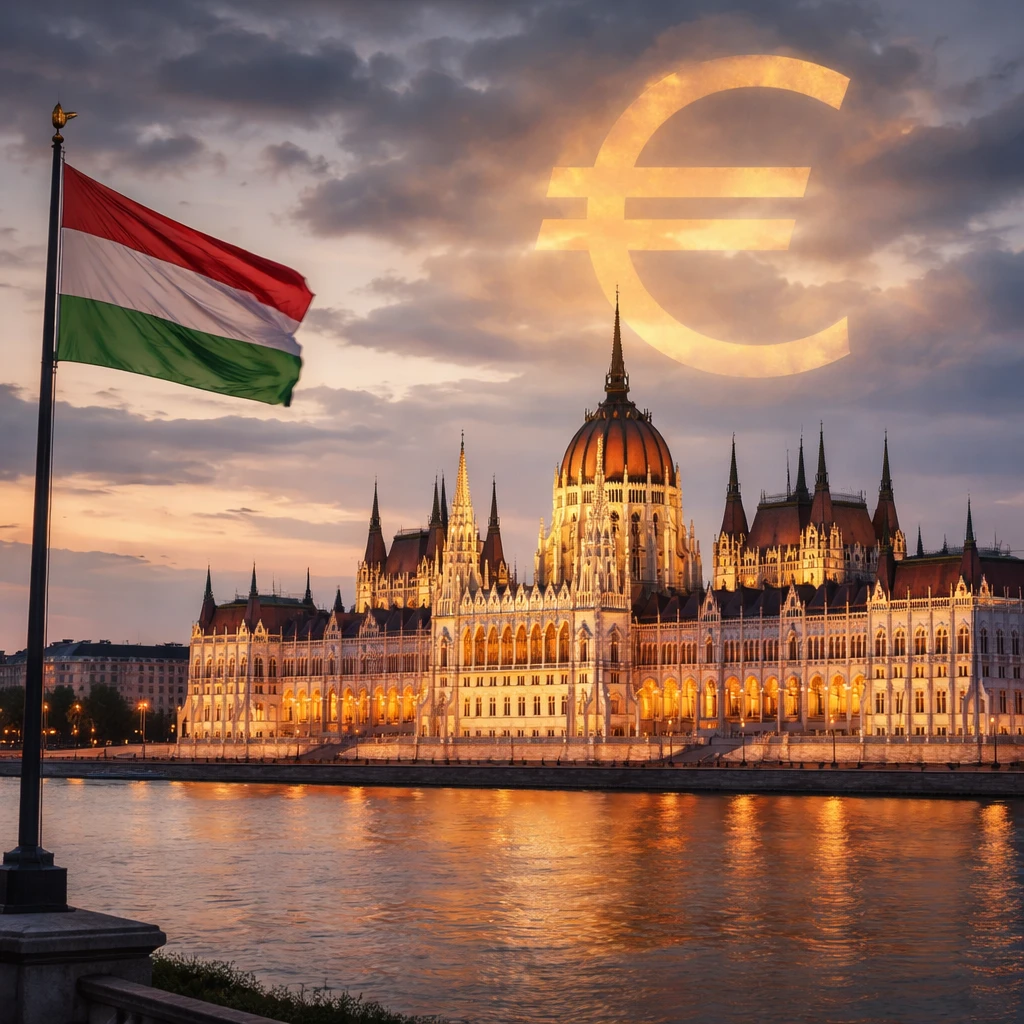
Hungarian Prime Minister Peter Magyar declared on Friday that Hungary could satisfy the European Union's economic benchmarks necessary for euro adoption by 2030. He made the remark after discussions in Budapest with Kyriakos Pierrakakis, the president of the Eurogroup. Magyar emphasized that meeting the technical criteria is distinct from formally adopting the common currency - that step would be a political decision and would require public consultation.
Political context and priorities
Hungary currently does not have a formal deadline for joining the single currency. Magyar's Tisza party has placed euro accession at the center of its economic program as the newly formed administration aims to mend relations with the European Union, which the prime minister said had been strained over the previous 16 years under the government led by his predecessor, Viktor Orban.
Economic rationale cited by the prime minister
Magyar argued that striving to meet the euro-entry requirements would bring tangible market benefits for Hungary, including lower bond yields and reduced risk premia. He quantified the potential fiscal advantage by saying the move could lead to savings in the hundreds of billions of forints each year for the state budget.
Next steps and caveats
While the prime minister set out what he described as a credible timetable for meeting the EU's economic conditions by 2030, he also made clear that actual accession entails a separate political decision and an engagement with the public. At present there is no formal target date for joining the euro, leaving the timetable contingent on both technical progress and subsequent political processes.
Concluding note
Magyar's statements after the meeting with the Eurogroup president lay out a potential path toward the single currency focused on meeting technical criteria and achieving market benefits, while reiterating that final adoption would require democratic consultation and an explicit political decision.