
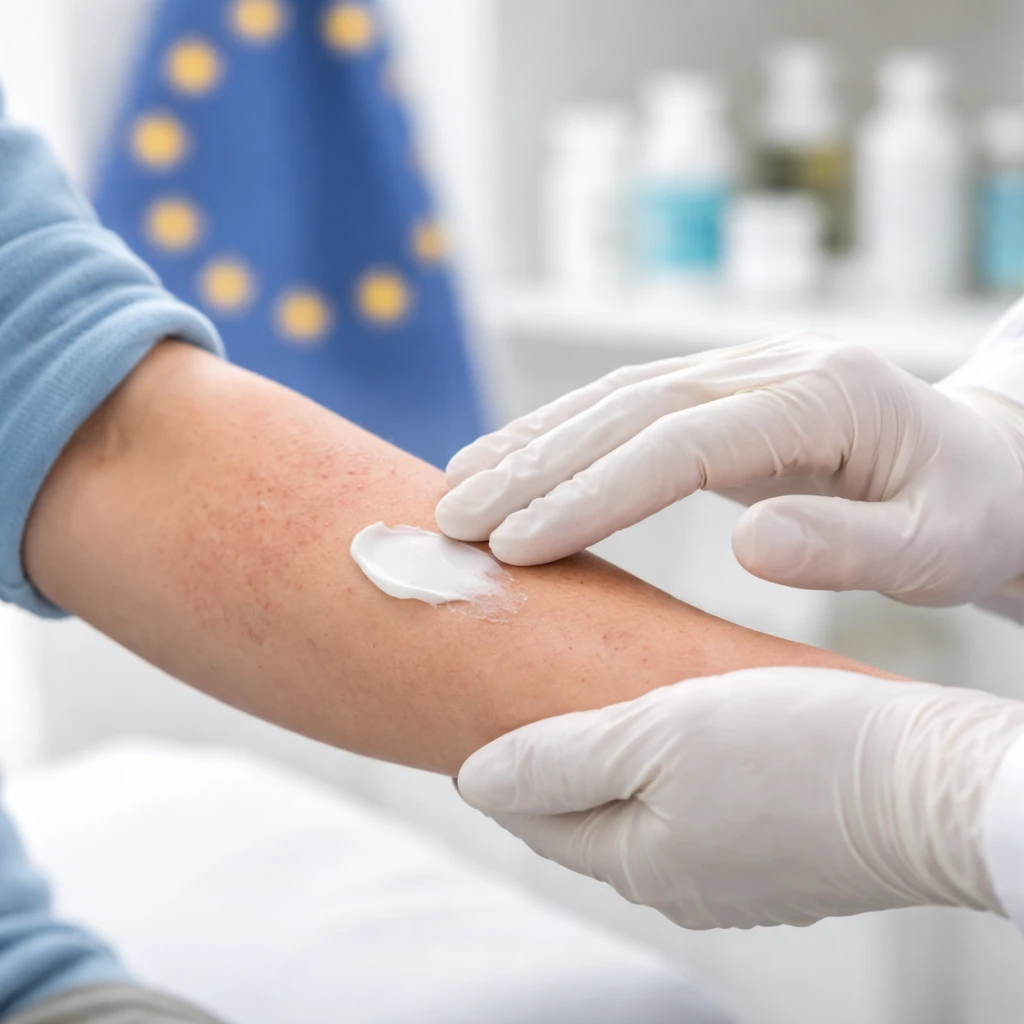
Shares of Incyte Corporation (NASDAQ:INCY) rose 4.6% on Friday following a positive opinion from the Committee for Medicinal Products for Human Use (CHMP) at the European Medicines Agency recommending approval of Opzelura (ruxolitinib) cream for the treatment of moderate atopic dermatitis in adults.
The CHMP recommendation covers adult patients for whom existing topical treatments - specifically topical corticosteroids and topical calcineurin inhibitors - are inadequate or inappropriate. If the European Commission accepts the CHMP's opinion and grants marketing authorization, Opzelura would be the first steroid-free, topical Janus kinase (JAK) inhibitor available for this indication in the European Union.
The positive regulatory view is grounded in data from the Phase 3 TRuE-AD4 trial, with supporting evidence from the earlier TRuE-AD1 and TRuE-AD2 studies. In TRuE-AD4, ruxolitinib cream met both co-primary efficacy endpoints at Week 8. A statistically higher share of patients treated with ruxolitinib cream achieved at least a 75% improvement in the Eczema Area and Severity Index (EASI75) compared with vehicle cream, and a statistically higher proportion achieved Investigator's Global Assessment Treatment Success (IGA-TS).
Efficacy extended beyond the initial assessment window. At Week 24, benefits were maintained with 84.3% of patients achieving EASI75 and 70.6% achieving IGA-TS while using the cream on an as-needed basis. Mean affected body surface area among participants fell from 15.1% at baseline to 2.5% by Week 8, and remained at 2.5% at Week 24.
From a tolerability perspective, ruxolitinib cream was reported to be well tolerated throughout the 24-week treatment period. The trial reported no serious infections, no major adverse cardiovascular events, no malignancies and no thromboses during that timeframe. The most frequently observed treatment-emergent adverse events were upper respiratory tract infection, occurring in 10.6% of patients, and nasopharyngitis, occurring in 6.3%.
Atopic dermatitis, noted in the trial context, is described as a chronic, recurring, inflammatory and highly pruritic skin condition. The disease is the most common form of eczema and is estimated in the provided data to affect up to 4% of adults worldwide, with a reported prevalence among adults in Europe of 4.4% to 7.1%.
The CHMP's positive opinion will now be subject to review by the European Commission, which has the authority to grant central marketing authorization for products across the EU. Until the Commission completes its review, the recommendation does not constitute final approval.
- Key points:
- CHMP issued a positive opinion recommending approval of Opzelura (ruxolitinib) cream for adult moderate atopic dermatitis when other topical therapies are inadequate or inappropriate.
- Phase 3 TRuE-AD4 and supporting TRuE-AD1/AD2 studies showed statistically significant efficacy at Week 8 with maintained responses through Week 24 and reductions in affected body surface area.
- Safety data over the 24-week treatment period showed no serious infections, major adverse cardiovascular events, malignancies or thromboses; most common adverse events were upper respiratory tract infection and nasopharyngitis.
- Sectors impacted: Healthcare, pharmaceutical manufacturing, and equity markets related to biotech and specialty pharma companies.
- Risks and uncertainties:
- The CHMP opinion must still be reviewed and approved by the European Commission before central marketing authorization is granted, so final regulatory approval is not guaranteed.
- Safety observations reported in the article cover a 24-week treatment period; longer-term safety and tolerability beyond that timeframe are not addressed in the provided information.
- The recommended indication applies specifically to adult patients for whom topical corticosteroids and topical calcineurin inhibitors are inadequate or inappropriate, limiting the eligible patient population described in the article.
The CHMP recommendation propelled a positive market reaction for Incyte's shares, reflecting investor response to the prospect of a new topical, steroid-free JAK therapy option in the EU pending final regulatory action by the European Commission.