
World November 24, 2026 05:59 PM

FAA Suspends Some Arrivals at O'Hare After Ground Radar and Tracking Fault

Technical problem in airport surveillance system causes delays affecting roughly 9% of flights during Thanksgiving travel peak

By Priya Menon
Share
Twitter Reddit Facebook LinkedIn

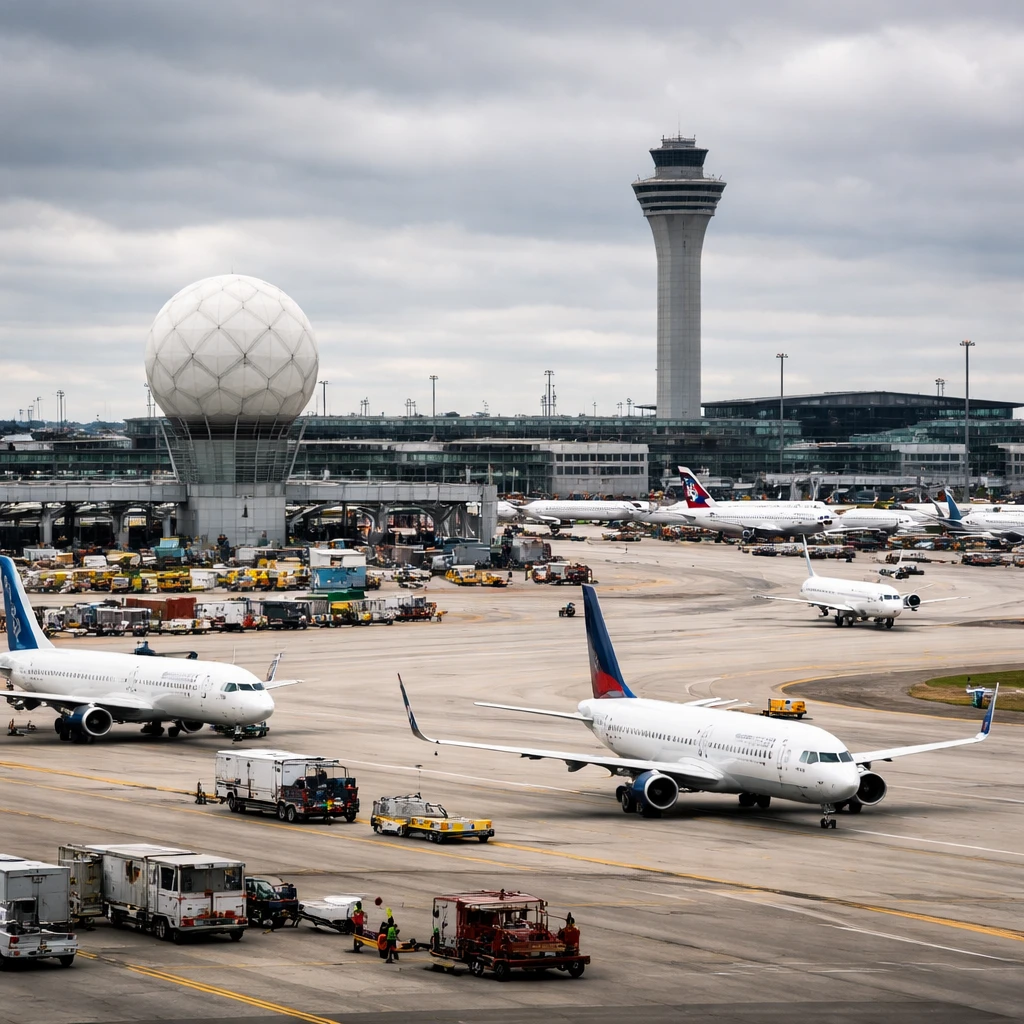
The U.S. Federal Aviation Administration announced a pause on a portion of arrivals at Chicago O'Hare International Airport after a ground surveillance radar and tracking system experienced a technical failure. The system supports controller monitoring of aircraft and vehicles on runways and taxiways. The agency said the outage produced delays for about 245 flights, representing roughly 9% of operations at the airport on a day that is the busiest of the Thanksgiving travel period. O'Hare functions as a major hub for both American Airlines and United Airlines.

FAA Suspends Some Arrivals at O'Hare After Ground Radar and Tracking Fault
Summarize with
ChatGPT Perplexity Claude Grok Gemini

Key Points

  • A ground surveillance radar and tracking system at Chicago O'Hare experienced a technical failure, disrupting controller visibility of aircraft and vehicles - sectors affected: aviation, air traffic control.
  • The FAA paused some arrivals, resulting in delays for about 9% of flights at O'Hare, roughly 245 flights - sectors affected: airlines, travel.
  • The incident took place on the FAA-designated busiest day of the Thanksgiving travel period, amplifying operational strain for major carriers based at O'Hare - sectors affected: passenger airlines, airport operations.

The U.S. Federal Aviation Administration said Tuesday it has halted a subset of incoming flights to Chicago O'Hare International Airport after a technical issue affected a ground surveillance radar and tracking system that controllers rely on to monitor activity on runways and taxiways.

According to the FAA, the disruption involves equipment that helps air traffic controllers track both aircraft and vehicles moving across the airfield. The agency reported that the service interruption has translated into delays for about 9% of flights at the airport on the day in question, which it quantified as roughly 245 flights affected.

O'Hare operates as a major connecting hub for two of the nation's largest carriers - American Airlines and United Airlines - and the FAA highlighted that the incident occurred on the busiest travel day of the Thanksgiving holiday period. The agency's notice framed the outage in the context of that high-volume travel day.


Operational context

  • The surveillance and tracking system provides ground movement awareness to air traffic controllers, including monitoring of aircraft and service vehicles on runways and taxiways.
  • When the system is degraded or unavailable, controllers may take additional protective measures, which can include pausing some arrivals or altering traffic flow patterns to maintain safety.
  • The FAA attributed the measurable delay impact at O'Hare to the technical problem with that ground radar and tracking equipment.

Impact on carriers and travelers

The FAA's statement noted the effect on flight operations at an airport that serves as a significant hub for American Airlines and United Airlines. The pause and associated delays occurred during the peak Thanksgiving travel period, the busiest single day within that holiday window according to the FAA's characterization.

Details in the FAA release focused on the technical nature of the problem and its operational consequences in terms of delayed flights. The agency provided the estimated proportion of impacted flights at the airport - about 9% of scheduled operations, equating to roughly 245 flights - without expanding on timelines for restoration or additional remediation steps in that announcement.

The FAA continues to manage traffic while the affected surveillance and tracking capability is being addressed.

Risks

  • Ongoing degradation or interruption of ground surveillance systems can force controllers to limit or pause arrivals, potentially increasing delays and operational strain for airlines and airports - impacts airlines and airport operations.
  • The timing of the failure on the busiest Thanksgiving travel day raises uncertainty about recovery time and capacity to absorb delayed flights, with consequences for connecting itineraries and passenger flow - impacts travel and airline scheduling.
  • Limited situational awareness from faulty radar and tracking equipment can necessitate conservative traffic management actions by the FAA, which may prolong disruptions until full system functionality is restored - impacts air traffic control and flight dispatch.

More from World

Strike in Odesa Region Kills Two; Drone Attack Sparks Fire in Kyiv Apartment Block Nov 24, 2026 U.S. Halts Joint Military Actions with Ecuador Amid Probe of Lethal Operation Nov 24, 2026 Shenzhou-24 Launches With Pakistani Payload Specialist, Marking First Foreign Presence on Tiangong Nov 24, 2026 Nidal Hasan Seeks Court Order to Pause Firing Squad Execution at Fort Hood Nov 24, 2026 Man Who Wrote 'How to Kill a Federal Judge' Given 6-1/2 Year Prison Term Nov 24, 2026