
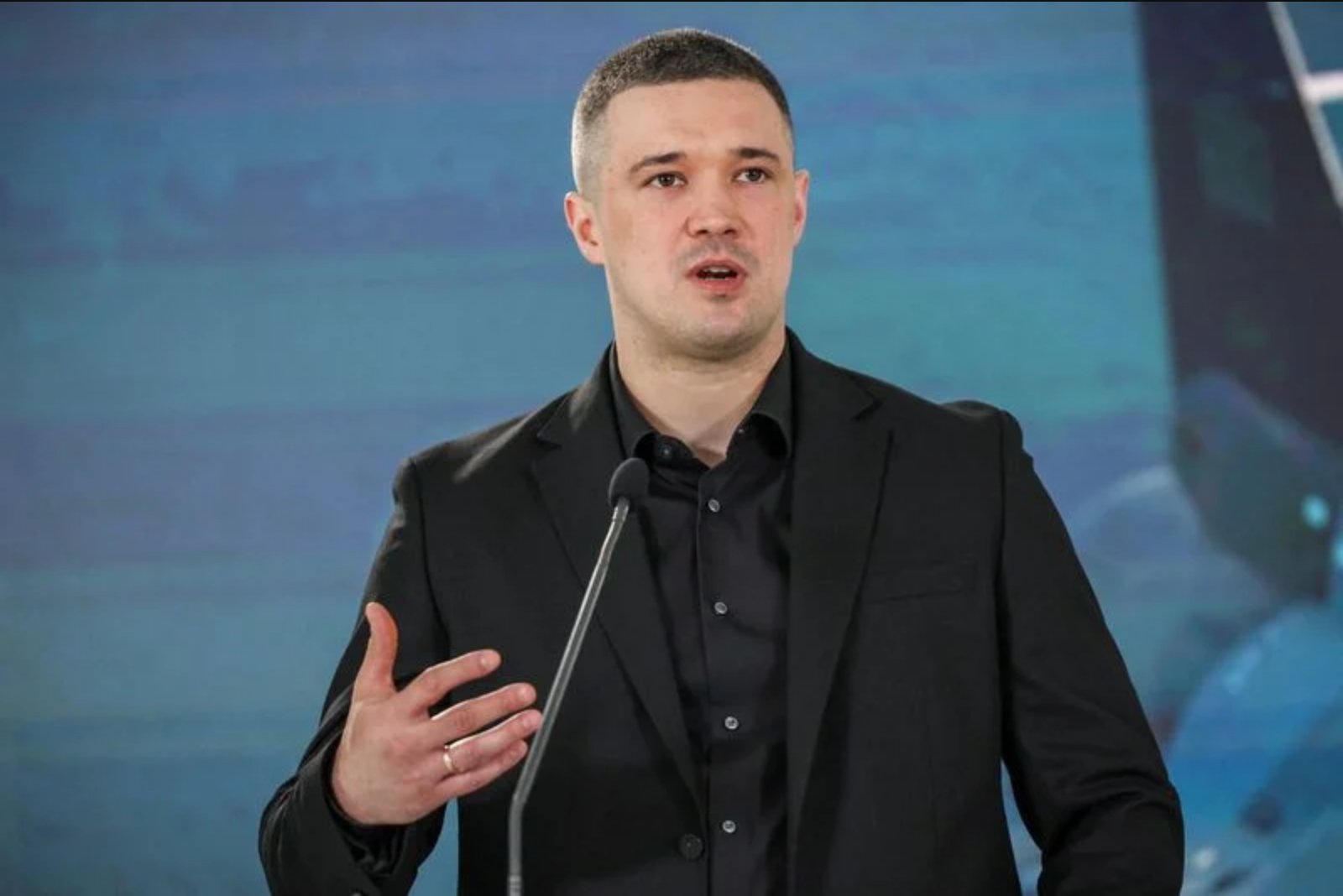
President Volodymyr Zelenskiy’s forthcoming cabinet reshuffle has drawn intense attention to Defence Minister Mykhailo Fedorov, a 35-year-old technology specialist whose potential removal could affect Kyiv’s conduct of the war with Russia. Appointed to the defence portfolio six months ago, Fedorov has led an assertive reform agenda intended to sharpen an outmanned Ukrainian military.
Supporters point to his unconventional background and reformist track record. Maria Berlinska, a well-known volunteer and proponent of drone warfare, praised Fedorov’s approach, saying his "out-of-the-box thinking" helped overcome bureaucratic obstacles across the positions he has held. Recalling her first meeting with him after his appointment, she wrote that she saw "a thoughtful, mature Ukrainian with Cossack military cunning."
But the minister’s future is unsettled. As Zelenskiy prepares his second cabinet shake-up within a year, it is unclear whether Fedorov will be retained. Even if the president nominates him again, some members of parliament have signalled cross-party reservations that could lead to rejection at a confirmation vote scheduled for Thursday. That possibility introduces risk at a delicate phase of the conflict.
Fedorov’s drive to reform defence procurement has provoked resistance from parts of the establishment, according to his allies. He has also attracted criticism from some lawmakers who argue he has not achieved rapid enough progress on promised changes to recruitment systems.
The political upheaval accelerated on Sunday when Zelenskiy said his changes were intended to bring "renewal" to government and law enforcement. The president’s decision to remove outgoing Prime Minister Yulia Svyrydenko after a year in office prompted the resignation of the entire government, creating a domino effect across Kyiv’s political apparatus. Under Ukraine’s constitutional arrangement, the president selects the defence and foreign ministers, but parliament must give formal approval.
Critics caution that replacing Fedorov could destabilise a ministry that is central to Ukraine’s military operations, at a time when Kyiv appears to be mounting fresh pressure on Russian targets, including energy infrastructure, and is slowing some Russian advances on the battlefield. Lawmakers and officials also point to continuing shortages in air defences and a shortage of personnel as unresolved vulnerabilities.
"We can shuffle around anything we want, but I have a request: at least leave the defence ministry stable," opposition lawmaker Solomiia Bobrovska told parliament on Tuesday, underscoring concern that political turnover might undermine military steadiness. Observers warn that even if Fedorov remains in office, the episode could erode public and parliamentary confidence in Zelenskiy’s leadership during wartime, precisely when Ukraine’s strategic position appears to be improving.
Fedorov’s supporters in the military point to concrete changes since he moved from his previous role as Ukraine’s first minister for digital transformation. In that post he consolidated key state services into a widely used app. As defence minister he has been credited with accelerating procurement of drones and applying a data-driven operational concept aimed at wearing down Russian forces.
Andriy Nazarenko, commander of the 72nd Mechanised Brigade’s unmanned systems battalion "Bulava", told Reuters he "unequivocally" supports Fedorov and said that view was common among his military contacts. Such backing from personnel involved in drone operations highlights the minister’s influence on current tactical priorities.
Militarily, Ukraine is reported to be in its strongest position since late 2022, striking Russian oil refineries and targeting battlefield logistics in operations that Kyiv says are degrading the Kremlin’s war effort. Russia, which describes the conflict as now in its fifth year, insists it remains on course to meet its objectives.
Despite battlefield gains, Ukraine continues to face critical shortages. The country lacks U.S.-designed interceptors capable of countering the ballistic missiles that have increasingly struck major cities, including Kyiv. Officials are preparing for the prospect of another winter in which Russian attacks focus on the power grid. At the same time, reforms meant to ease manpower constraints are still being implemented, while reports persist of abuse and mismanagement within aspects of the draft process and in some military units.
On the front line, Russian forces are methodically advancing toward Ukraine’s so-called "fortress belt" of key eastern Donetsk cities, terrain that Russian President Vladimir Putin is seeking to occupy fully. Whether Fedorov remains in post or is replaced, analysts argue that the reforms initiated under him need to be embedded institutionally within the ministry so they do not depend on a single individual.
Serhii Kuzan, head of the Ukrainian Security and Cooperation Center think-tank in Kyiv, said institutionalisation is essential. "It is exactly this kind of approach that ensures the stability of state processes in the long term," he said, stressing that durable organisational change matters for the continuity of defence efforts.
Summary: Ukraine’s cabinet reshuffle has put Defence Minister Mykhailo Fedorov under scrutiny. His reform efforts in procurement, drone acquisition, and digitisation have supporters in the military but provoked criticism among parts of the political establishment. The uncertain outcome of a parliamentary vote scheduled for Thursday risks unsettling defence ministry continuity during a critical phase of the conflict with Russia.