
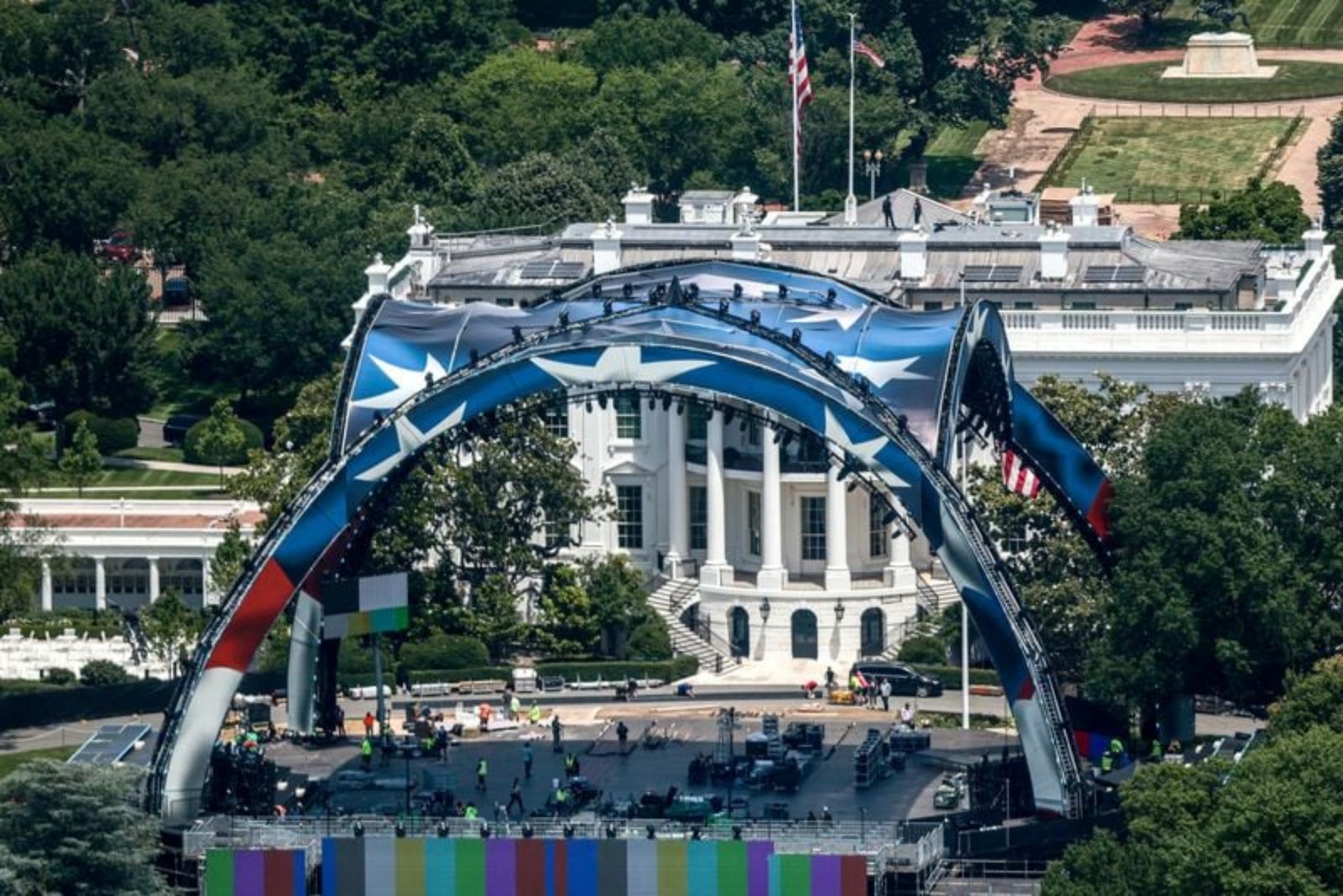
Two Washington-area residents have asked a federal court in Washington to stop a planned mixed martial arts event at the White House and to halt construction of the large metal arena being assembled on the South Lawn.
The plaintiffs filed a request on Sunday seeking a temporary restraining order from U.S. District Judge Amit Mehta to prevent the Ultimate Fighting Championship event, which is scheduled to take place next week and to coincide with President Donald Trump’s 80th birthday on June 14.
Judge Mehta on Monday directed the parties to propose a schedule for consideration of the emergency motion.
The program, promoted as "UFC Freedom 250," is to include fights inside a 92-foot-tall (28 meters), octagon-shaped cage and will have weigh-ins at the nearby Lincoln Memorial. The temporary arena structure has been described as "the Claw" and is being assembled on the South Lawn of the executive residence.
The lawsuit, which was filed on Saturday, argues that authorizations granted by the National Park Service and the Interior Department for the event were unlawful and should be set aside. The plaintiffs wrote: "This nation’s public monuments should not be loaned out for private exploitation."
In response, the White House issued a statement calling the filing an "obstructionist, baseless, and dilatory lawsuit," and said the planned event "is no different than the various other White House-hosted events on the South Lawn and properly permitted events on the Ellipse and National Mall throughout the year."
The complaint contends that the event runs afoul of rules that bar sporting events on the South Lawn and at the Lincoln Memorial and further argues that the construction of the large arena structure requires authorization by Congress.
The filing comes as the president faces additional litigation related to construction projects at the White House and elsewhere in Washington. Those other suits include challenges to a proposed 90,000-square-foot ballroom on the site of the demolished East Wing and to a proposal to renovate and close the John F. Kennedy Center for the Performing Arts.
Context and next steps
The immediate procedural step is the court’s scheduling order, which will set deadlines for briefing and potential hearings on the emergency request. The plaintiffs seek a temporary injunction to preclude the event and the final disposition of the construction activities at issue; the White House has maintained that the event is comparable to other permitted activities on federal grounds.
Both the legal claims about permitting and congressional authorization and the competing statements from the plaintiffs and the White House will be central to the court’s initial consideration of the emergency motion.