
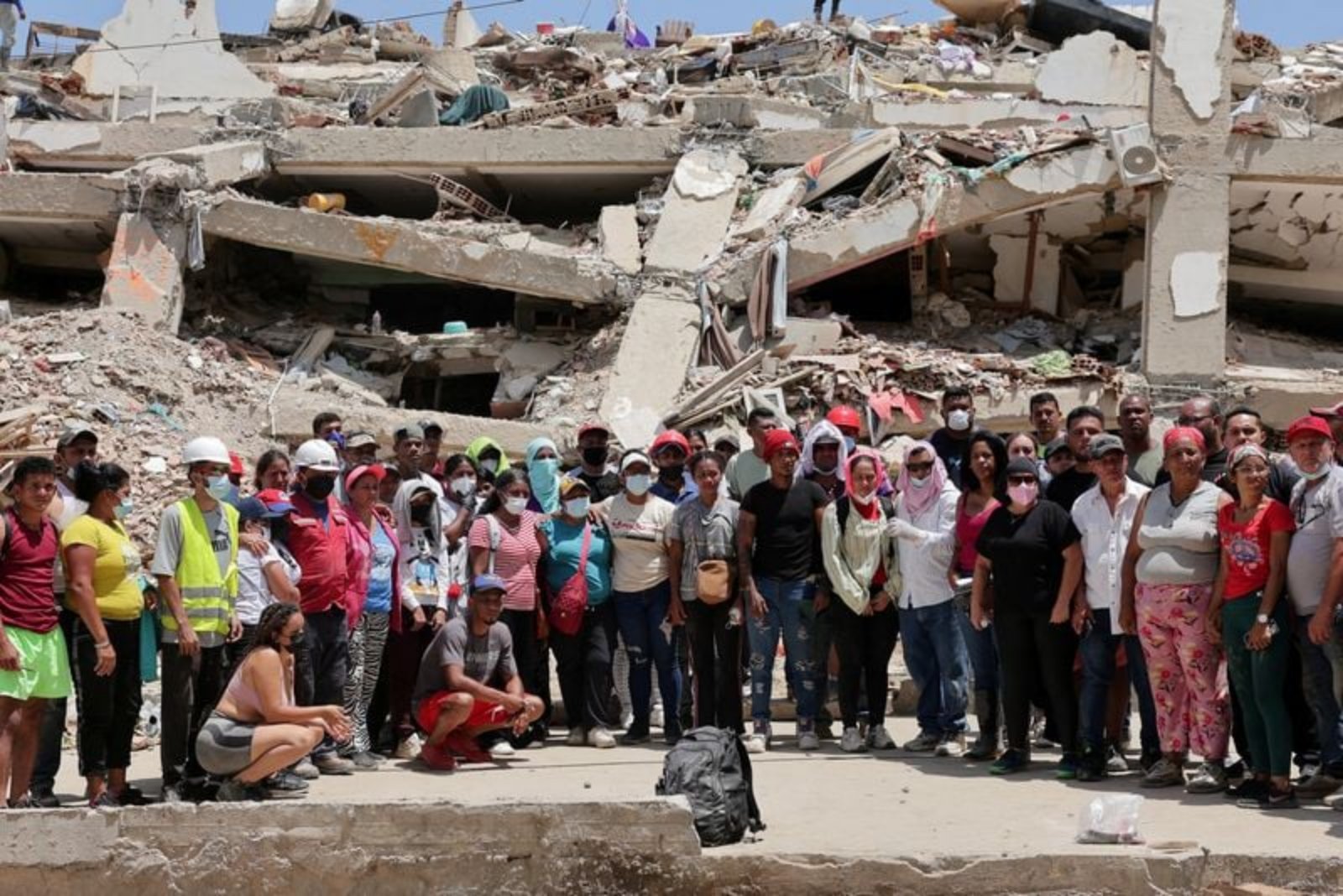
Anger and impatience are rising in communities across Venezuela after twin earthquakes struck last Wednesday, leaving widespread damage and a mounting death toll, residents and officials said on Monday. In several affected areas, locals say they have seen few government representatives and that immediate relief has largely been provided by neighbors, farmers and grassroots actors.
Local residents report scant official support
In El Junquito, a small mountainous area about 33 km (20 miles) west of Caracas that many Venezuelans visit on weekends, residents said public officials have been scarce since the quakes. Community members have been organizing their own response, distributing food and other essentials.
"We are waiting for answers, for debris to be cleaned up, for inspections, for people who have been really affected to be helped," said Keily Ibarra, a 33-year-old manicurist who is leading citizen complaints to authorities. "She called on the government to do 'what needs to be done.'"
The town's commercial center suffered extensive damage, with collapsed buildings visible during a visit to the area. Some residents whose homes and businesses are no longer safe have erected tents in an open field despite the proximity of damaged and unstable structures.
"We don’t know where we are going to be located or how long we are going to be here," said Tony Abreu, the owner of a local candy store, who has been living in a tent since the quakes because his home and business are unsafe.
Higher casualties reported and specific incidents of devastation
A hotel near Maiquetia Airport that was housing more than 140 people deported from the United States - including seven children - while they were being processed by Venezuelan authorities, collapsed in the earthquakes, two families of deportees said. Those families said most of the people who had been staying there are believed to have been killed.
The government program that manages deportee processing, the Return to the Homeland Grand Mission, posted videos online showing arrivals, including the children receiving toys, on Wednesday.
International and national relief response
Multiple international aid and rescue teams have mobilized and focused much of their efforts in La Guaira, which has been identified as the state hardest hit by the quakes. Authorities said the international community had provided assistance from 30 countries, supplying about 1,000 metric tons of relief items, more than 3,600 rescue and support personnel and 118 search-and-rescue canines.
National officials said the death toll continued to rise. Jorge Rodriguez, who is the acting president's brother and the president of the National Assembly, reported on Monday that there were 1,719 confirmed deaths, 5,034 injured and 15,866 people left homeless.
Industrial effects and energy supply
Power outages on Monday prevented a refinery, a petrochemical complex and other industrial plants in the country's central region from restarting, industry sources said. Despite these disruptions, sources added that state-run oil company PDVSA did not expect domestic fuel shortages, because output from refineries in the country's eastern and western regions is sufficient to meet national demand, even with increased consumption by rescue operations. The sources said oil output and exports were continuing normally.
Search operations continue amid persistent aftershocks
Rescue teams worked around the clock on Monday for a fifth consecutive day, racing to find survivors as hundreds of aftershocks - which have continued since last Wednesday - have complicated efforts and kept both national and international teams on edge.
Caracas residents felt a 4.6-magnitude aftershock early on Monday, centered north of the capital at a depth of 10 km (6 miles), according to the U.S. Geological Survey. Assembly President Rodriguez said no immediate damage was reported from that tremor. The aftershocks have repeatedly interrupted rescue operations and heightened the risks faced by teams and affected communities.
Amid the ongoing search efforts, one notable rescue involved 21-year-old Aaron Levi, who was pulled from a collapsed building in La Guaira after being trapped for 106 hours. Venezuelan interim president Delcy Rodriguez said the extraction required a 43-hour rescue operation.
Shelters, camps and official communications
Assembly President Rodriguez said authorities had established 15 shelters in La Guaira and 50 provisional camps to assist people displaced by the quakes. He commended Venezuelans for maintaining calm and resilience, and he urged the public to rely on official channels for information.
"Do not pay attention to rumors, do not let yourselves be led by manipulation strategies on social networks or by media manipulation that seek nothing but to increase unrest and anxiety," Rodriguez said. "Official information is the only one that truly has the truth to share with you."
Concerns for foreign nationals
A senior U.S. administration official said three U.S. citizens are known to have died in the earthquakes and 12 are missing. That official added that a State Department task force had handled more than 300 inquiries from U.S. citizens seeking assistance. A second U.S. official estimated there are approximately 5,000 U.S. citizens in Venezuela.
Local relief efforts persist as formal response is questioned
Across affected towns and neighborhoods, residents described a patchwork of relief activities in which local volunteers, farmers and neighbors deliver immediate aid while official emergency response and coordination appeared uneven to many. The disparity between community-driven assistance and formal governmental presence has generated public frustration and repeated calls for clearer, faster support and rebuilding plans.
Authorities report extensive international and national resources have been mobilized, and officials have provided updated casualty and displacement figures. Yet in hard-hit locales such as El Junquito and parts of La Guaira, residents continue to say they are still waiting for debris removal, structural inspections and targeted help for those most affected.
The situation remains fluid as search-and-rescue teams continue operations and authorities work to restore industrial activity and address the humanitarian needs of tens of thousands of displaced people.