
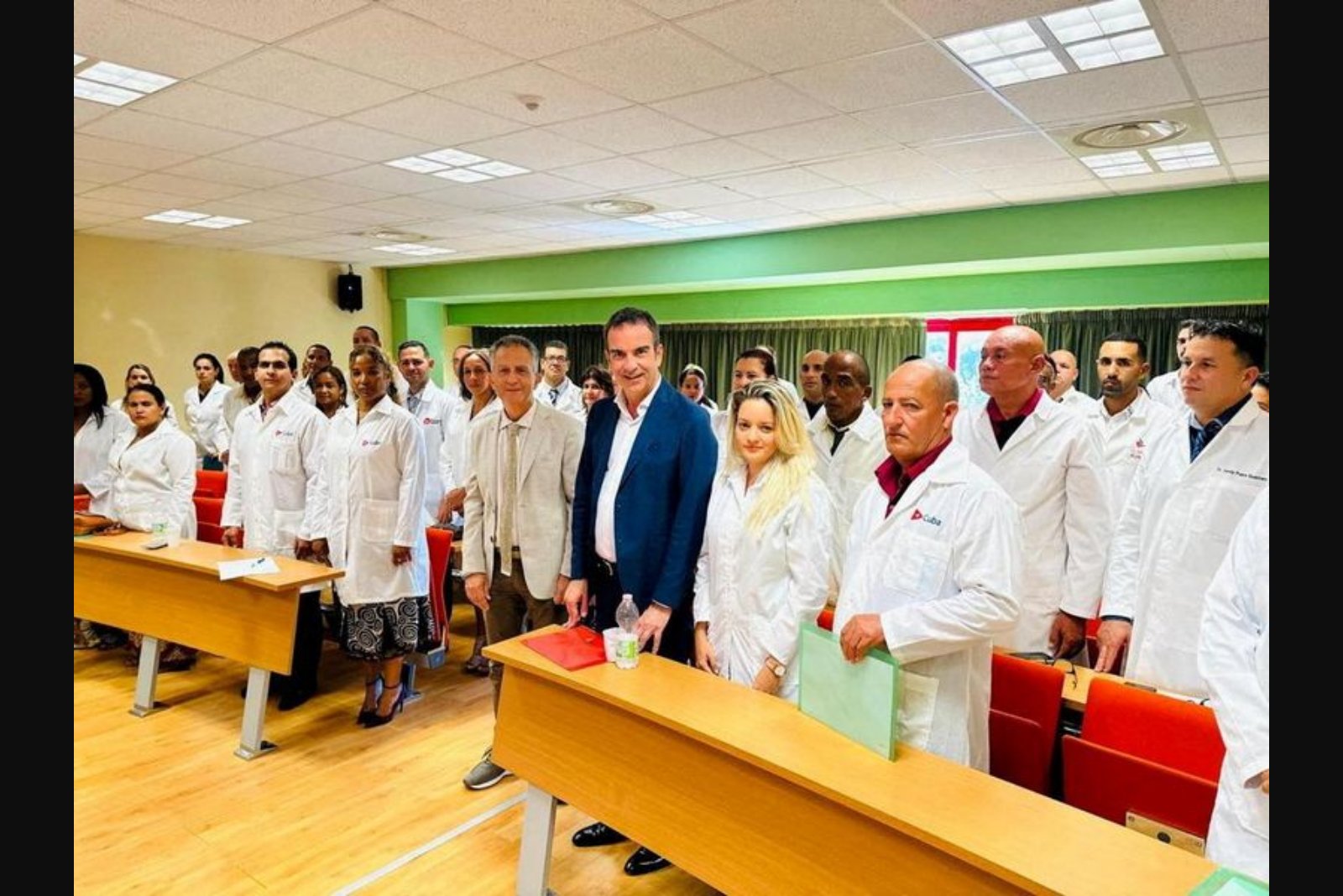
The governor of Calabria said that Cuban doctors are central to maintaining hospital services in the region, telling a senior U.S. diplomat on Monday that those medics are still necessary to keep hospitals and emergency rooms functioning. At the same time, he said he would reassess a planned increase in the number of Cuban medical staff and seek personnel from a wider international pool.
Roberto Occhiuto issued a statement after meeting Mike Hammer, the U.S. charge d'affaires to Cuba, saying their discussion focused on the "urgent needs of Calabria's health system and the complexities surrounding the Cuban doctors' mission." Occhiuto reiterated that the Cuban doctors currently helping to keep hospitals and emergency departments open remain essential for the region.
Occurring against a backdrop of increasing U.S. pressure on Havana, the talks followed Washington's January announcement that it considered Cuba to pose an "unusual and extraordinary threat" to U.S. national security, a characterization that Cuba has rejected. U.S. policymakers are seeking to tighten measures aimed at reducing revenue flows to the island from overseas activities, including its export of medical personnel.
Occhiuto confirmed that Calabria had entered a 2023 agreement to bring in nearly 500 Cuban doctors to help fill critical staffing gaps. He said he had previously intended to expand that mission further in 2026, potentially increasing the number of Caribbean medical staff to as many as 1,000. Following his meeting with the U.S. diplomat, he said he would review those expansion plans and explore alternative avenues for recruitment.
"I had intended, in 2026, to increase the mission of Cuban doctors to as many as 1,000 Caribbean medical staff," Occhiuto said. He added that the region would advertise for candidates from other parts of the world and was prepared to welcome doctors from within the European Union, from outside the EU, and "Cubans not tied to the existing mission, who independently want to come work in Calabria."
There was no immediate comment from U.S. officials in Italy regarding the meeting or the regional recruitment plans.
Italy has historically trained its own medical workforce, but the national health labour market has been strained. Low pay, burnout experienced during the COVID-19 pandemic and intense competition for specialists in areas such as emergency medicine have reduced staffing levels, particularly in southern regions. Calabria, a peripheral and economically challenged region, has faced a chronic shortage of medical personnel for years, and its limited capacity to offer competitive salaries contributed to reliance on external providers.
Occhiuto has acknowledged the region's financial constraints and previously said that Calabria's difficulty in offering competitive pay pushed him to seek support from Havana, which hires out Cuban medics and generates important revenue for the island economy.
The U.S. State Department has publicly characterised Cuba's medical missions as human trafficking, an allegation that both Havana and Occhiuto have denied. Separately, U.S. pressure on Cuba has included measures aimed at constraining the island's economy more broadly, with U.S. actions such as a comprehensive fuel blockade cited as contributing to prolonged blackouts on the island.
Calabria now faces the dual task of ensuring hospitals remain staffed in the near term while diversifying its recruitment strategy to reduce potential vulnerability to diplomatic and policy shifts. The governor's statement underlines the immediate operational reliance on Cuban medical personnel even as it signals a willingness to expand recruiting efforts to other geographies.