
World June 29, 2026 09:07 AM

Aftershock rattles Caracas as round-the-clock rescue work enters critical fourth day

4.6-magnitude tremor shocks residents while search-and-rescue teams press on in hardest-hit La Guaira

By Derek Hwang
Share
Twitter Reddit Facebook LinkedIn

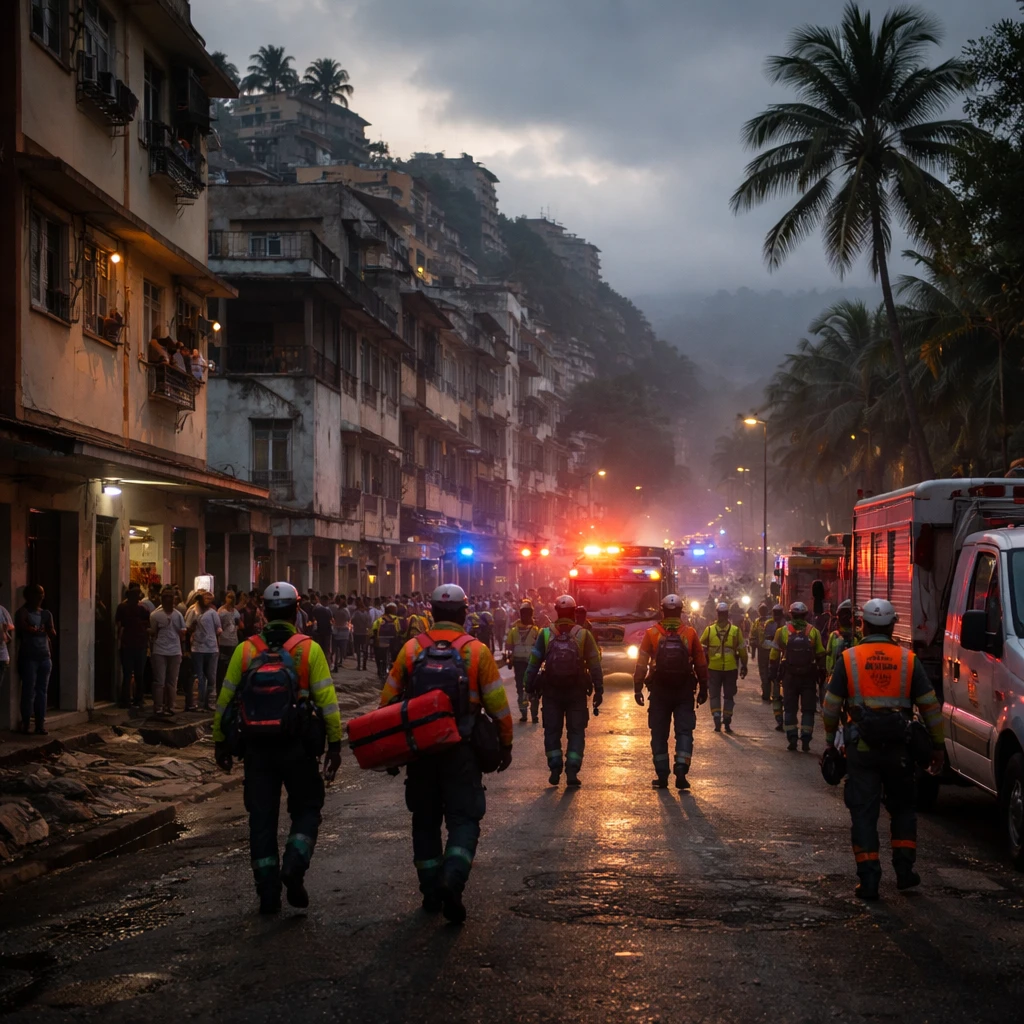
A 4.6-magnitude aftershock struck north of Caracas early on Monday at a shallow depth of 10 km (6 miles), the U.S. Geological Survey reported. Authorities said there were no immediate reports of damage. Rescue crews continued continuous operations on the fourth day following last week’s powerful earthquakes, with efforts concentrated in La Guaira, the state most affected. The earlier twin quakes on Wednesday have left nearly 1,500 people confirmed dead in a country already facing a deep political and economic crisis.

Aftershock rattles Caracas as round-the-clock rescue work enters critical fourth day
Summarize with
ChatGPT Perplexity Claude Grok Gemini

Key Points

  • A 4.6-magnitude aftershock struck north of Caracas early on Monday at a depth of 10 km (6 miles), according to the U.S. Geological Survey.
  • No immediate damage was reported following the aftershock, according to Jorge Rodriguez, president of the National Assembly, who posted on social media.
  • Rescue teams continued round-the-clock operations into a fourth day, concentrating on La Guaira state, the hardest-hit area after Wednesday’s twin earthquakes that have left close to 1,500 people confirmed dead. (Economic and market sector impacts are not detailed in the available reporting.)

A shallow 4.6-magnitude aftershock occurred north of Venezuela's capital early on Monday, centered at a depth of 10 km (6 miles), the U.S. Geological Survey reported. The tremor woke residents across Caracas and caused buildings to shake, though authorities said there were no immediate reports of structural damage.

Jorge Rodriguez, president of the National Assembly, posted on social media that the aftershock had not produced any immediate harm. Residents described being roused from sleep by the moderately strong jolt as teams continued sustained rescue operations in areas hit by last week’s larger earthquakes.

Rescue personnel remained on continuous shifts into the fourth day after the initial seismic events, focusing resources on La Guaira state. Officials and emergency crews have prioritized that coastal state because it has been identified as the area suffering the most severe impacts. The continuing efforts reflect an intensive search-and-rescue phase following the previous tremors.

Authorities reported that Wednesday’s twin earthquakes have so far resulted in close to 1,500 confirmed fatalities. The country’s broader situation is complicated by a long-standing political and economic crisis, a condition referenced in the official statements about the response and recovery environment.

The aftershock, occurring at the shallow depth reported by the U.S. Geological Survey, contributed to an atmosphere of heightened concern among residents and responders alike. While federal and regional officials have indicated that no immediate damage had been identified from this specific event, teams on the ground continued to assess impacts as rescue work proceeded around the clock.


Context and immediate response

Search-and-rescue operations that began after last week’s powerful earthquakes continued without interruption into Monday, marking a fourth consecutive day of continuous effort in the most affected zones. La Guaira state remained the focus of those operations as crews worked to reach and assist areas hit hardest by the earlier quakes.

Casualty figures issued by officials place the confirmed death toll from the twin quakes on Wednesday at close to 1,500 people. Those figures, together with ongoing rescue work and the newly reported aftershock, frame a response phase that remains active and critically timed.

Officials and residents alike described the scene as one of ongoing operations amid heightened vigilance following the latest seismic activity. Given the confirmed fatalities and the continuing rescue effort, the situation remains fluid and closely monitored by authorities.

Risks

  • Ongoing seismic activity - the reported aftershock and the prior twin earthquakes indicate continued seismic risk in affected areas, which may complicate rescue operations and post-event assessments.
  • Strained recovery capacity - sustained, around-the-clock rescue efforts amid an existing political and economic crisis could challenge the speed and scale of response and reconstruction in the hardest-hit regions.
  • Uncertainty in damage assessment - while no immediate damage was reported from the aftershock, officials and rescuers continued to evaluate affected zones, leaving final assessments and longer-term impacts unresolved.

More from World

Released Belarusian Prisoner Questions Sanctions Relief Amid Ongoing Repression Jun 29, 2026 Teenage Visitor Found Dead After Night Out in Pattaya; Australian Man Detained Jun 29, 2026 Taylor Swift and Travis Kelce Poised to Marry as Manhattan Buzzes with Speculation Jun 29, 2026 Engineers Call for Rapid Structural Audits of Venezuela’s Public Housing After Devastating Quakes Jun 29, 2026 Clashes on Pakistan-Afghanistan Frontier Leave Scores Dead as Airstrikes and Ground Raids Continue Jun 29, 2026