
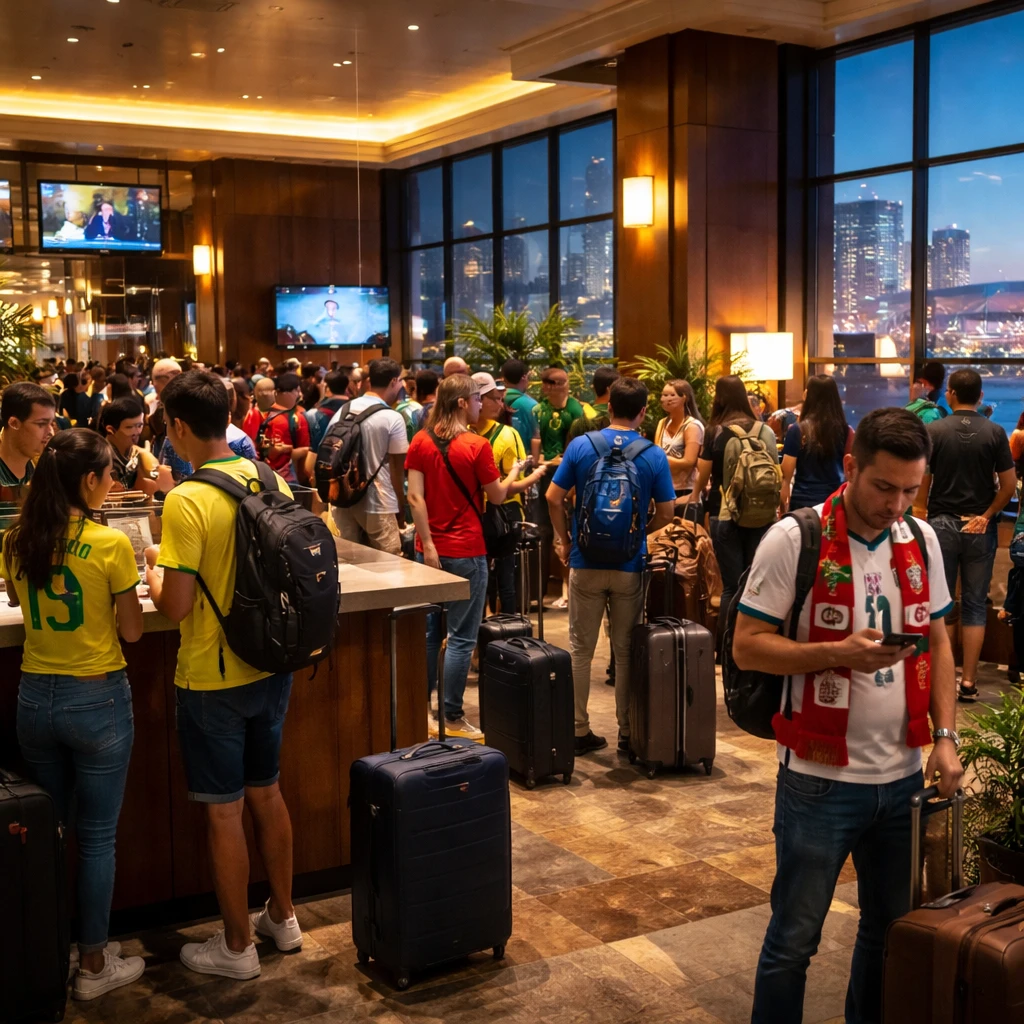
U.S. hotel operators and online travel platforms begin rolling out second-quarter earnings next week, and investors face a split picture: hotels appear positioned to benefit from elevated demand and pricing associated with FIFA World Cup activity, while online travel firms may trim forecasts amid ongoing Middle East disruptions and other challenges.
Analysts at BofA Global Research summed up the contrast succinctly, saying hotels are the "real World Cup winner." The hotel sector’s momentum has been propelled by resilient travel demand and premium pricing for rooms and airfares, conditions that should support solid second-quarter results for major chains.
Still, analysts note that hotel companies will likely need to lift their full-year outlooks to sustain the sector’s positive trajectory beyond any short-lived boost tied to the World Cup.
Online travel firms are expected to take a more cautious tone. Brokerage BTIG has forecast softer guidance from online travel companies, citing uncertainty stemming from the Middle East where booking cancellations peaked in March and April. BTIG specifically called out Booking Holdings as most exposed to that risk, observing the company had previously assumed the U.S.-Israeli war on Iran would end by June 30 when setting its full-year guide.
Concerns about AI agents replacing core online travel functions have also surfaced, affecting investor sentiment toward travel platforms. Jeff Barrington, managing director at Windsor Drake, warned that an AI agent could replace the search, comparison and aggregation tasks central to companies such as Expedia.
Despite softness expected at some online platforms, Airbnb is seen as an outlier. Bernstein analyst Richard Clarke said he expected Airbnb to be the biggest beneficiary in the online travel space because of its focus on leveraging the World Cup to add supply.
Within the hotel industry, luxury and upper-upscale segments drove a robust quarter, according to Jefferies, and ongoing geopolitical events have not yet materially dented leisure or business travel trends. However, industry executives caution that any earnings lift originating from World Cup host markets represents a concentrated spike rather than a sustainable trend.
Bookit CEO Lin Dai said the World Cup produced a short-lived pricing effect: U.S. hotels charged more without filling substantially more rooms, pushing revenue up through higher rates rather than higher volumes. He described that spike as already gone and characterized the World Cup impact as a three-week event, not a long-term trend line.
Key reporting dates for the sector are set: Hilton Worldwide will report on July 28, Marriott International on August 3, Booking Holdings on August 4, Expedia Group on August 5 and Airbnb on August 6. As companies publish results, analysts will focus on core growth trends that exclude one-off World Cup-related effects.
Investors and analysts remain divided on how to interpret the coming results. Some see a durable recovery in pricing power for hotels, while others emphasize the need to separate temporary, event-driven gains from the underlying performance that will determine momentum for the rest of the year.
What to watch when results arrive
- Whether hotel operators raise full-year guidance to reflect stronger-than-expected pricing.
- How online travel platforms address cancellations and geopolitical uncertainty in their forecasts.
- Signs that AI-driven booking tools are materially changing user behavior and revenue mix for online travel firms.