
Summary: Ford Motor Company finds itself at the center of a sharp U.S. political debate after recent public criticisms and praise from various corners of Washington over its commercial links with Chinese companies. The controversy underscores conflicting ideas within the Republican-led House and the administration about when collaboration with Chinese firms becomes a threat to the U.S. auto industry. Ford maintains that partnerships and technology access are vital to remain competitive worldwide while simultaneously warning that state-backed Chinese automakers pose a risk to the domestic industry.
Long-standing tensions over Ford’s dealings with Chinese firms erupted into a visible standoff this week, with Republican criticism and official praise arriving almost simultaneously and in contradictory tones. The dispute exposes a lack of consensus in Washington about the appropriate balance between openness to foreign technology and protecting U.S. manufacturing capacity.
On one front, the House Select Committee on China - controlled by Republicans - posted on social media platform X that Ford had a dual posture: publicly warning about Chinese threats to the U.S. auto sector while privately partnering with some Chinese companies. The post said, "This is what Ford says vs. what it does."
Nearly a day earlier, the U.S. Transportation Secretary, Sean Duffy, sent a letter describing Ford’s connections with Chinese companies as "troubling." Ford responded sharply, accusing the secretary of seeking headlines. A company spokesman said: "This whole situation is very puzzling. We have such a good and productive dialogue with the administration, and this letter came out of left field."
At the same time, other administration voices took a different tone. The White House posted on X that Ford is a "great American company" that has invested in U.S. production, and U.S. Commerce Secretary Howard Lutnick had, just weeks earlier, praised some of the same moves that Secretary Duffy criticized. Those divergent statements have compounded the uncertainty Ford and its peers face as they plan product and manufacturing strategies.
Jim Farley, Ford’s chief executive, has been among the most outspoken auto executives warning about China’s rapid rise in automotive manufacturing. He and Ford have lobbied Congress to limit Chinese automakers' access to the U.S. market, arguing that extensive government support for Chinese firms creates a significant cost advantage that could displace U.S. automakers. Farley has publicly stated concerns that China has enough manufacturing capacity to supply all of North America and thereby threaten U.S. producers.
Despite this hawkish rhetoric, Farley’s public remarks have not excluded acknowledgment of individual products from Chinese manufacturers. He has conceded that an electric car from China’s Xiaomi impressed him after a comment on an October 2024 podcast drew more attention than anticipated.
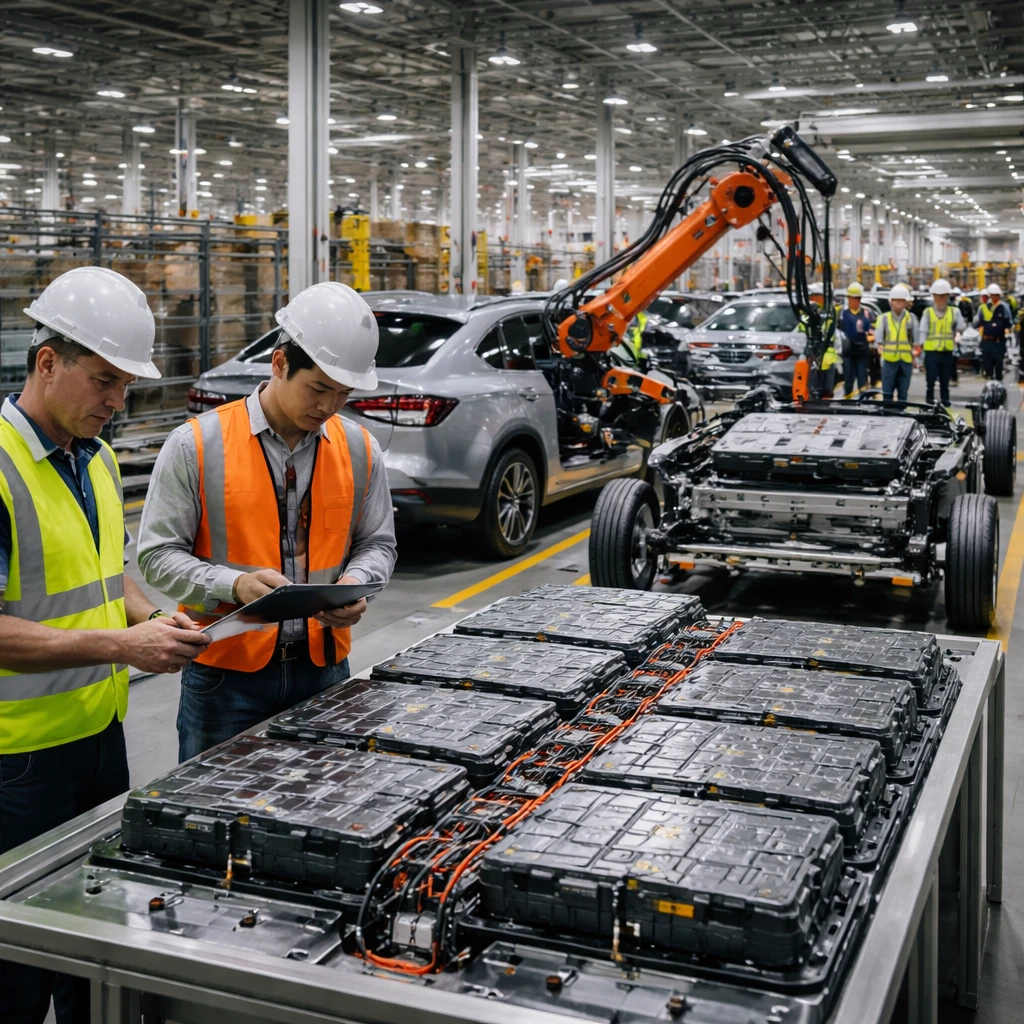
At the corporate level, Ford has pursued commercial relationships with Chinese companies that have drawn congressional scrutiny. In 2023 Ford announced a partnership with Chinese battery manufacturer CATL, intending to use CATL’s cell technology at a Michigan plant owned by Ford and staffed by American workers. The announcement prompted the chairs of two U.S. House committees to open an investigation, warning that the deal risked exposing Ford and U.S. taxpayers to the influence of the Chinese government. Sources familiar with Ford’s reaction said the automaker was surprised by the strength of the backlash. The Michigan factory began production this year.
In January, according to Transportation Secretary Duffy’s letter, Farley discussed the potential for joint ventures between Chinese automakers and U.S. companies at the Detroit Auto Show, a move Duffy said would weaken the domestic industry. Ford denied proposing such a joint-venture framework.
More recently, in July, Ford announced a strategic partnership with China’s Geely to collaborate in Europe, including joint development of a new model. That announcement drew sharp criticism from some lawmakers. Representative John Moolenaar, chair of the House Select Committee on China, said in July that "Ford’s decision is incomprehensible as it seeks protection from Chinese automakers coming to the United States." Ford defended its approach in Europe, saying the market is changing rapidly and that competing with Chinese and other global automakers requires companies to become "radically leaner and smarter."
The Trump administration’s public posture toward Chinese automakers has also been mixed. President Trump has made shielding U.S. industries from Chinese competition and rebuilding domestic manufacturing central policy objectives, but different administration officials have signaled varying degrees of openness to engagement with Chinese manufacturers. In January, for example, Trump said at the Detroit Economic Club that he would welcome Chinese automakers building factories in the U.S. provided they hire American workers: "If they want to come in and build a plant and hire you and hire your friends and your neighbors, that’s great," he said.
In the midst of these mixed messages, Commerce Secretary Lutnick commended Ford’s decision to move some Lincoln production from China to the United States beginning in 2030. Transportation Secretary Duffy, however, described that timeline as unacceptably slow in his recent letter.
Observers say the whiplash from conflicting signals complicates strategic planning for automakers. Ilaria Mazzocco, deputy director and senior fellow at the Center for Strategic and International Studies, said the back-and-forth creates uncertainty: "There’s a general consensus that the U.S. wants to be less dependent on China, but I don’t think there’s actually a lot of consensus on exactly what that looks like." She added that the lack of a coherent approach makes it harder for companies to chart long-term manufacturing and supply chain decisions.
For Ford, the policy uncertainty has practical implications across several dimensions of its business. It affects decisions about where to site factories, how to source battery technology and components, and the timeline for relocating production. The Michigan plant tied to the CATL collaboration and the announced shift of some Lincoln production to U.S. facilities are concrete examples of how commercial arrangements and political reactions intersect to shape manufacturing footprints.
Washington’s mixed signals also feed into congressional oversight and potential investigations, as seen with the inquiry into the CATL partnership and public criticisms of the Geely tie-up. Those oversight efforts could influence fuel sources for investment, raise compliance costs, or delay production plans if companies must repeatedly defend partnerships to lawmakers.
As the debate continues, Ford will need to balance its stated strategic aim of accessing global EV technology against mounting political scrutiny at home. For the broader auto sector, the clash highlights the difficult trade-offs between competitiveness in a global market and growing pressure to reduce dependence on foreign suppliers and partners.