
Stock Markets July 7, 2026 02:54 AM

U.S., Germany and European Partners Discuss Local Production and Maintenance Hubs for Key Air-Defence Missiles

Statement of intent expected at NATO forum as talks aim to relieve U.S. factory strain and bolster allied supply lines

By Caleb Monroe
Share
Twitter Reddit Facebook LinkedIn
LMT RTX

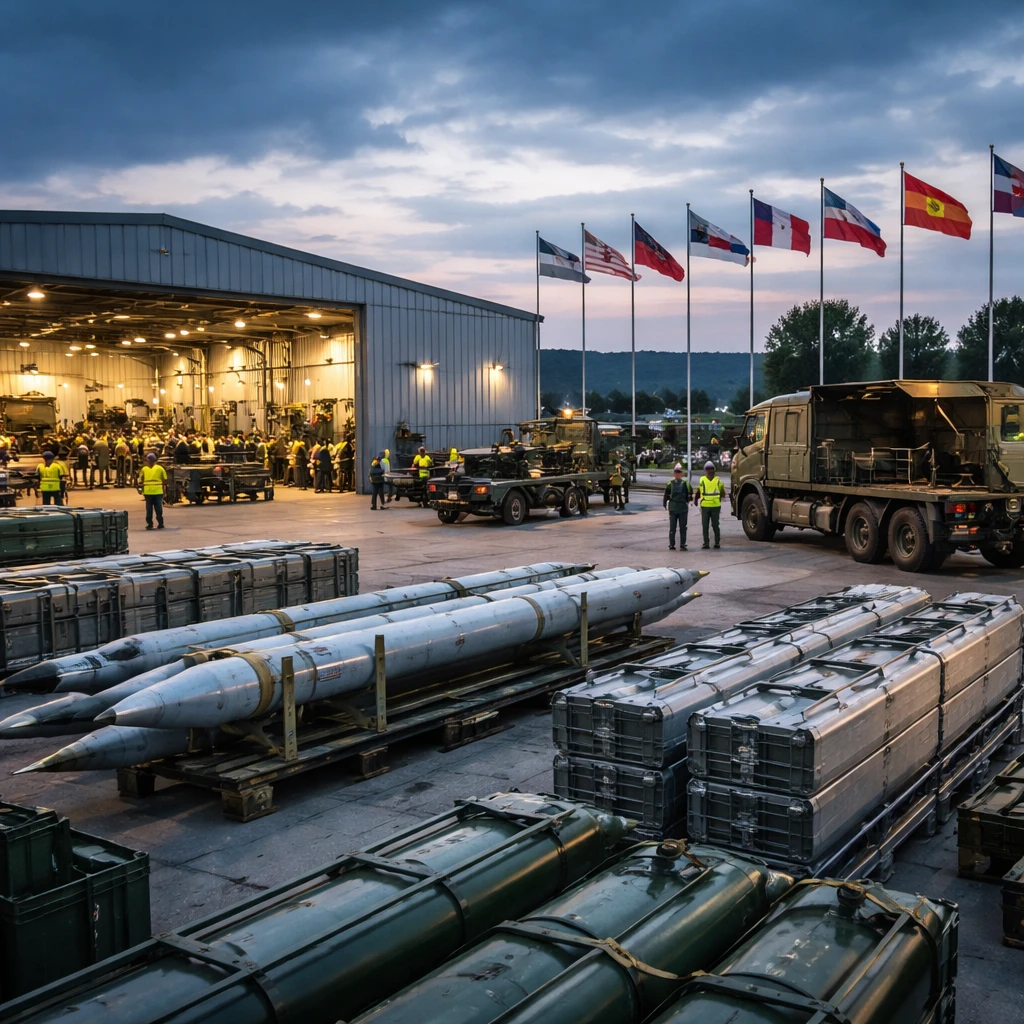
U.S. officials are engaged in talks with Germany and other European countries to set up co-production of Raytheon’s AIM-120 AMRAAM missiles and a European maintenance facility for Lockheed Martin’s PAC-3 Patriot missiles. A statement of intent is due to be signed at a NATO Industry Forum on the sidelines of the alliance’s Ankara summit, according to a source who spoke on condition of anonymity. The measures, if implemented, are intended to free up U.S. factory capacity and help domestic producers increase production amid high demand and depleted stocks.

U.S., Germany and European Partners Discuss Local Production and Maintenance Hubs for Key Air-Defence Missiles
LMT RTX
Summarize with
ChatGPT Perplexity Claude Grok Gemini

Key Points

  • The U.S. is negotiating with Germany and other European nations to co-produce Raytheon AIM-120 AMRAAM missiles and to establish a European maintenance facility for Lockheed Martin PAC-3 Patriot missiles.
  • A statement of intent is expected to be signed at a NATO Industry Forum on the sidelines of the Ankara summit, reflecting initial political agreement rather than a final contract.
  • If carried out, the projects could ease production pressure at Raytheon and Lockheed Martin factories in the United States and permit increased domestic output.

The United States is discussing plans with Germany and additional European partners to establish local production of Raytheon’s AIM-120 AMRAAM missiles and to create a maintenance hub in Europe for Lockheed Martin’s PAC-3 Patriot missiles, a source told Reuters on condition of anonymity.

Officials involved in the talks say that moving some manufacturing and sustainment work to Europe could relieve capacity constraints at Raytheon and Lockheed Martin facilities in the United States. That, in turn, would allow the U.S. defence firms to redirect domestic capacity and increase output at home, the source added.

Delegations from the participating countries are due to sign a statement of intent at a NATO Industry Forum taking place on the sidelines of the military alliance’s summit in Ankara later on Tuesday, the source said. The announcement at the forum would reflect an initial political commitment rather than a final binding contract.

Demand for both PAC-3 interceptors used by Patriot air-defence batteries and AIM-120C-8 missiles - which are fired from NASAMS systems as well as F-16 fighters - remains strong. Ukrainian forces have continued to seek these weapons while defending against Russian attacks after Moscow’s full-scale invasion in 2022, the source noted.

U.S. President Donald Trump has repeatedly criticised European allies for depending on the United States for their security and has urged them to raise defence spending and purchase more U.S. equipment. He has at times also threatened to withdraw Washington from NATO.

In mid-June, the president invoked the Defense Production Act to try to tackle constraints affecting weapons production and the munitions supply chain. That move followed increased concern in Washington about whether U.S. weapons manufacturers could meet rising demand as both the war on Iran and the war in Ukraine have drained U.S. arms inventories.


Contextual note: The source that provided details asked to remain anonymous. The planned signing at the NATO Industry Forum is described as a statement of intent rather than a completed agreement.

Risks

  • The announcement scheduled at the NATO Industry Forum is a statement of intent, not a binding agreement, leaving implementation and timelines uncertain - impacts defence manufacturing and procurement.
  • Concerns remain about U.S. manufacturers' capacity to meet demand after stocks were depleted by the wars in Iran and Ukraine, creating uncertainty for munitions supply chains and defence contractors.
  • Political tensions over burden-sharing within NATO, highlighted by U.S. presidential criticism of European reliance on American security, add uncertainty to multinational defence cooperation efforts - affecting government procurement decisions.

More from Stock Markets

Goldman Sachs Upgrade Sparks Rentokil Initial Pop as Broker Lifts Target to 590p Jul 7, 2026 Infineon Shares Slide as Global Chip Rally Sees Profit-Taking After Samsung Update Jul 7, 2026 Capita Shares Plummet After Government Condemns Pension Administration Failings Jul 7, 2026 Mizuho Highlights Top U.S. REIT Picks: Sunbelt Office and West Coast Apartments Stand Out Jul 7, 2026 Soitec Plunges After Chip Sector Selloff, Technical Signals and Analyst Cuts Weigh Jul 7, 2026