
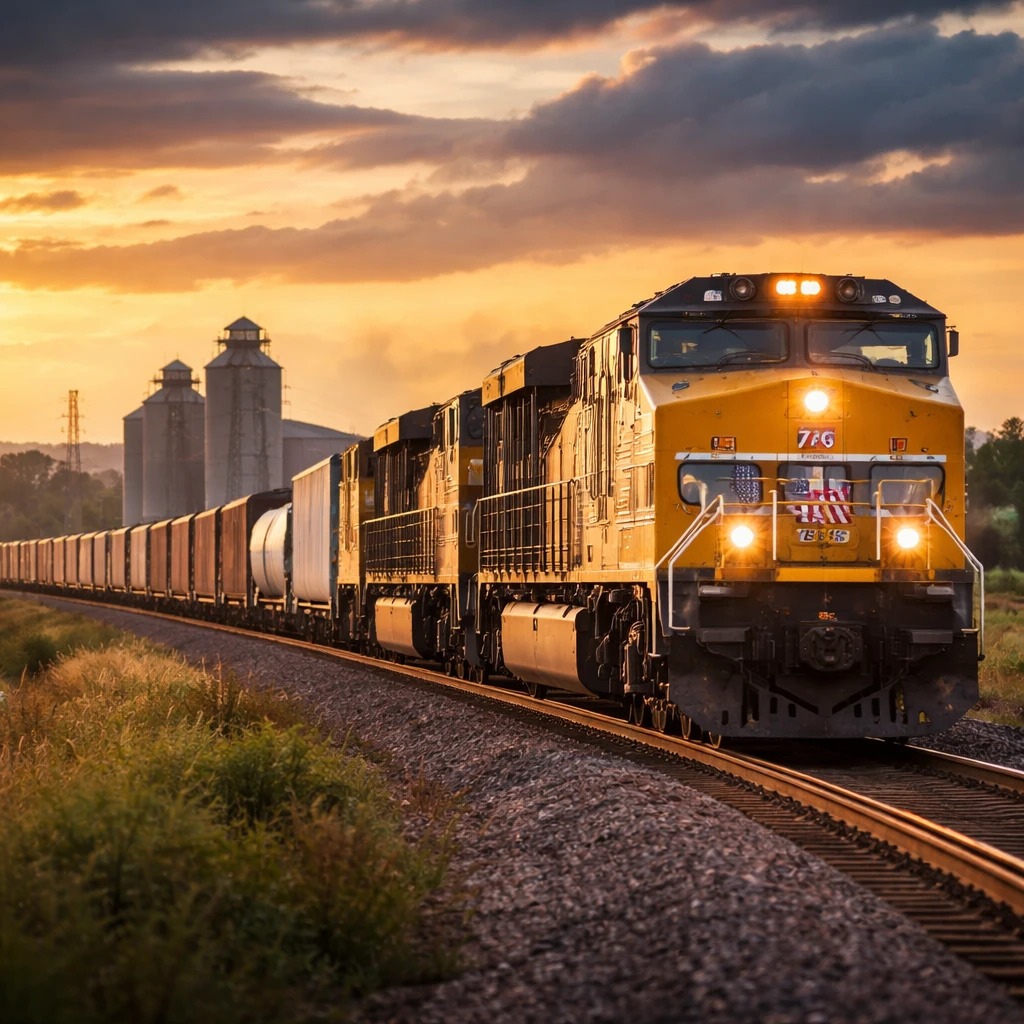
Union Pacific reported that in the third quarter it collected $131.8 million more in fuel surcharge revenue than it paid in fuel costs, a surplus the company said lifted earnings by $0.15 per share. That follows a prior-quarter surplus of $91.1 million, which UP reported added $0.14 per share to results, according to filings submitted to the Surface Transportation Board (STB) and other financial disclosures.
Those figures are part of a larger outturn through the first nine months of the year. From January through September, Union Pacific collected $2.81 billion in fuel levies intended to offset higher diesel prices. Those collections exceeded reported fuel costs by $188.1 million for the period, STB filings show.
Rail companies are unique among U.S. transportation firms in that they report both fuel expenses and fuel surcharge revenue to regulators, creating an unusually transparent window into how surcharges flow through company accounts. The tightening of diesel markets, which the filings and statements attribute to the wars in Iran and Ukraine, has pushed transportation costs to record levels and prompted criticism that some surcharge practices are inflating consumer prices.
Union Pacific serves most of the western two-thirds of the United States and maintains connections into Mexico. Its customers paying surcharges span retailers, construction firms, manufacturers, and producers in food and energy sectors, filings and company statements show.
UP framed the growth in surcharge revenue as an industry-wide response to higher fuel prices. "Due to high fuel prices, fuel surcharge revenues across the rail industry increased substantially," the company said in a statement, adding that its year-over-year percentage increase is in line with the industry.
The surplus at Union Pacific stands in contrast to the results reported by BNSF, the Berkshire Hathaway-owned railroad. STB filings indicate BNSF’s surcharge collections fell short of its fuel costs by $922.4 million in the first three quarters of 2026.
The discrepancy has taken on added significance because UP is pursuing an $85 billion acquisition of Norfolk Southern that would combine the two into the first continental U.S. railroad operation. The Surface Transportation Board is reviewing the proposal; a decision is expected in the months ahead, according to disclosures.
Other major railroads have reported their own surcharge dynamics this year. CSX and Norfolk Southern both disclosed quarterly surcharge surpluses in 2026, with CSX reporting the highest single-quarter excess in the third quarter at $61.4 million. Executives at those companies have said the incremental revenue helped blunt rising fuel costs in their second and third quarters, though they did not disclose the direct effect on profits.
Federal analysis helps explain part of the difference in surcharge outcomes between Union Pacific and BNSF. A U.S. Department of Agriculture review noted the two carriers use different fuel-price thresholds to trigger surcharge recovery. According to that analysis, Union Pacific begins recovering fuel costs through surcharges when diesel reaches $2.30 per gallon, while BNSF’s surcharge mechanism does not start until prices exceed $3.25 per gallon. The USDA review also showed that Union Pacific’s November 2026 fuel surcharge equaled 84 cents per mile, compared with 61 cents per mile at BNSF.
Union Pacific did not immediately comment on the USDA analysis.
Advocacy groups and customers have voiced concerns about how surcharges are applied. Ann Warner, a spokesperson for the Freight Rail Customer Alliance, said surcharges are an accepted tool for transportation companies to offset unexpected fuel-price increases. But she cautioned members raise concerns "when it becomes excessive and it turns into a revenue generator exercise rather than a cost recoup," a comment that reflects complaints among some captive shippers, including utility companies that rely on a single railroad for coal deliveries.
Warner’s group is a member of the Stop the Rail Merger Coalition, which opposes the proposed Union Pacific-Norfolk Southern combination. "The proposed merger puts so much scrutiny on what UP is doing or not doing. You don’t want to overreact too much to it, but at the same time, something’s not right," she said.
BNSF has argued the merger would weaken competition, and the companies have traded regulatory actions as the acquisition review proceeds. Disclosures show Union Pacific sought additional information about an August meeting between investor Warren Buffett, Berkshire Hathaway CEO Greg Abel, and the CEO of CSX. BNSF has resisted Union Pacific’s attempts to subpoena testimony from Buffett, who is Berkshire’s chairman emeritus.
Union Pacific did not immediately comment on that regulatory step.
Tensions have flared in public remarks as well. Earlier in the year, Union Pacific’s CEO Jim Vena ignited controversy when he told an industry conference the railroad would raise rates on merger opponents by 3-4 percent "to teach you a lesson." The company later described Vena’s comments as a joke.
The evolving surcharge dynamics, disparate carrier policies on when surcharges kick in, and the regulatory review of a major proposed merger have combined to put fuel levies and their treatment under close scrutiny across the rail sector. For shippers and sector observers alike, the STB filings offer a rare, granular view into how fuel-price swings are being handled by the companies that haul much of the nation’s freight.