
Ted Turner, the combative and larger-than-life entrepreneur whose risk-taking and instincts reshaped television and created the first 24-hour global news channel, has died at the age of 87, according to a press release from Turner Enterprises cited by CNN. No cause of death was provided.
Turner’s public acknowledgment in September 2018 that he was living with Lewy body dementia, a degenerative neurological disease, was one of the most personal revelations late in his life. Even so, his public persona remained defined by a succession of colorful sobriquets - among them the "Mouth of the South," "Captain Outrageous," and "Terrible Ted."
From Billboards to Broadcasting
Turner rose to vast wealth by turning his family’s billboard business into a springboard for a media empire. He purchased a struggling Atlanta UHF television station in 1970 for $2.5 million despite contrary advice and gradually converted it into a low-cost, 24-hour operation. The station, now known as WTBS, benefited from a 1976 federal ruling that allowed cable systems to retransmit satellite signals. Turner’s early use of satellite distribution helped WTBS become the first so-called "superstation," with cable systems across the United States carrying its programming.
Building on that cable foothold, Turner launched the Cable News Network in Atlanta in 1980. He framed CNN as a corrective to what he described as the "sleazy" approach of the major broadcast networks CBS, NBC and ABC. Despite low pay and skepticism from rivals and observers who derided it as the "Chicken Noodle Network," CNN’s continuous newsgathering model became a template for around-the-clock coverage of wars, trials, revolutions and disasters.
"Barring satellite problems, we won’t be signing off until the world ends," Turner said in a 2013 interview with CNN.
By the mid-1990s, Turner’s broadcasting interests had expanded well beyond news. He acquired the MGM/UA movie studio and consolidated his assets into Turner Broadcasting System, a collection that included networks focused on news, sports, classic films and children’s programming.
Corporate Merger and Its Aftermath
In 1996 Turner Broadcasting System was sold to Time Warner for $7.5 billion, creating what was then described as the world’s largest communications company. The merged company grouped Turner’s networks alongside assets such as HBO, Warner Bros., Time magazine, Cartoon Network and Turner Classic Movies. Turner served as head of the new company’s cable networks division and remained a leading shareholder, but the transition from independent operator to corporate executive proved difficult. The organization and priorities of a large public company constrained the free-wheeling autonomy he had exercised for decades, and over time he lost operational control of the networks he had founded.
Turner voted in favor of Time Warner’s 2001 merger with AOL, a $99 billion deal. That transaction and the organizational changes that followed coincided with a severe decline in the value of the company’s stock, and Turner’s holdings lost substantial value. He resigned as vice chairman in 2003 and stepped down as a Time Warner director three years later.
Public Life, Outspokenness and Controversy
Physically recognizable by a slender mustache, a gap-toothed grin and a dimpled chin, Turner was as known for his blunt speech as for his strategic instincts. In his early years he developed a reputation as a raucous drinker and a man who spoke what he thought without preparation. "I don’t have any idea what I’m going to say," he told the New Yorker. "I say what comes to my mind." Those instincts sometimes produced remarks that provoked backlash, from calling some staff members "Jesus freaks" to a remark aimed at Germans that compared their historical recovery to his baseball team’s turnaround.
He also carried long-running personal and professional feuds. A 1983 yacht collision with a vessel sponsored by media rival Rupert Murdoch escalated into a challenge to fight. The rivalry deepened in 1996 when Murdoch launched Fox News, a conservative competitor to CNN; Turner publicly attacked Murdoch, calling him a warmonger and comparing him to Adolf Hitler.
Sporting Ventures and Other Pursuits
Turner’s interests extended into professional sports and competitive sailing. In the 1970s he owned Major League Baseball’s Atlanta Braves and the NBA’s Atlanta Hawks. He once appointed himself manager of the Braves and directed the team for a single game in 1977, a 2-1 loss to Pittsburgh, after which baseball officials ordered him to abandon the role. Turner skippered the yacht Courageous to the America’s Cup and in 1986 founded the Goodwill Games, an international sporting event intended as an Olympic-style competition. In 1988 he purchased a wrestling organization to provide additional television programming.
Philanthropy, Conservation and Business Diversification
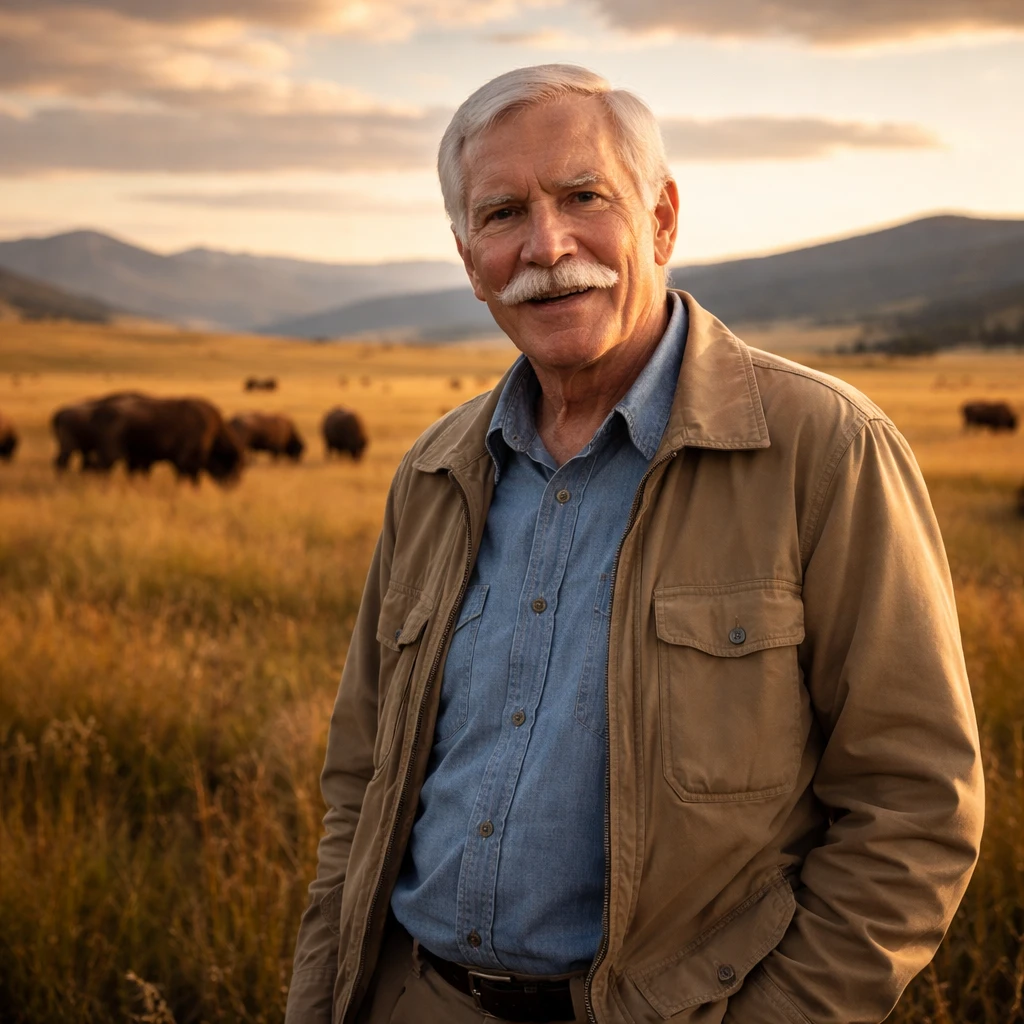
Turner became a prominent environmentalist and one of the country’s largest private landowners. He owned more than 1.9 million acres (770,000 hectares) across six states, including substantial holdings in Montana where he spent large amounts of time. His Turner Foundation contributed millions to environmental groups, and he invested in clean energy initiatives. Turner maintained a herd of about 50,000 bison that supplied the restaurant chain he founded in 2002, Ted’s Montana Grill; he also owned ranches in Argentina’s Patagonia.
He established himself as a major philanthropist in 1997 when he announced a pledge to give $1 billion to the United Nations. With the final installment completed in 2017, Turner later described the gift as "the best investment I’ve ever made." He also co-founded the Nuclear Threat Initiative in 2001, citing concerns about the dangers posed by nuclear weapons.
Personal Background and Later Years
Robert Edward Turner III was born in Cincinnati on November 19, 1938, and moved south with his family at age 9. He was sent to military schools where he became a champion debater and a skilled yachtsman. He enrolled at Brown University and chose to study the classics rather than business, a decision that angered his father; Turner did not complete his degree. He returned to Savannah, Georgia, to join the family advertising business selling billboard space. At 24 he was left in charge after his father took his own life. The company was initially sold to settle debts, but Turner eventually won a family dispute that allowed him to repurchase the firm and rebuild it into a profitable enterprise.
His estimated net worth was placed at $2.8 billion by Forbes. Turner was married and divorced three times and was the father of five children. His third marriage, to actress Jane Fonda, lasted a decade and ended in 2001.
Mental Health and Final Reflections
Throughout his life Turner acknowledged personal struggles. According to his biographer, he battled depression and at times spoke openly about suicide. His 2018 disclosure that he had Lewy body dementia provided a public explanation for a decline in his involvement with the organizations he had created; that same year he said he no longer watched CNN regularly, criticizing its focus on politics.
Turner left behind a complex legacy: a businessman who dramatically altered the media landscape, an environmentalist and major landowner, a sports team owner and a philanthropist whose largest gift to the United Nations was unprecedented in scale at the time. He was quick with a quip about himself: "If I only had a little humility, I’d be perfect."